Oct 23, 2026
E6011 vs E6010 Welding Electrodes for Pipe Welding: Key Differences
E6011 or E6010 for pipe welding? Compare AC/DC compatibility, root pass applications, and welding procedure requirements before choosing an electrode.
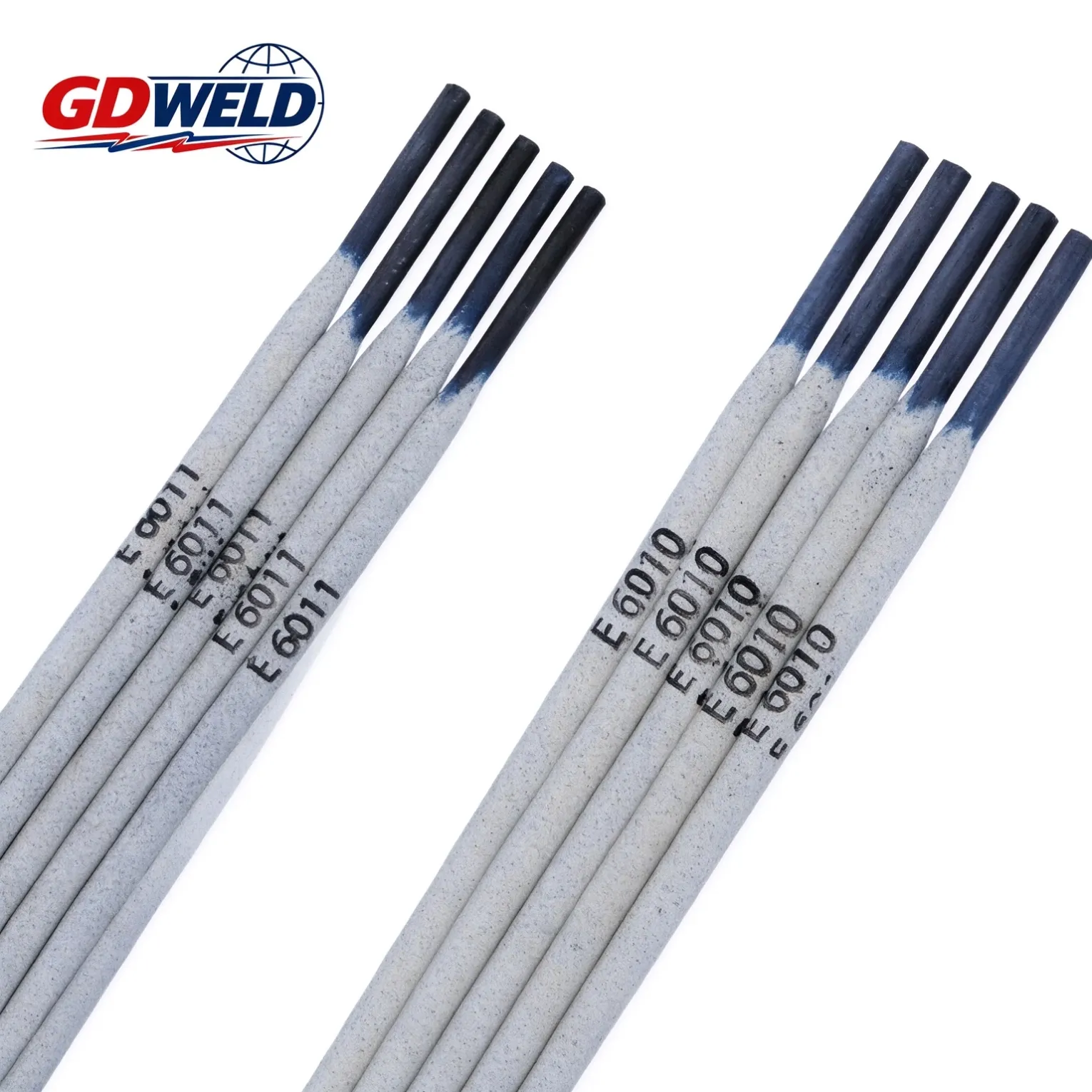
E6011 vs E6010: Quick Comparison
E6010 and E6011 are cellulosic SMAW electrodes used for carbon steel welding. Both offer deep penetration and fast-freezing slag, but their power source compatibility differs.
Feature | E6010 | E6011 |
|---|---|---|
AWS classification | E6010 | E6011 |
Coating | High-cellulose sodium | High-cellulose potassium |
Power source | DCEP (DC+) | AC or DCEP (DC+) |
Key advantage | Established choice for pipeline root passes | Greater power source flexibility |
Typical applications | Pipeline construction and specified root passes | Field repairs and compatible pipe welding applications |
Actual performance depends on electrode diameter, current settings, joint preparation, and welding technique.
1. Which Electrode Is Better for Pipe Root Passes?
The root pass establishes fusion and penetration at the pipe joint. Electrode selection should follow the approved welding procedure and the conditions on site.
E6010 is often preferred when:
- The welding procedure specifies E6010.
- A suitable DC electrode-positive power source is available.
- The application requires E6010 for pipeline root welding.
Its forceful arc and fast-freezing slag make it a common choice for open-root pipeline welding under suitable conditions.
E6011 may be suitable when:
- AC operation is needed or the available machine supports AC welding.
- The job involves compatible carbon steel pipe repairs or field maintenance.
- The approved procedure permits E6011.
E6011 offers more power source flexibility, but that does not automatically make it the better choice for every pipe joint.
2. Can E6011 Replace E6010?
Not automatically. Although both electrodes have a 60 ksi tensile-strength classification and similar cellulosic characteristics, their operating requirements and suitability for specific welding procedures differ.
Before substituting E6011 for E6010, check:
- Welding procedure: Is E6011 permitted by the approved WPS?
- Power source: Does the machine provide the required current type and polarity?
- Joint and welding position: Is the electrode suitable for the specified joint preparation and progression?
- Project requirements: Does the proposed change meet applicable code and inspection requirements?
For pressure piping and pipeline construction, obtain the required technical approval before changing the specified electrode.
3. What Should You Check Before Buying?
For welding contractors, distributors, and industrial buyers, verify these four points before ordering:
- Pipe material and application: Confirm the base metal grade and whether the electrode is intended for root, fill, or repair welding.
- Power source and polarity: Check whether the job requires DC+ or permits AC.
- Electrode diameter and current range: Match the electrode to the joint, welding position, and manufacturer's recommendations.
- Technical documentation: Verify the AWS classification, product specifications, and project quality requirements.
Do not select an electrode based on classification alone. The welding procedure and application determine whether it is suitable.
Final Recommendation
For pipeline root passes, E6010 is a common choice when specified by the approved procedure and used with a suitable DC+ power source. E6011 may be a practical option for compatible pipe welding and repair applications where AC capability is important.
The right electrode depends on the welding procedure, joint requirements, and available power source—not just the AWS classification.
Explore our E6010 welding electrode and E6011 welding electrode pages for product details. For selection support, share your pipe grade, electrode diameter, power source, and application with GD WELD.