Sep 24, 2026
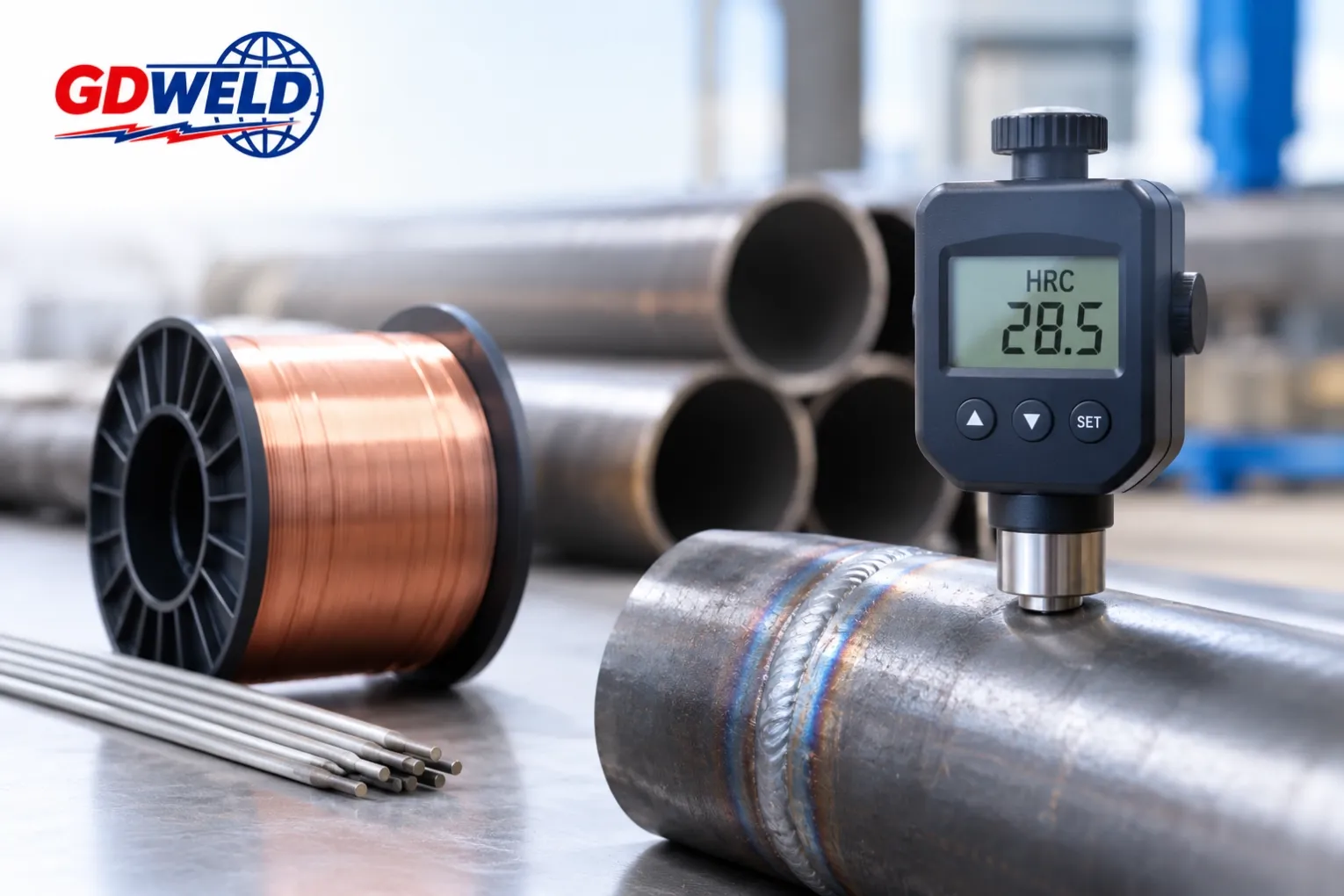
Why Is Cr-Mo Weld Hardness Too High After PWHT?
For Cr-Mo steel welding, PWHT is commonly used to reduce residual stress and obtain the required weld properties. But sometimes the weld hardness is still too high after PWHT.
Technical Blog
Practical guides for selecting welding consumables, understanding AWS classifications and solving material-specific welding challenges.
For Cr-Mo steel welding, PWHT is commonly used to reduce residual stress and obtain the required weld properties. But sometimes the weld hardness is still too high after PWHT.
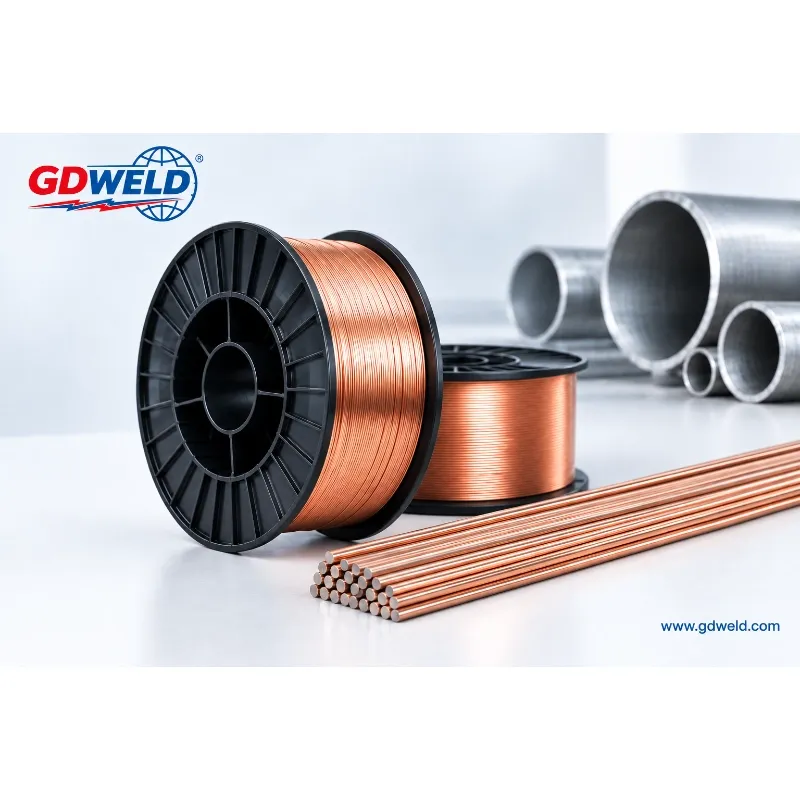
Learn how ER80S-Ni1 welding wire is used for low-temperature steel, including pipelines, pressure vessels and tanks. Compare toughness, applications and key selection factors.
Learn about Cr-Mo welding consumables, including ER80S-B2, ER90S-B3, ER80S-B6 and ER80S-B8, with common materials, applications and selection tips.
Learn why Cr-Mo steel welds crack, including hydrogen, hard HAZ, residual stress, wrong consumables and PWHT problems. Discover practical ways to prevent Cr-Mo welding cracks.
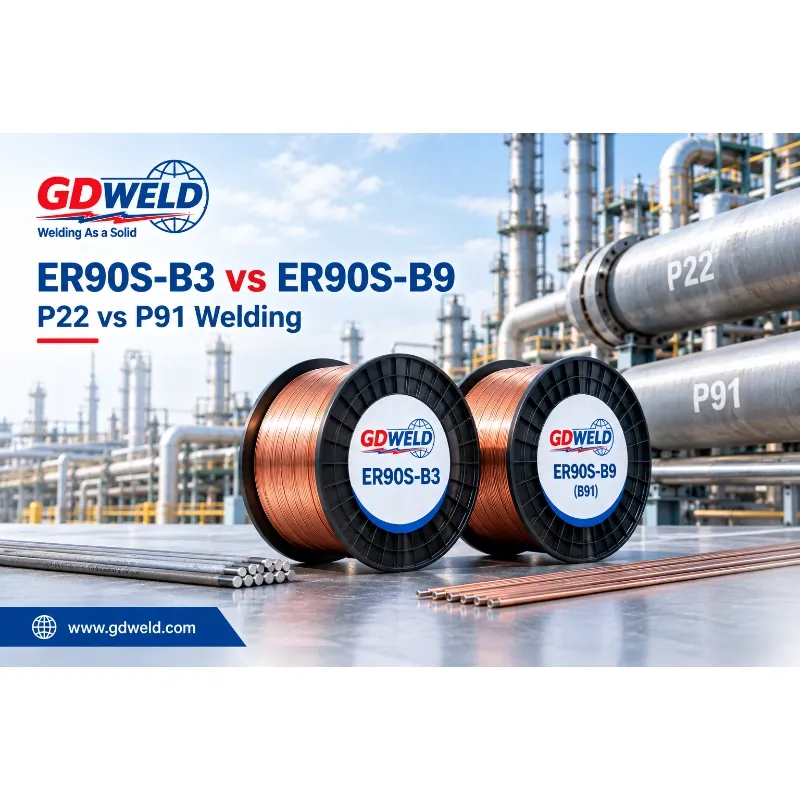
Learn the key differences between ER90S-B3 and ER90S-B9 welding wire for P22 and P91 steel. Compare alloy chemistry, applications, welding requirements and selection.
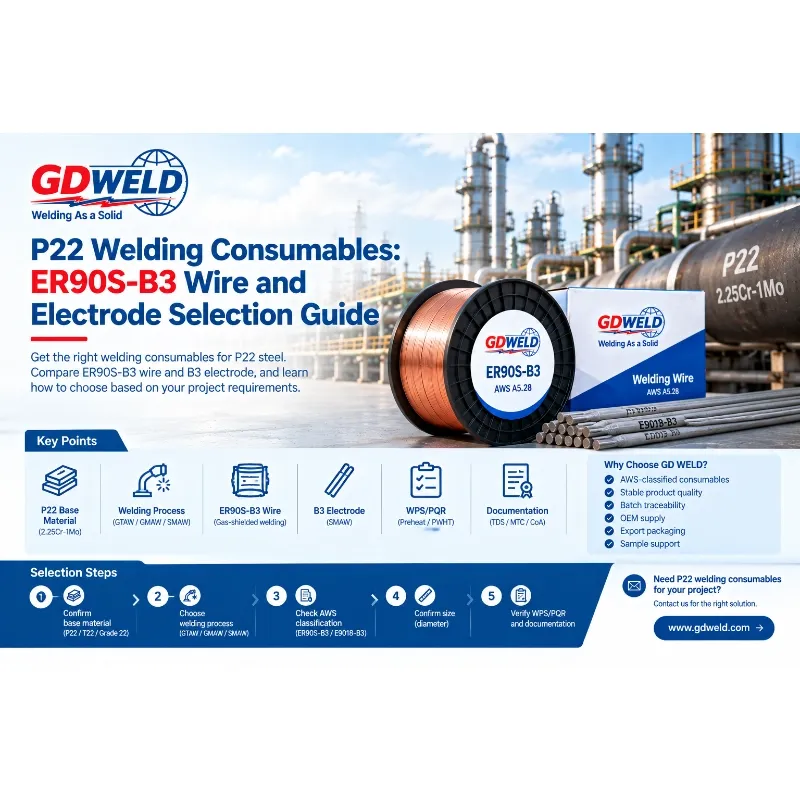
Learn how to select welding consumables for P22 steel, including ER90S-B3 wire and B3 electrodes. Compare welding processes, classifications and key purchasing requirements.
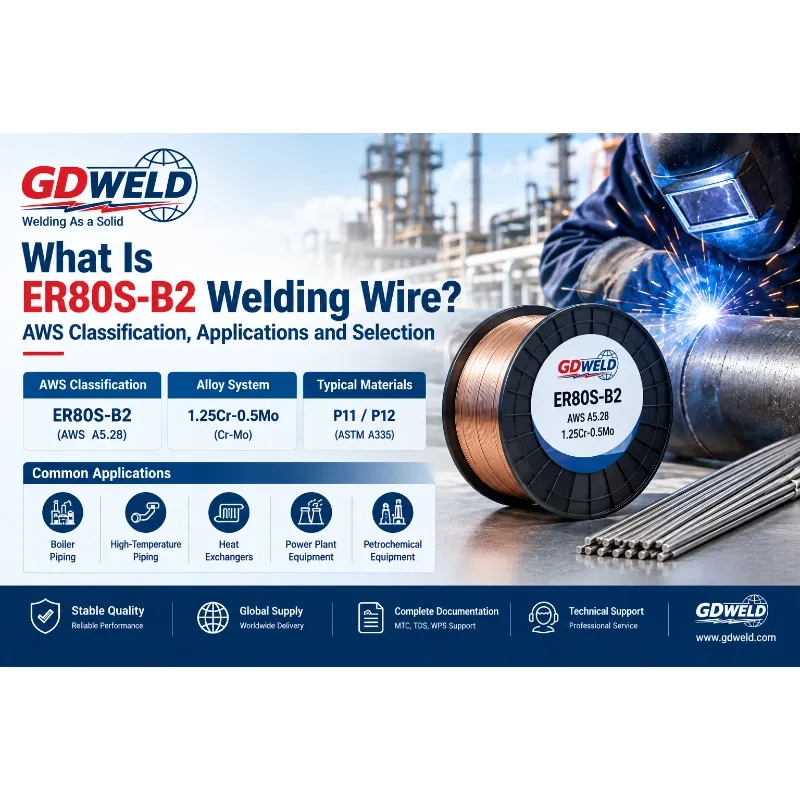
Learn what ER80S-B2 welding wire is, its AWS A5.28 classification, P11 applications, welding processes and key selection considerations.
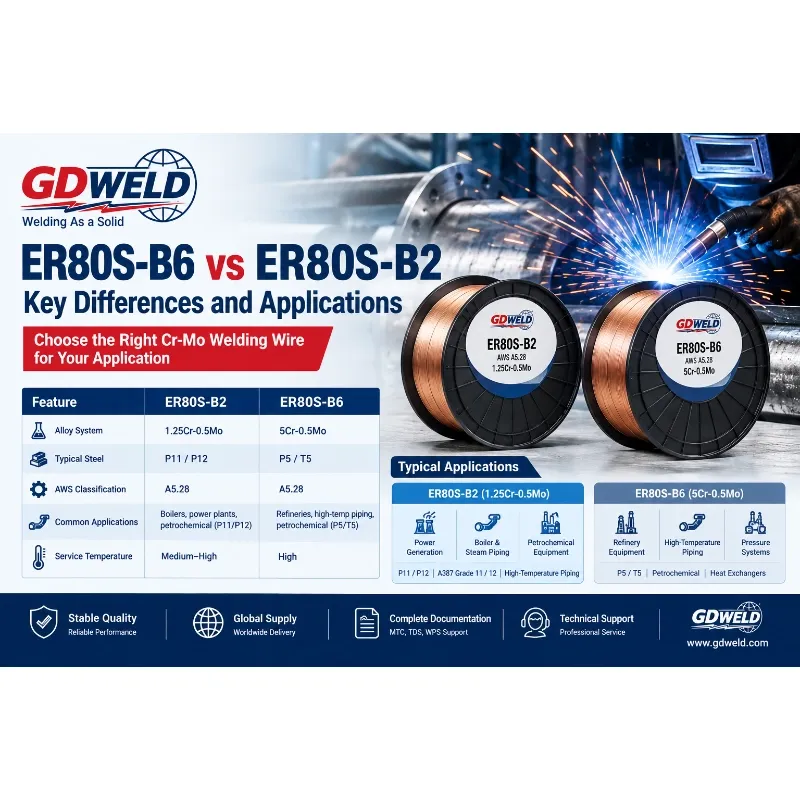
Compare ER80S-B6 vs ER80S-B2 welding wire, including Cr-Mo alloy systems, P11/P5 applications, key differences and selection considerations.
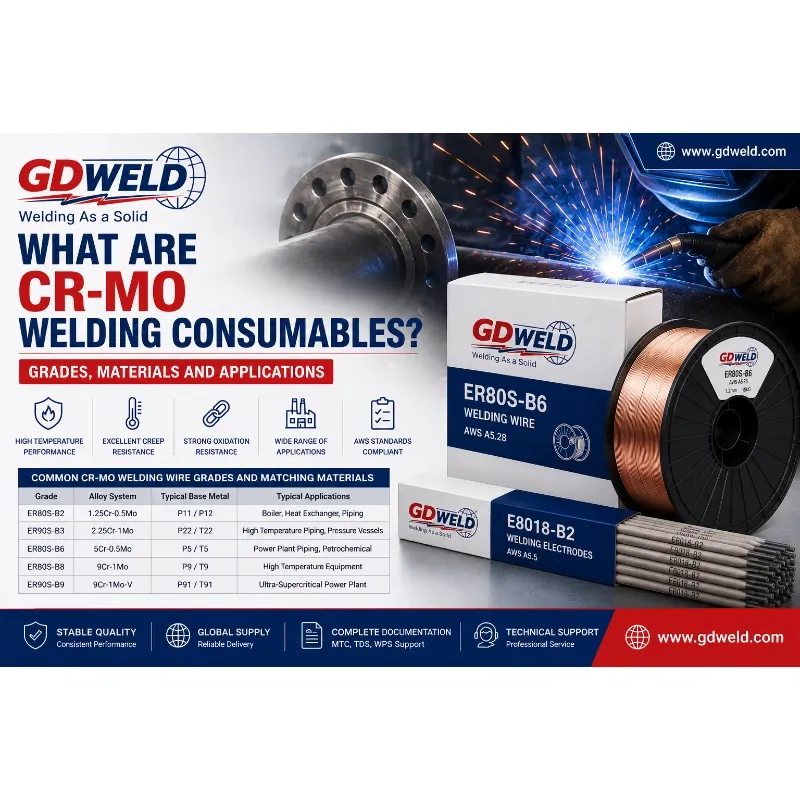
Learn about Cr-Mo welding consumables, including ER80S-B2, ER90S-B3, ER80S-B6, ER80S-B8 and ER90S-B9, with grades, materials, applications and selection tips.
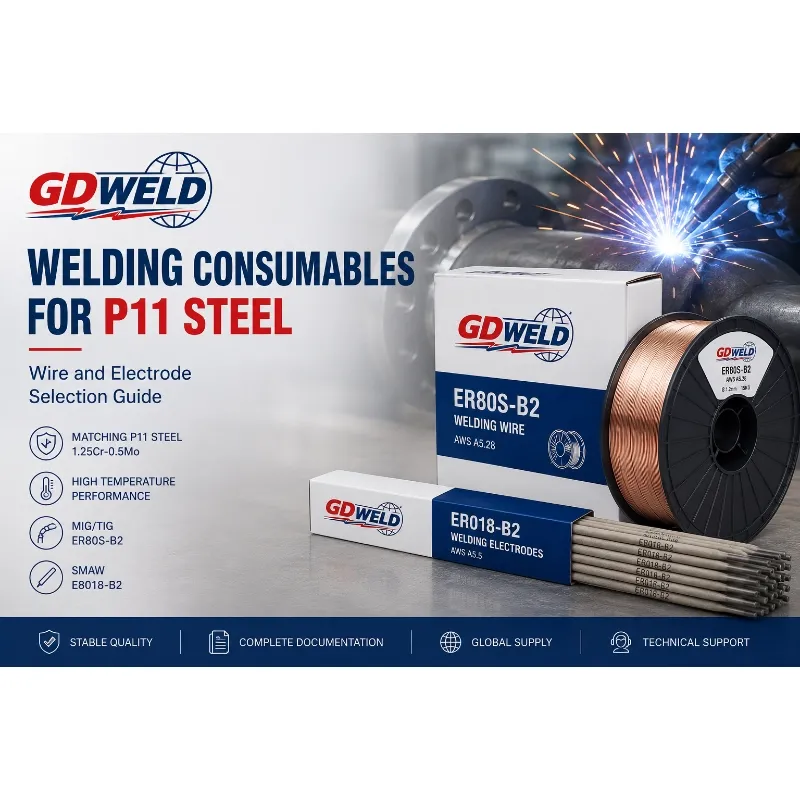
Learn which welding consumables are used for P11 steel, including ER80S-B2 wire and E8018-B2 electrodes, with selection and procurement tips.
Recommended products
Popular pieces selected to support the routines, repairs, and ideas featured in our journal.
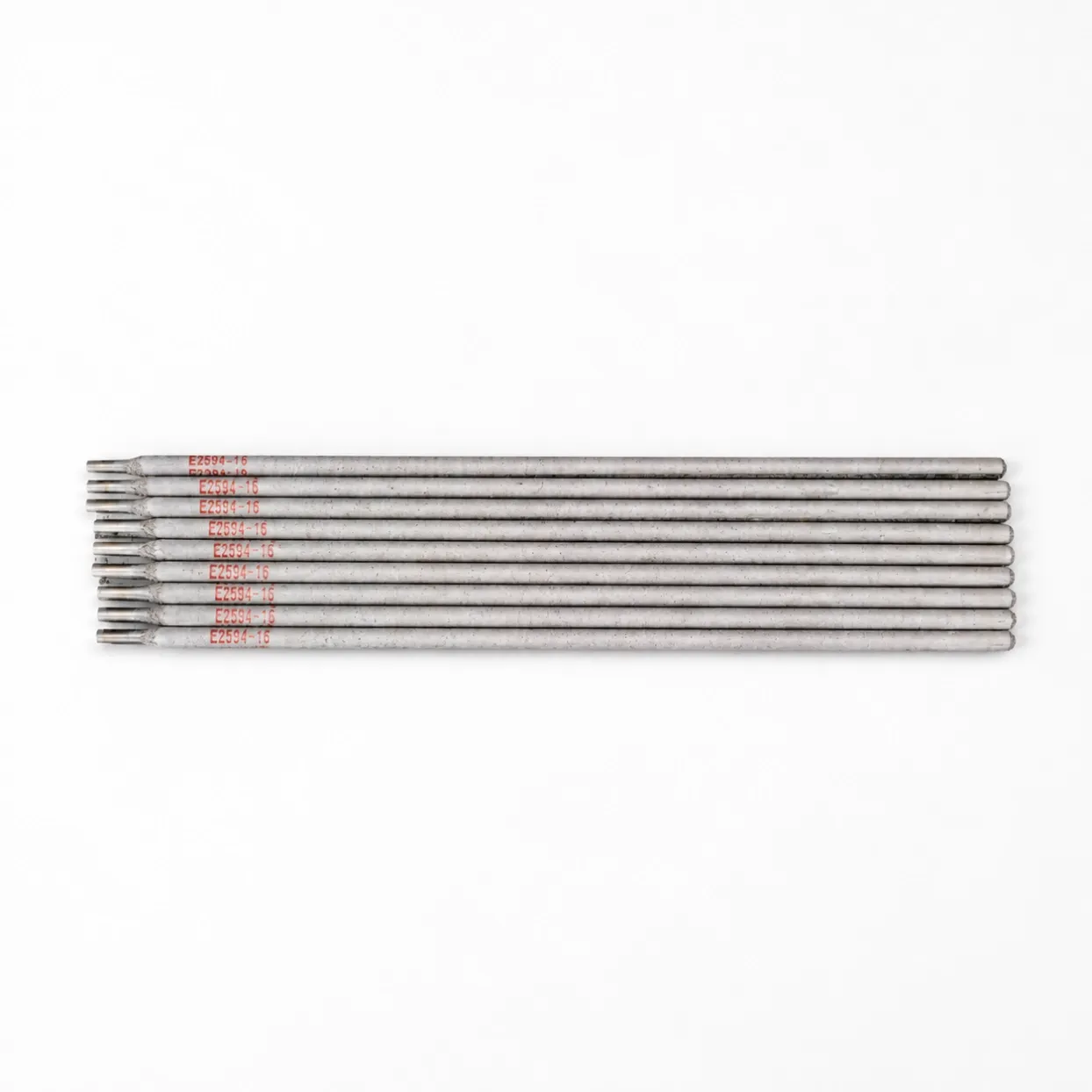
E2594-16 is a super duplex stainless steel welding electrode for SMAW applications on 2507-type materials. It provides high-strength weld metal with excellent resistance to pitting, crevice corrosion and stress corrosion cracking. It is commonly used for UNS S32750, UNS S32760 and similar super duplex stainless steels in offshore, oil & gas, seawater, chemical and pressure equipment applications.
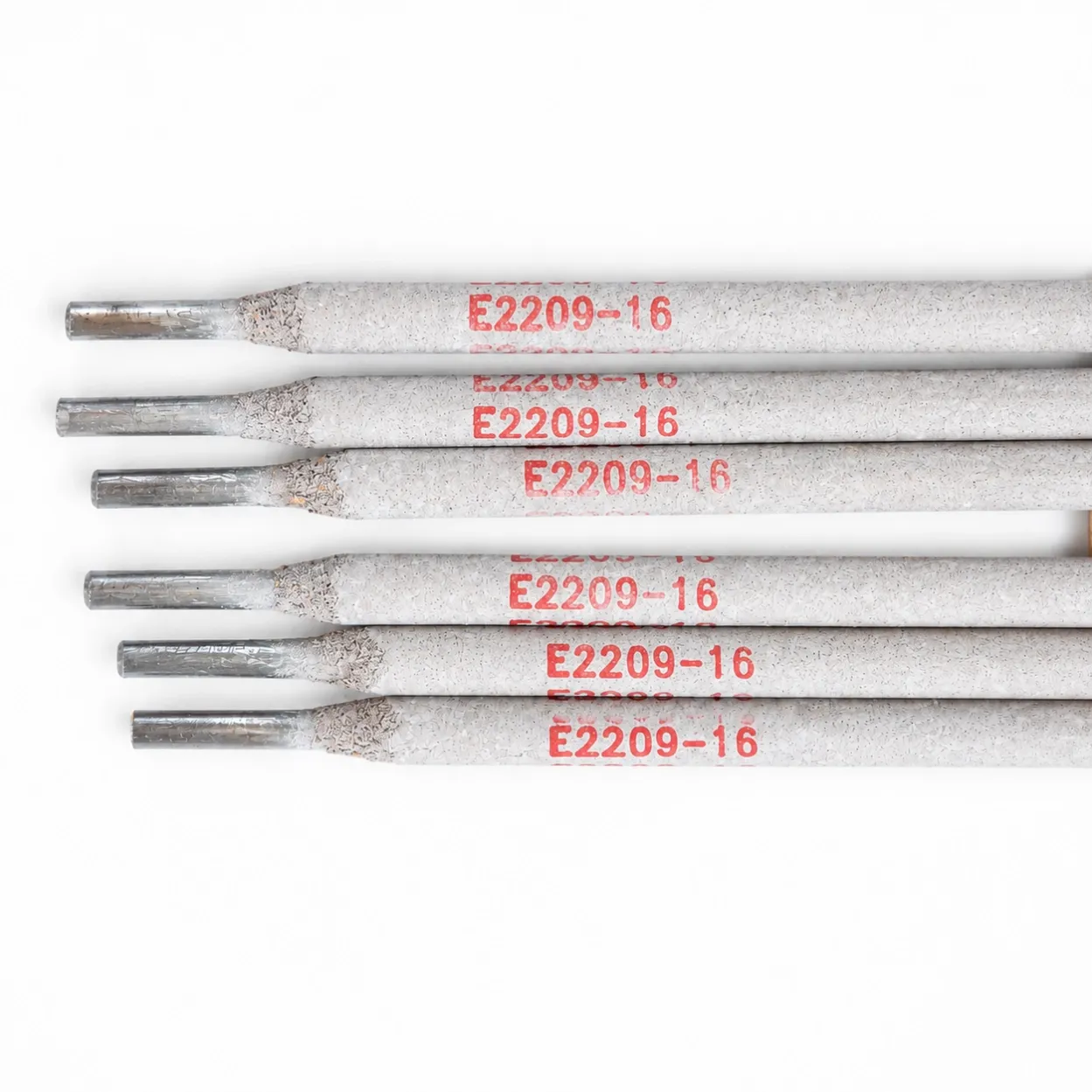
E2209-16 is a rutile-coated duplex stainless steel welding electrode classified to AWS A5.4 / ASME SFA-5.4 E2209-16. It produces ferritic-austenitic weld metal with high strength and good resistance to pitting, intergranular and stress corrosion. It is primarily used for Duplex 2205, UNS S31803, UNS S32205 and SAF 2205 in oil and gas, offshore, chemical processing, piping and marine applications.
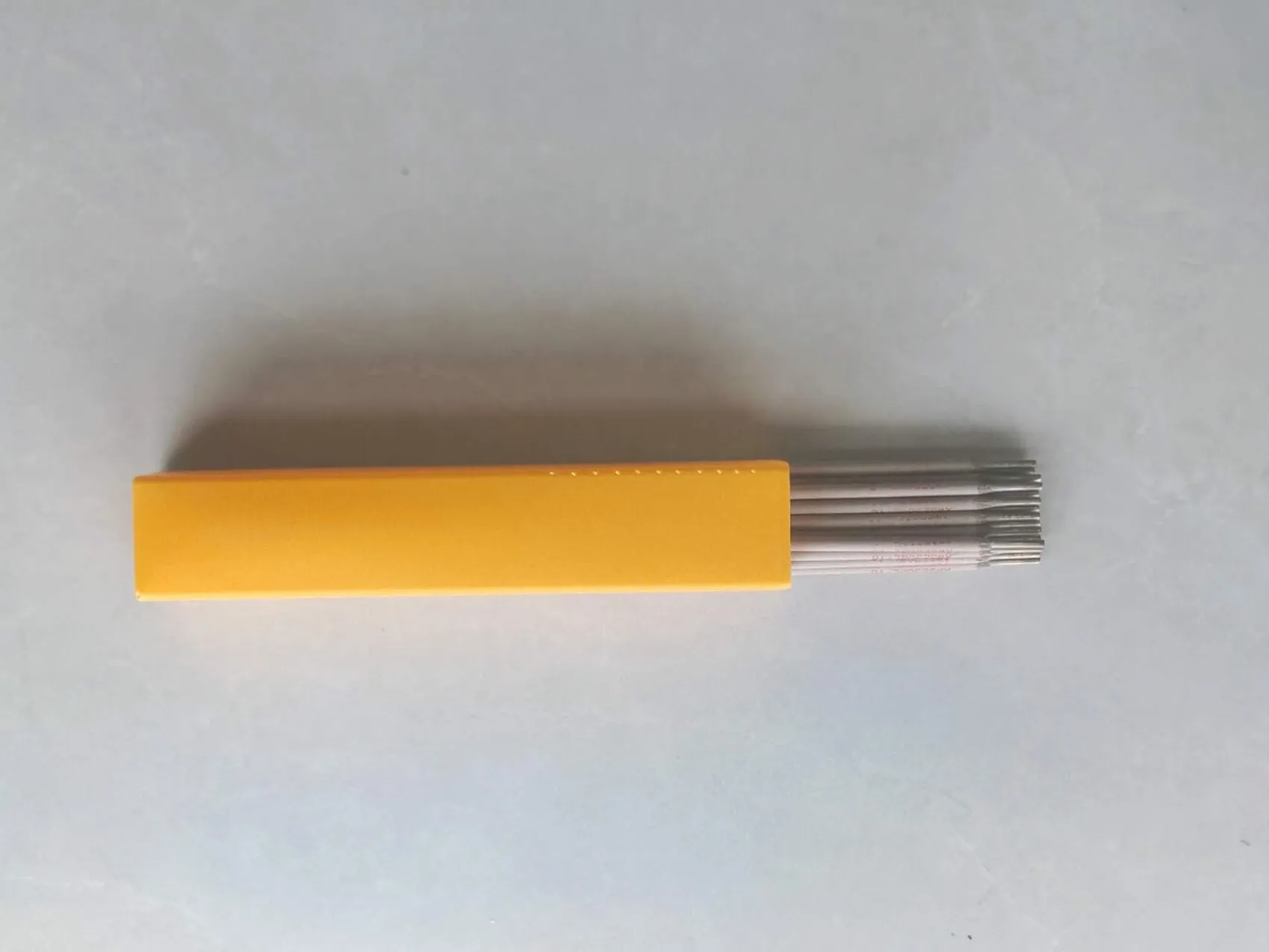
E320-16 is a high-alloy austenitic stainless steel welding electrode for severe corrosion-resistant applications. It is classified under AWS A5.4 E320-16 and GB/T 983 E320-16, and is commonly supplied as A902 E320-16. With a Cr-Ni-Mo-Cu-Nb weld metal, E320-16 is mainly used for Carpenter 20Cb, Alloy 20, and similar corrosion-resistant alloys, particularly in chemical processing and sulfuric acid service.