E6011 Vertical Up vs. Vertical Down Welding: Which Should You Use?
Can E6011 be used for vertical up and vertical down welding? Compare welding directions, applications, and key factors for choosing the right technique.
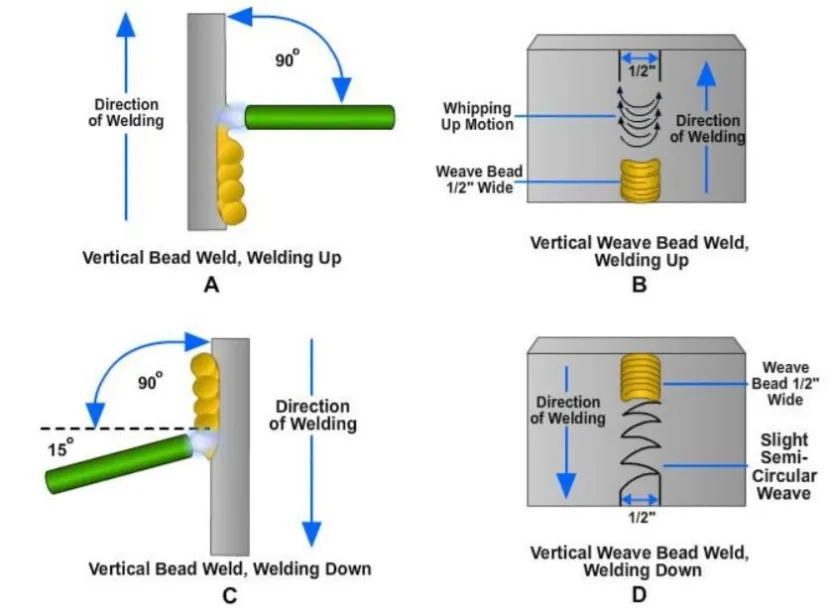
Can E6011 Be Used for Both Vertical Up and Vertical Down Welding?
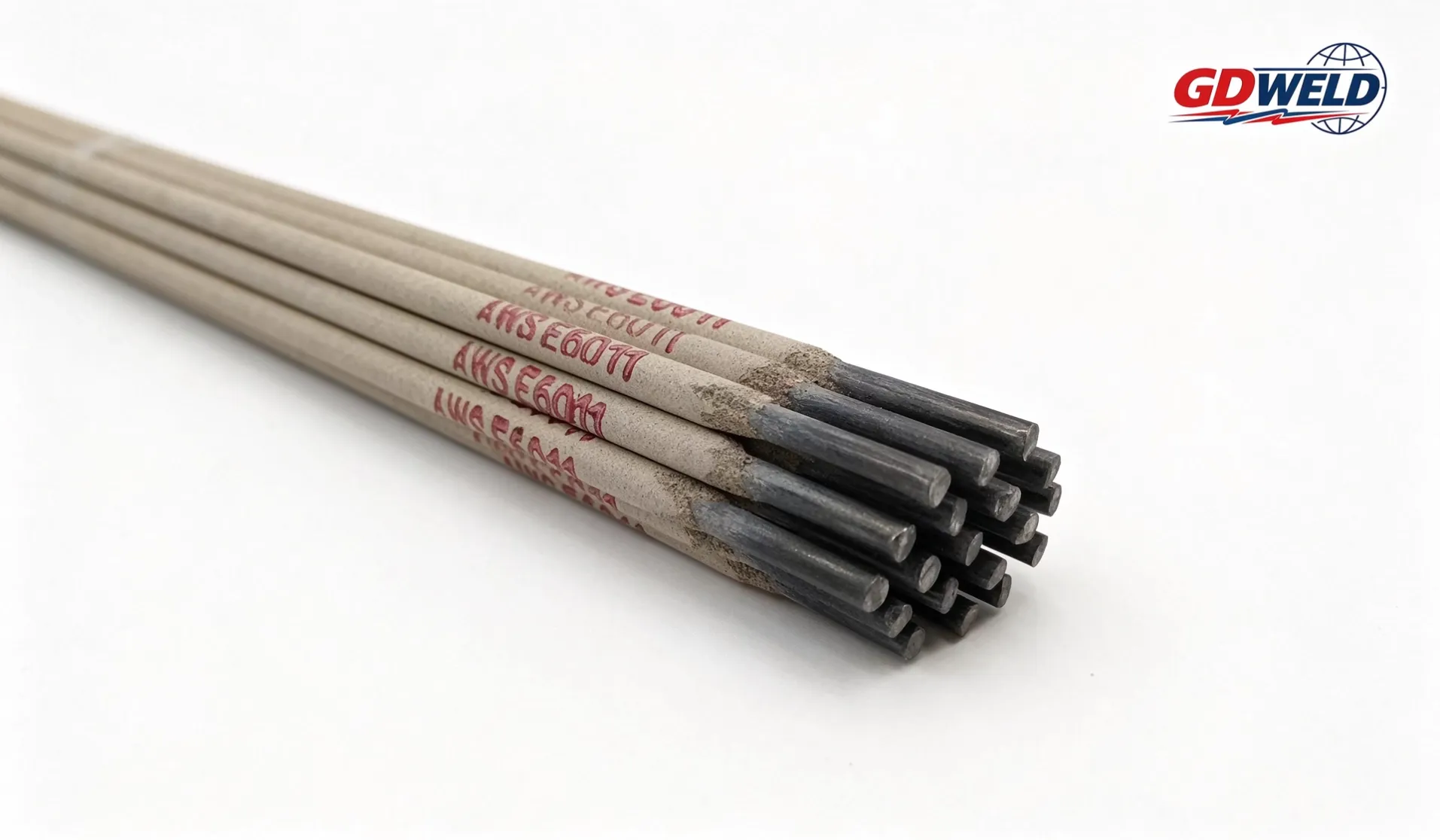
Yes. Many E6011 welding electrodes are suitable for both vertical-up and vertical-down welding. However, the correct direction depends on the electrode manufacturer's specifications, material thickness, joint design, and required weld quality.
Here is the quick difference:
- Vertical Up (3G upward progression): Welding moves from the bottom toward the top. It is commonly considered when controlled weld deposition and penetration are important.
- Vertical Down (3G downward progression): Welding moves from the top toward the bottom. It can be suitable for certain thinner materials and applications where faster travel is beneficial.
Quick selection: Consider vertical up when the welding procedure requires controlled deposition and penetration. Consider vertical down only when the electrode and approved welding procedure permit it.
1. E6011 Vertical Up Welding: When Should You Use It?
Vertical-up welding progresses from the bottom of the joint toward the top.
It is commonly used when the application requires controlled weld metal deposition and adequate fusion.
Important considerations:
- Maintain a consistent arc length.
- Control the molten weld pool throughout the weld.
- Adjust electrode movement to suit the joint and welding position.
- Avoid excessive weaving or travel speed that may affect fusion and bead appearance.
Vertical-up welding requires attention to weld pool control. The correct electrode movement and settings depend on the specific E6011 product and welding procedure.
2. E6011 Vertical Down Welding: When Is It Suitable?
Vertical-down welding progresses from the top of the joint toward the bottom.
It can be useful for suitable thin-material applications where faster travel is desirable.
Important considerations:
- Confirm that the E6011 product is approved for vertical-down welding.
- Maintain sufficient fusion throughout the joint.
- Avoid excessive travel speed.
- Follow the recommended electrode operating conditions.
Not all E6011 electrodes have identical vertical-down characteristics. Always check the manufacturer's technical data sheet before selecting this technique.
3. E6011 Vertical Up vs. Vertical Down: Key Differences
Comparison | Vertical Up | Vertical Down |
|---|---|---|
Welding direction | Bottom to top | Top to bottom |
Typical application | Applications requiring controlled deposition and penetration | Suitable thin-material applications |
Travel speed | Often slower | Often faster |
Main challenge | Weld pool control | Maintaining sufficient fusion |
Important consideration | Joint requirements and weld quality | Material thickness and electrode suitability |
Neither direction is universally better. The correct choice depends on the welding application, joint design, electrode specifications, and approved procedure.
4. What Happens If You Choose the Wrong Welding Direction?
Choosing an unsuitable welding direction can affect weld quality.
Here are some problems to watch for:
Possible problem | What may happen | What to check |
|---|---|---|
Insufficient penetration | Inadequate fusion at the joint | Travel speed, current, and joint preparation |
Excessive weld buildup | Irregular or oversized weld bead | Electrode movement and travel speed |
Undercut | Grooves along the weld toe | Current and welding technique |
Irregular weld bead | Uneven weld appearance | Arc length and travel consistency |
Slag inclusions | Slag trapped between weld passes | Slag removal and pass preparation |
These defects can have several causes. Do not assume that welding direction alone is responsible.
5. How Do You Choose the Right E6011 Welding Direction?
Before welding, consider these four factors:
1. Material thickness
Thin materials may be suitable for vertical-down welding when the electrode and welding procedure allow it. Other applications may require a different welding direction to meet penetration and quality requirements.
2. Joint design
Butt joints, fillet joints, and open-root joints have different welding requirements. Select the direction according to the joint configuration and required weld quality.
3. Electrode specifications
Check whether the specific E6011 electrode is approved for vertical-up, vertical-down, or both positions. Also confirm the recommended current type, polarity, electrode diameter, and amperage.
4. Welding procedure
For structural fabrication, pressure piping, and other critical applications, follow the approved Welding Procedure Specification (WPS) and applicable project standards. Do not select a welding direction based only on general electrode guidance.
6. What Should You Check Before Using E6011 for Vertical Welding?
Use this checklist before starting:
- Confirm the AWS E6011 electrode classification.
- Check the approved welding positions in the manufacturer's data sheet.
- Confirm AC or DC compatibility and the recommended polarity.
- Select the appropriate electrode diameter and amperage.
- Check the base material thickness and joint preparation.
- Follow the applicable WPS and project requirements.
These checks help ensure that the electrode and welding technique are suitable for the application.
Looking for E6011 Welding Electrodes?
Choosing the right E6011 electrode depends on more than its AWS classification. Welding position, material thickness, joint design, and operating requirements all influence product selection.
GD WELD supplies welding consumables for different industrial applications.
Contact us with your required AWS classification, electrode diameter, welding position, and application to discuss a suitable E6011 product.
👉 Internal Link 2: Anchor text: E6011 Welding Electrode Amperage Guide Link to: Existing E6011 amperage article