Aug 26, 2026
ER90S-B3 Welding Wire: Applications, Properties and Selection Guide
Explore ER90S-B3 welding wire for Cr-Mo steels, including applications, classification, mechanical properties, heat treatment and selection factors.
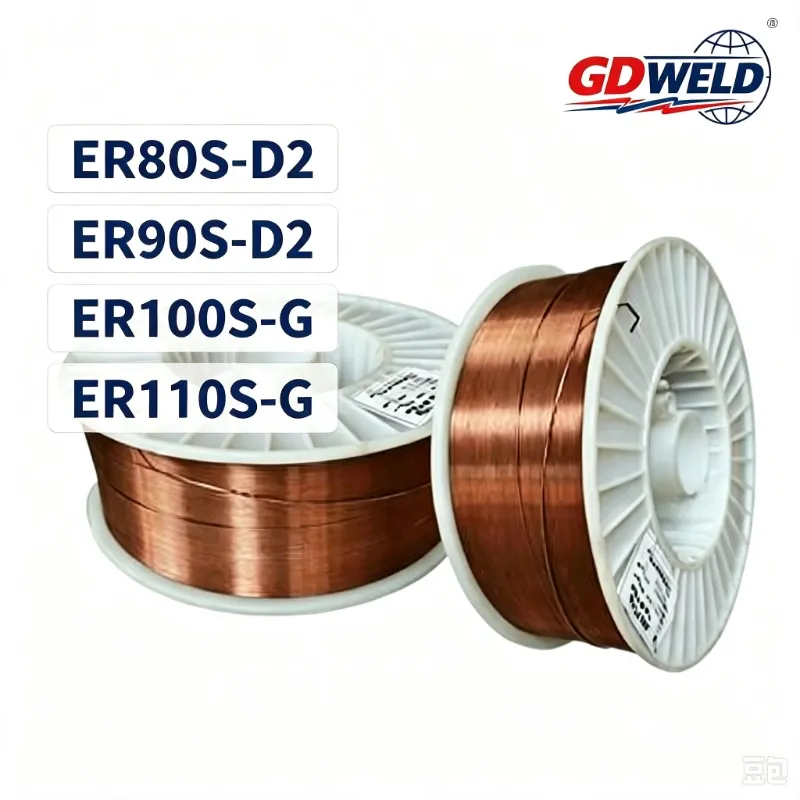
ER90S-B3 Welding Wire: Applications, Properties and Selection Guide
Introduction
ER90S-B3 is a specialty low-alloy solid welding wire classified under AWS A5.28. It is designed for welding chromium-molybdenum steels where the weld metal requires a controlled alloy composition and higher strength than many general-purpose welding wires.
For fabricators and industrial buyers, ER90S-B3 is relevant when the base material, service temperature, mechanical requirements, and post-weld heat treatment demand a specific Cr-Mo filler metal.
What Is ER90S-B3?
ER90S-B3 is a solid low-alloy welding wire associated with the Cr-Mo B3 alloy system. The classification is intended for applications requiring weld metal chemistry compatible with B3-type Cr-Mo steels.
The “90” in the classification refers to a minimum tensile strength level of approximately 90 ksi under the applicable AWS testing conditions. The exact qualification and product requirements should be verified against the applicable edition of AWS A5.28 and the manufacturer's technical documentation.
ER90S-B3 can be used in suitable gas-shielded welding processes such as GTAW or GMAW when the product and welding procedure are qualified for the application.
Typical Applications of ER90S-B3
ER90S-B3 is associated with low-alloy Cr-Mo steels used in demanding industrial environments.
Potential application areas include:
- Power generation
- Boilers and heat exchangers
- High-temperature piping
- Pressure vessels
- Petrochemical and refinery equipment
- Chemical processing equipment
- Maintenance and repair of compatible Cr-Mo components
The correct consumable should always be selected based on the actual base-metal grade and project requirements rather than application category alone.
Why Use ER90S-B3 for Cr-Mo Welding?
The principal reason is weld-metal chemistry and mechanical compatibility.
Cr-Mo steels are commonly selected for service environments where elevated temperature, pressure, or long-term mechanical performance are important. Using a compatible filler metal can help the completed joint meet the required weld-metal properties and procedure requirements.
When selecting ER90S-B3, engineers should consider:
- Base-metal chemistry
- Weld-metal chemistry
- Tensile and yield strength
- Service temperature
- Preheat and interpass control
- PWHT
- Hydrogen control
- Welding process
- Applicable code or specification
A higher-strength classification is not automatically a substitute for another Cr-Mo filler metal. Compatibility with the base material and qualified welding procedure remains essential.
ER90S-B3 Chemical Composition
ER90S-B3 belongs to the B3 Cr-Mo alloy family. Typical classification limits include approximately:
Element | Classification Requirement |
|---|---|
Carbon (C) | 0.10% max. |
Manganese (Mn) | 0.40–0.70% |
Silicon (Si) | 0.50% max. |
Chromium (Cr) | 2.30–3.30% |
Molybdenum (Mo) | 0.90–1.20% |
Nickel (Ni) | 0.60% max. |
Phosphorus (P) | 0.025% max. |
Sulfur (S) | 0.025% max. |
Copper (Cu) | 0.35% max. |
Actual chemistry should be checked against the current product certificate and the applicable AWS classification.
Mechanical Properties
ER90S-B3 is intended to provide a higher weld-metal strength level than ER80S-class consumables under the applicable AWS classification requirements.
Typical minimum classification values are approximately:
- Tensile strength: 620 MPa (90 ksi)
- Yield strength: 530 MPa (77 ksi)
- Elongation: 17%
Actual test results depend on the welding process, shielding gas, heat treatment, test temperature, and procedure.
For critical projects, the required mechanical properties should be confirmed through the applicable standard and qualified WPS/PQR.
Preheat, Interpass Temperature and PWHT
Cr-Mo welding requires careful thermal control.
Depending on the base-metal grade, thickness, welding process, applicable code, and service conditions, the welding procedure may specify:
- Minimum preheat temperature
- Maximum interpass temperature
- Controlled heat input
- Hydrogen-control measures
- Post-weld heat treatment
PWHT can be particularly important for Cr-Mo fabrication because the final weldment may require controlled microstructure and stress relief.
The exact thermal cycle should come from the qualified welding procedure and applicable project code. A general temperature recommendation should not replace a WPS.
ER90S-B3 vs. ER80S-B3
ER90S-B3 and ER80S-B3 share a B3 Cr-Mo alloy family, but they have different strength classifications.
The key distinction is the required weld-metal strength level.
Factor | ER80S-B3 | ER90S-B3 |
|---|---|---|
Alloy family | B3 Cr-Mo | B3 Cr-Mo |
Strength classification | 80 ksi class | 90 ksi class |
Primary selection factor | Required weld-metal properties | Higher required weld-metal strength |
Interchangeability | Not automatic | Not automatic |
The choice should be based on the base material, design requirements, qualified welding procedure, service conditions, and applicable code.
ER90S-B3 vs. ER80S-B6
ER90S-B3 and ER80S-B6 are both specialty Cr-Mo welding wires, but their alloy systems are different.
ER90S-B3 is associated with the B3 Cr-Mo system, while ER80S-B6 is associated with the higher-chromium B6 system.
This means they should not be selected solely by tensile strength. The required weld-metal chemistry must match the base material and service requirements.
When comparing these grades, review:
- Base-metal specification
- Chromium and molybdenum requirements
- Required weld-metal strength
- Service temperature
- PWHT
- Welding code and project specification
How to Purchase ER90S-B3
For a specialty welding consumable such as ER90S-B3, purchasing teams should provide technical information before requesting a quotation.
Useful information includes:
- Required AWS classification
- Base-metal grade
- Wire diameter
- Welding process
- Shielding gas
- Application
- Mechanical requirements
- PWHT requirements
- Required certification
- Quantity and packaging
- Destination country
This allows the supplier to confirm product suitability and documentation before production or shipment.
Why ER90S-B3 Fits a Specialty Welding Strategy
ER90S-B3 is not a general-purpose high-volume welding wire. It is selected for a specific Cr-Mo alloy family and demanding industrial applications.
That makes it relevant to buyers who need application-specific or less-common welding consumables rather than standard products selected mainly by price.
GD WELD focuses on specialty welding consumables for demanding applications, including low-alloy and high-strength welding wires and electrodes.
Conclusion
ER90S-B3 is a specialty Cr-Mo welding wire intended for applications requiring a B3-type weld-metal chemistry and a higher strength classification.
The correct selection should be based on the base-metal grade, weld-metal chemistry, mechanical requirements, service temperature, thermal treatment, qualified welding procedure, and applicable standards.
GD WELD supports international buyers looking for specialty welding consumables with specific classifications, dimensions, technical requirements, and documentation.
Looking for ER90S-B3 or another specialty Cr-Mo welding wire? Contact GD WELD with your application and required specification.