Oct 9, 2026
Why Is Higher-Strength Welding Wire Not Always Better? What Should I Check?
Is higher-strength welding wire always better for high-strength steel? What should you check before upgrading filler metal?
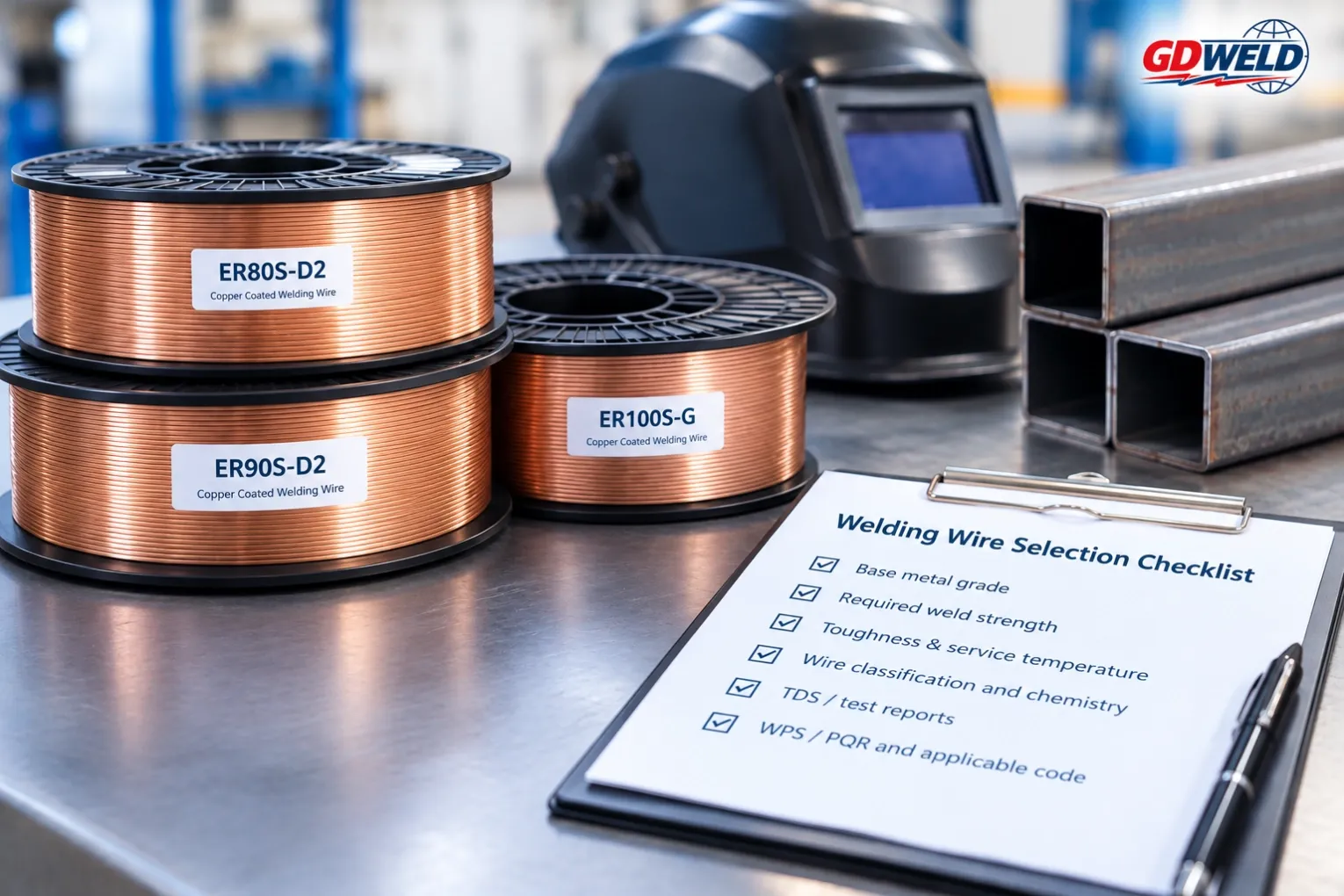
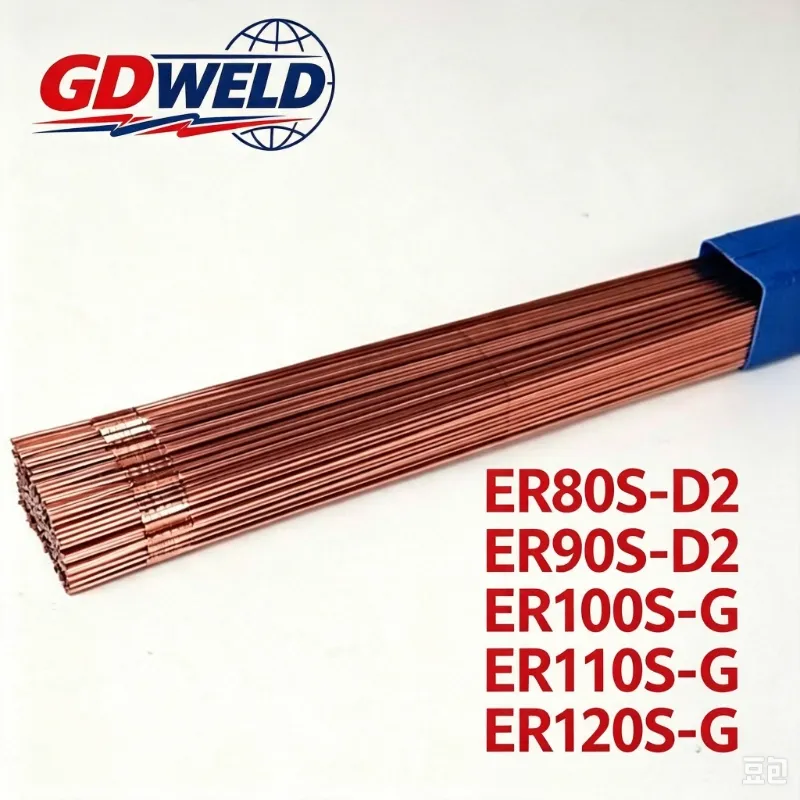
Are you considering a stronger welding wire because you are worried that your weld may not meet strength requirements? Before replacing ER80S-D2 with ER90S-D2, ER100S-G or ER110S-G, check the base metal, required weld properties and qualified welding procedure. Higher weld-metal strength does not automatically mean better weld performance.
1. Can Stronger Welding Wire Cause a Strength Mismatch?
Choosing a higher-strength wire may seem like a safe way to improve weld performance. However, the filler metal must meet the actual requirements of the joint.
Unnecessarily high weld-metal strength can create a mismatch between the weld metal and base metal. It may also make it harder to satisfy other requirements, including toughness and ductility.
The correct objective is to meet the specified mechanical properties—not to maximize strength without a technical reason.
2. Check the Base-Metal Grade First
Before changing welding wire, identify the exact base-metal grade and material specification.
High-strength low-alloy (HSLA) steels and other low-alloy steels have different mechanical properties and welding requirements. The term “high-strength steel” alone is not enough to determine the correct filler metal.
Check:
- Base-metal grade and specification
- Required weld-metal strength
- Service conditions and project requirements
- Applicable welding code and WPS/PQR
If you are concerned about strength mismatch, read our guide to avoiding strength-mismatch risk in HSLA steel welding.
3. Does Your Application Actually Need a Stronger Wire?
ER80S-D2, ER90S-D2, ER100S-G and ER110S-G represent different weld-metal strength classifications. They should not be treated as interchangeable simply because their strength levels differ.
Before upgrading, ask:
- Does the design require higher weld-metal strength?
- Does the existing wire meet the specified properties?
- Does the project specification require a different classification?
- Is the replacement permitted by the qualified welding procedure?
If the existing wire meets all requirements, changing to a higher-strength classification may offer no practical benefit.
For a direct model comparison, see our guide to choosing between ER80S-D2, ER90S-D2, ER100S-G and ER110S-G.
4. Check Toughness and Service Temperature
Tensile strength is only one part of weld performance. For low-temperature or impact-critical applications, check:
- Required Charpy impact energy
- Minimum service temperature
- Specified mechanical properties
- Heat input and post-weld heat treatment (PWHT) requirements
A higher-strength classification does not automatically provide better impact toughness. Review the relevant test data and confirm that the required properties can be achieved under the applicable welding procedure.
5. What Should You Check Before Ordering?
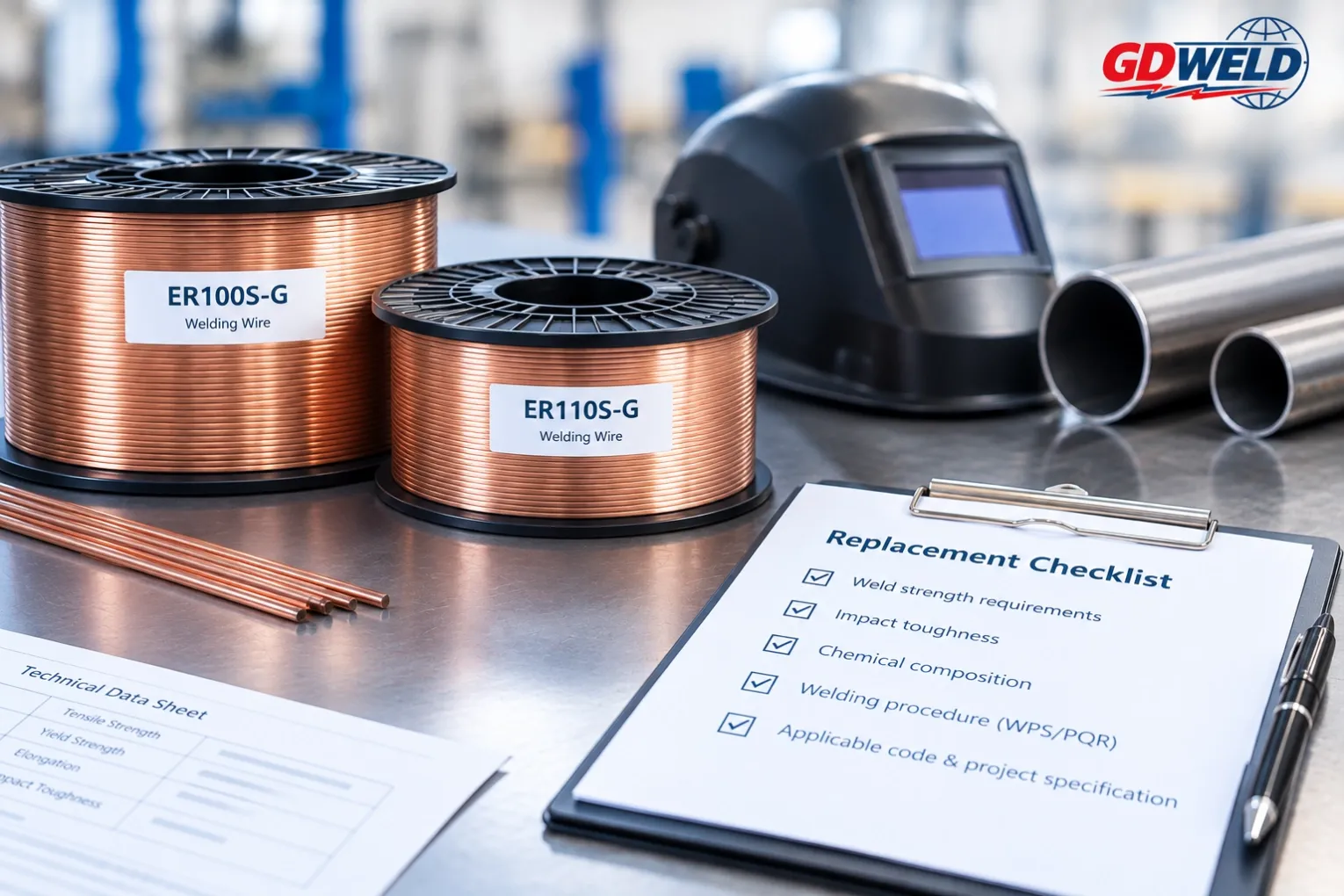
Use this checklist before approving a change to higher-strength welding wire.
Check | Why It Matters |
|---|---|
Base-metal grade | Establishes material requirements |
Required weld strength | Determines the necessary strength level |
Toughness requirements | Confirms suitability for service conditions |
Classification and chemistry | Supports specification compliance |
TDS and test reports | Provide technical evidence |
WPS/PQR and applicable code | Confirm whether the change is permitted |
For ER100S-G and ER110S-G, check the manufacturer's actual chemical composition and mechanical test data. The G classification alone does not establish one fixed alloy chemistry.
A change in filler metal may require technical review or procedure requalification, depending on the applicable code and the nature of the change.
Frequently Asked Questions
Is Higher-Strength Welding Wire Better for High-Strength Steel?
Not necessarily. The wire must meet the required strength, toughness, material compatibility and welding procedure requirements. A higher classification is appropriate only when the application justifies it.
Can I Replace ER80S-D2 with ER100S-G?
Not automatically. Confirm the base-metal grade, required weld properties, project specification and WPS/PQR before changing consumables.
Bottom Line
Higher-strength welding wire is not automatically the best choice for high-strength steel. Before upgrading from ER80S-D2 to ER90S-D2, ER100S-G or ER110S-G, confirm the base-metal grade, required properties, service conditions and qualified welding procedure.
Choose the wire that meets the complete technical requirements—not simply the one with the highest strength classification.