Aug 10, 2026
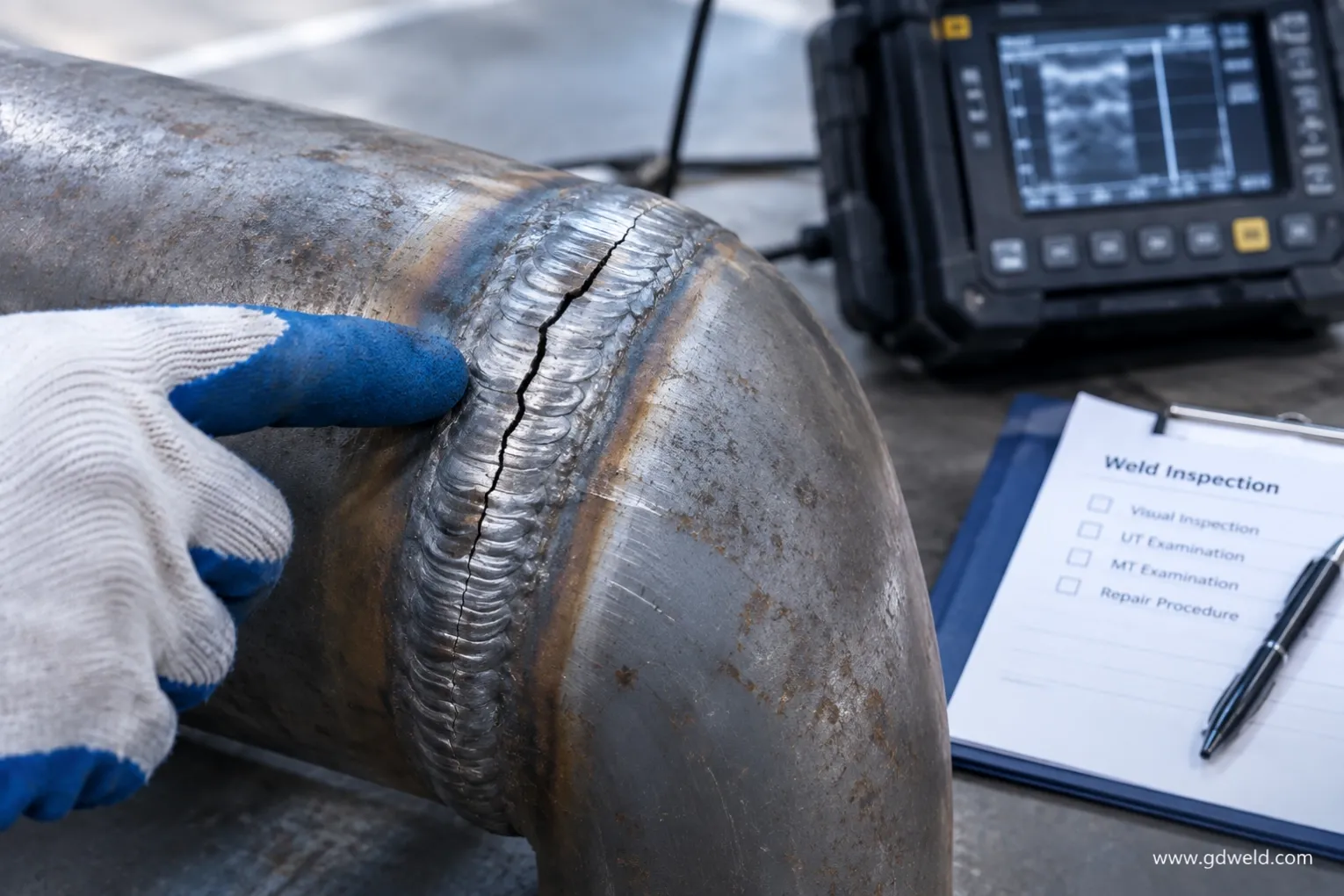
What causes delayed cold cracking on high-strength steel solid wire joints?
High-strength wires (ER80S-G etc.) look fine post-weld, but cracks appear hours later due to martensite + hydrogen + stress in thick parts. GD-WELD controls impurities to cut crack risk.
What causes delayed cold cracking on high-strength steel solid wire joints?
Many fabricators face hidden failure: weld passes look perfect right after welding, yet cracks appear hours or days later when using HSLA solid wires such as ER80S-D2, ER90S-D2, ER100S-G and ER110S-G.
Why it happens:
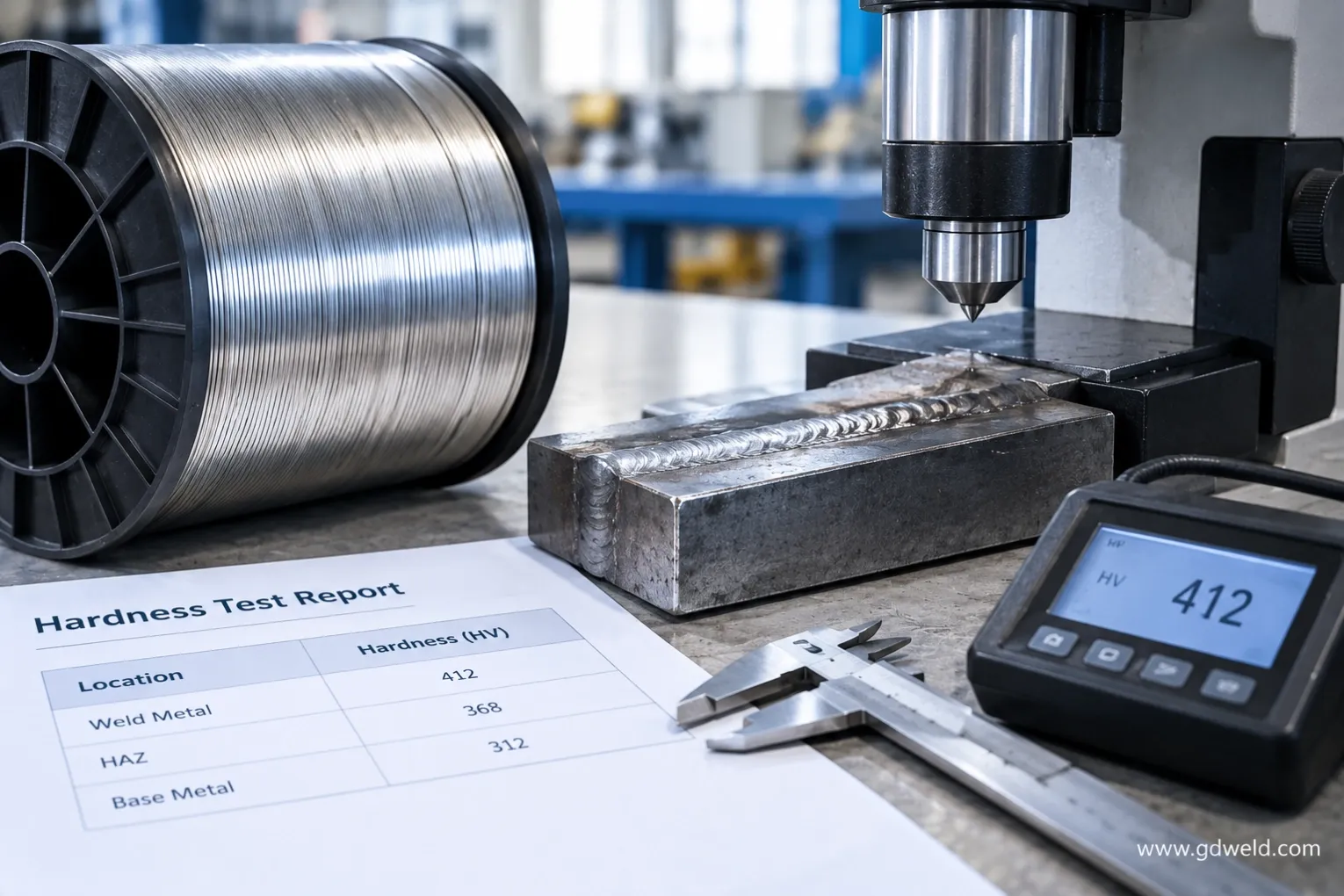
These high-strength grades produce hard martensitic microstructure. Even tiny trapped hydrogen plus high residual stress triggers hydrogen-induced cold cracks. This risk is very common for Q550, Q620, Q690 and Q890 heavy-section components. Low-quality wires with poor impurity control greatly amplify this risk.
How to avoid it:
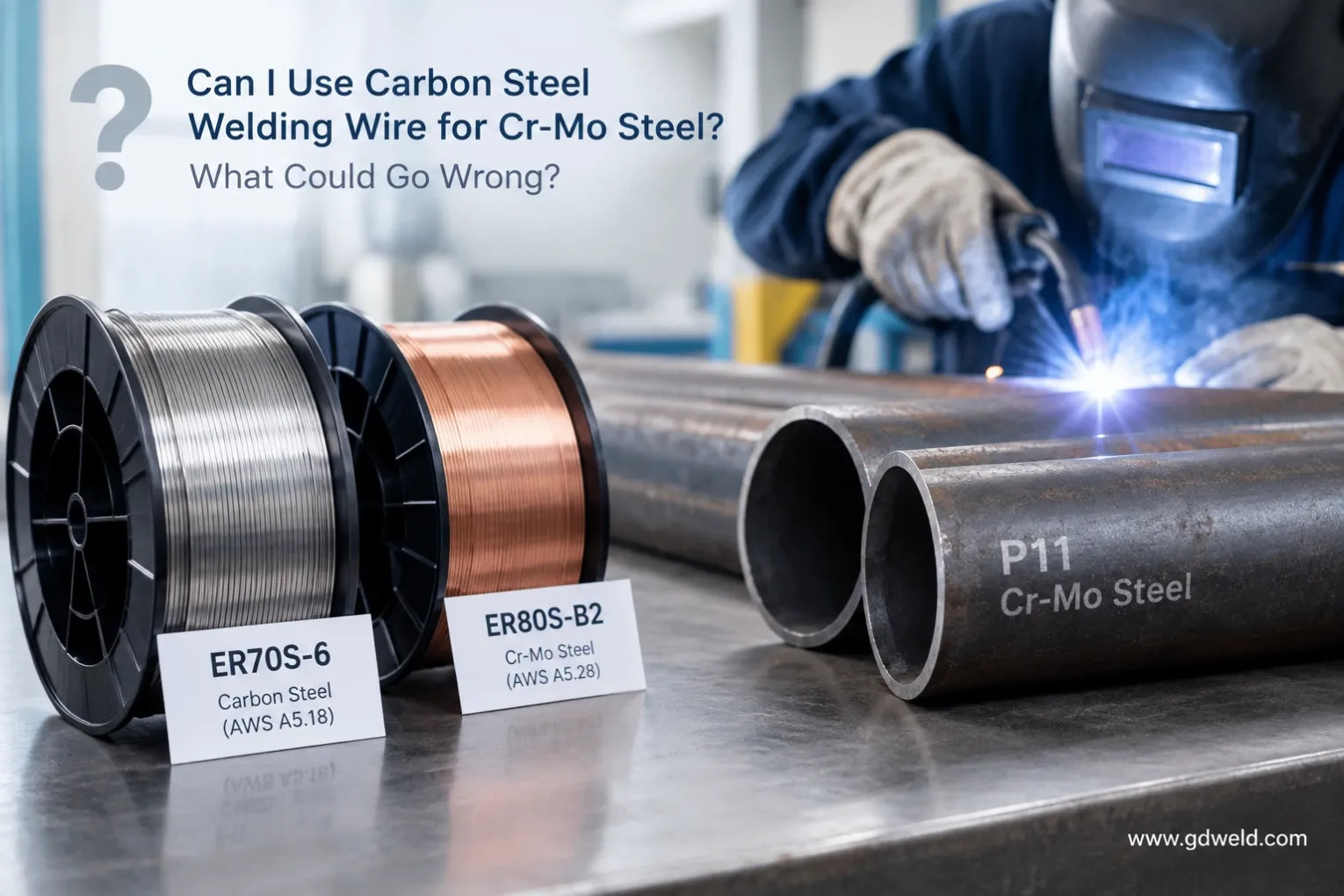
1. Choose low-diffusion-hydrogen solid wires like GD-WELD ER80S-D2, ER90S-D2, ER100S-G, ER110S-G
2. Apply correct preheat & interpass temperature
3. Fully clean joint surfaces from moisture, rust and oil
4. Apply post-heat for thick high-restraint assemblies
Our GD-WELD high-strength solid wire series strictly controls trace elements to reduce crack sensitivity for heavy-duty machinery.
Question: Do you encounter delayed cold-crack issues when welding with ER100S-G / ER110S-G? Drop your comment below. Reach out for datasheets, samples and quotations.