Aug 18, 2026
What Happens If You Apply Too-High Heat Input on High-Strength Solid Wire Welds
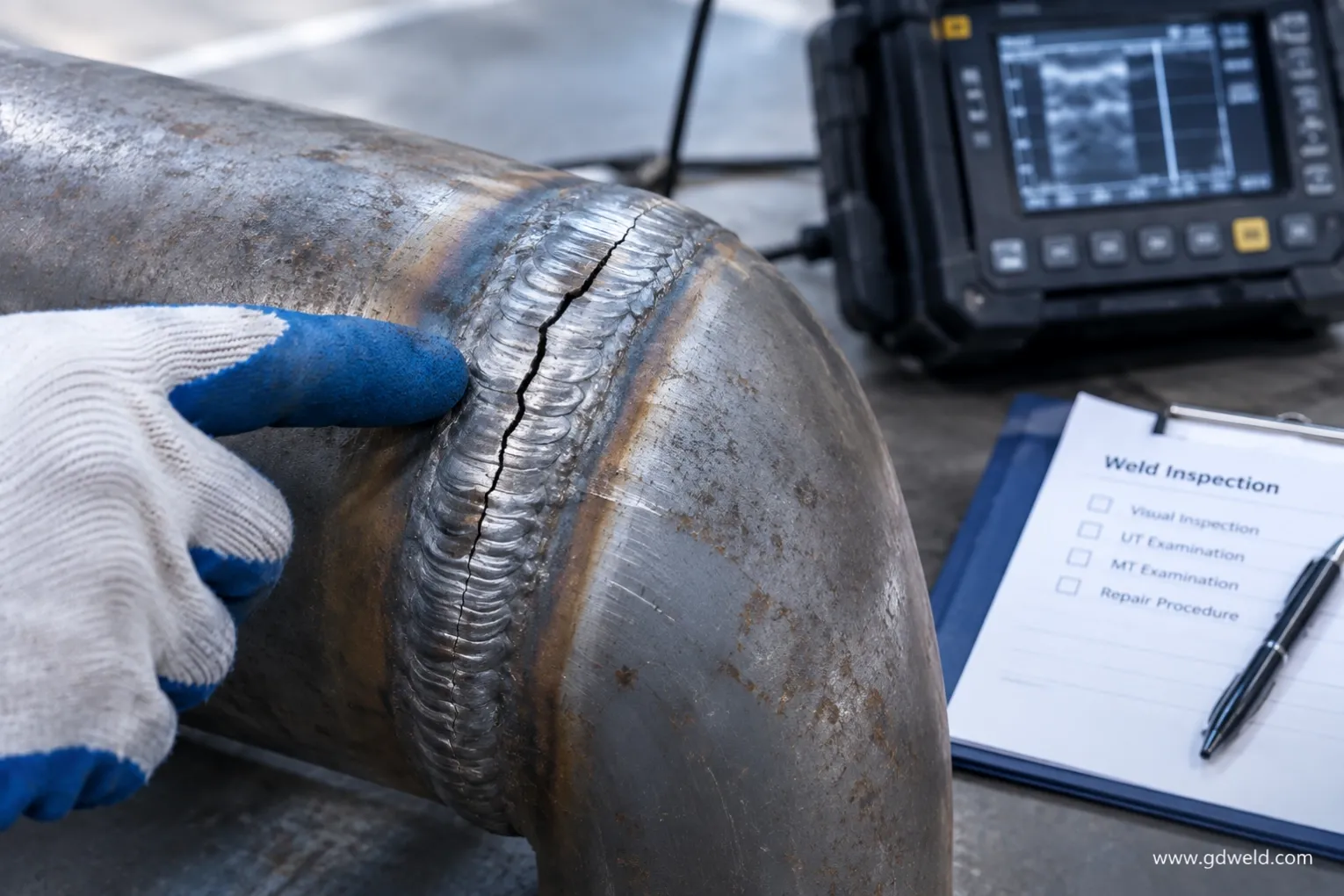
ER80S-D2 / ER100S-G welds with high heat input pass tensile but fail low-temperature impact. Learn how grain coarsening causes brittle fracture risk in cranes and mining equipment.
What Happens If You Apply Too-High Heat Input on High-Strength Solid Wire Welds
The Hidden Problem: Higher Productivity = Higher Risk
Production pressure is real. Deadlines loom. The natural instinct is to increase welding current and voltage to lay down more metal faster.
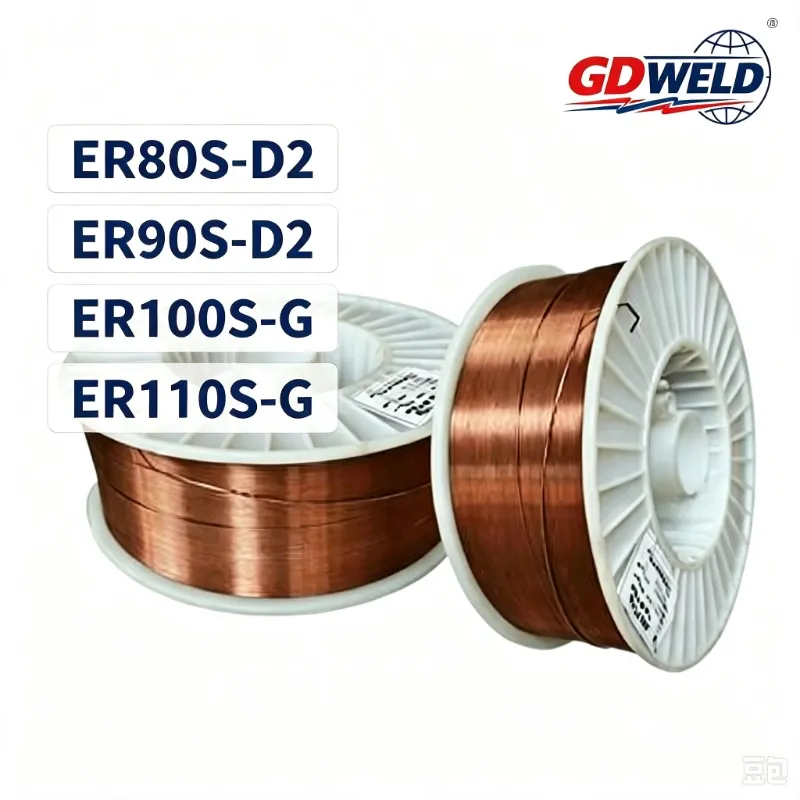
For many fabricators using high-strength solid wires like ER80S-D2, ER90S-D2, ER100S-G, and ER110S-G, this is a dangerous trap.
The weld looks fine. The tensile test passes. The joint appears sound. But invisible damage has been done — damage that will only reveal itself under low-temperature dynamic loading.
Excessive heat input is the hidden killer of high-strength weld integrity.
What Excessive Heat Input Does to Weld Metal
Heat input is the amount of thermal energy delivered to the weld per unit length. It is calculated as:
Heat Input (kJ/mm) = (Voltage × Current × 60) / (Travel Speed × 1000)
When voltage, current, or both are increased — or travel speed is decreased — heat input rises. This extra heat has a direct metallurgical consequence:
Grain coarsening.
The weld metal and heat-affected zone (HAZ) are heated to high temperatures and cooled. With excessive heat input, the cooling rate slows. This allows grains to grow larger than they should.
The result is a microstructure that is coarser — and therefore less tough — than the same weld produced with correct heat input.
Property | Normal Heat Input | Excessive Heat Input |
|---|---|---|
Grain size | Fine, equiaxed | Coarse, columnar |
Toughness | High | Reduced significantly |
Crack resistance | Good | Poor |
Low-temperature impact | Passes | Fails |
The Deception: Tensile Passes — But Impact Fails
This is the most dangerous aspect of excessive heat input: tensile tests may still pass.
The weld metal may have sufficient static strength. A tensile test measures load-bearing capacity under slow, steady loading. Coarse grains do not necessarily reduce this.
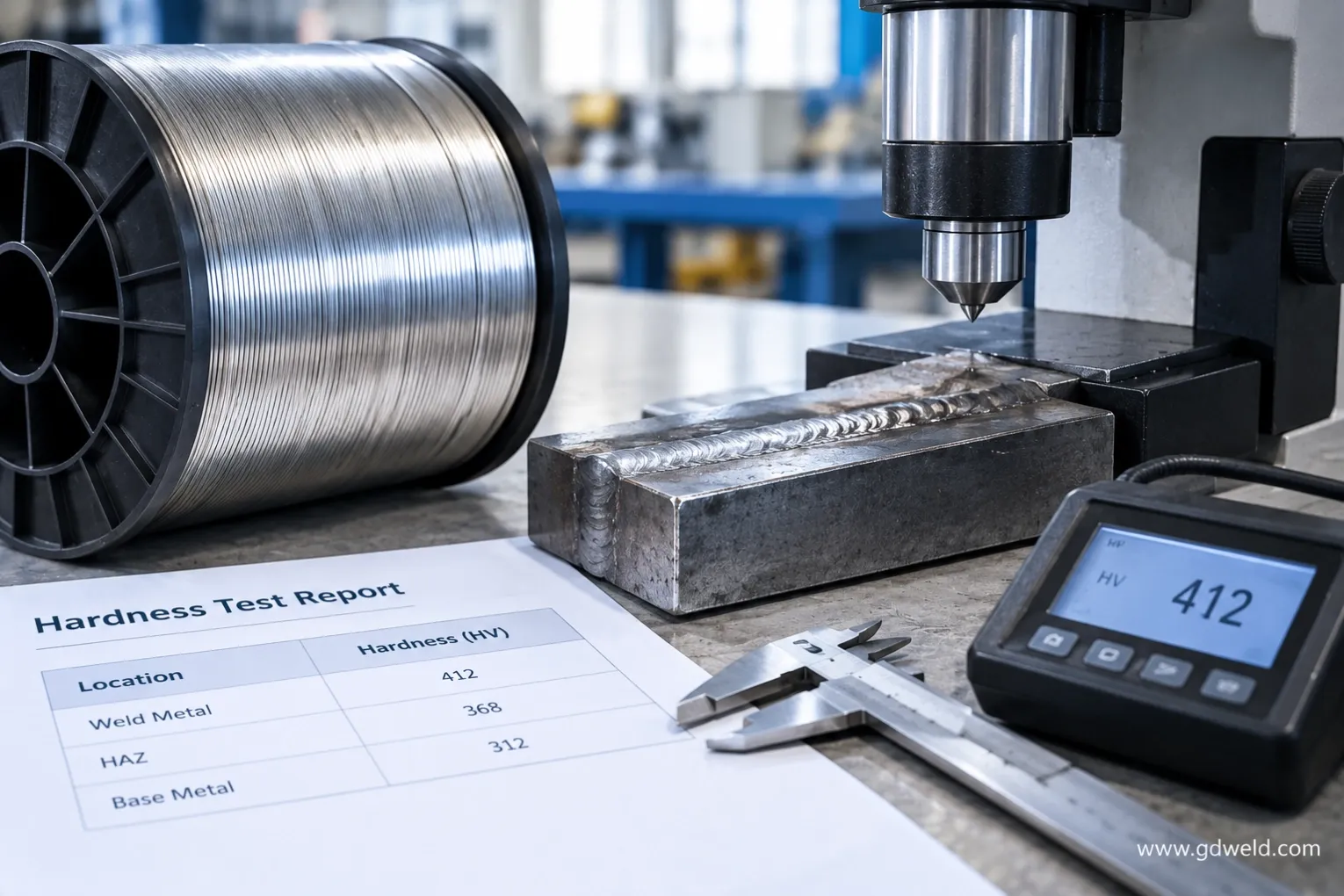
But a Charpy impact test tells a different story. Under dynamic loading at low temperatures, coarse-grained welds fracture easily. The impact energy absorption drops dramatically — sometimes by 50% or more.
Consider this real-world scenario:
Test | Normal Weld | High-Heat-Input Weld |
|---|---|---|
Tensile strength | 780 MPa ✓ | 760 MPa ✓ (still meets spec) |
-40°C Charpy | 65 J ✓ | 32 J ✗ (fails requirement) |
The weld meets the tensile specification. But it fails the impact requirement. If only tensile testing is performed, the defect goes undetected — until the weld fails in service.
Real-World Cost: Brittle Fracture in Dynamic Components
The consequences of grain coarsening are not theoretical. They show up in critical applications:
- Cranes and hoists — lifting equipment experiences shock loads and cold-weather operation
- Mining machinery — heavy dynamic loads in harsh environments
- Offshore structures — fatigue and low-temperature toughness are mandatory requirements
- Construction equipment — ground-engaging tools and structural arms face repeated impact
A brittle fracture in any of these applications is catastrophic. It means:
Consequence | Impact |
|---|---|
Safety incidents | Injury or loss of life from sudden failure |
Equipment loss | Entire crane or machine rendered inoperable |
Liability | Legal exposure for product failure |
Reputation damage | Long-term loss of customer trust |
No productivity gain justifies this risk.
How to Control Heat Input Correctly
1. Follow Qualified WPS Strictly
The welding procedure specification (WPS) is not a suggestion. It is a qualified, tested, and validated set of parameters.
- Do not increase current or voltage without re-qualification
- Do not slow travel speed to increase deposition rate
- Do not assume that "a little more" is harmless
If you need higher productivity, qualify a new WPS with the higher parameters — and confirm that all mechanical properties (including impact) still meet requirements.
2. Control Interpass Temperature
Interpass temperature is the temperature of the weld zone between passes. It directly affects heat accumulation.
- Stay within the specified interpass temperature range — typically 100-200°C for high-strength steels
- Allow cooling between passes when necessary
- Monitor temperature with proper equipment (contact pyrometer or infrared thermometer)
Too high interpass temperature means the base metal never cools sufficiently. Each pass adds more heat, compounding grain growth in the HAZ.
3. Use Multi-Layer Multi-Pass Welding Instead of Single-Pass Heavy Welding
For thick plates, the temptation is to use a single, heavy pass to fill the joint quickly.
Resist this temptation.
Multiple smaller passes are better than one large pass. Here is why:
- Finer grain structure — each pass refines the previous pass's grain structure
- Lower heat input per pass — less total energy into the joint
- Better toughness — the overall HAZ is smaller and better controlled
- Reduced residual stress — less distortion and cracking risk
In many cases, multiple passes with controlled heat input actually produce better properties than a single heavy pass — despite taking longer to weld.
Why High-Strength Solid Wires Are More Sensitive
Not all wire grades respond the same way to heat input. High-strength solid wires like ER80S-D2, ER90S-D2, ER100S-G, and ER110S-G are more sensitive to heat input variation.
Why?
- Alloy-rich chemistry — higher alloy content means more precise thermal cycles are required to achieve the desired microstructure
- Quenched-and-tempered base metals — these materials have specific heat input limits to avoid degrading the HAZ
- Acicular ferrite formation — this desired microstructure requires specific cooling rates; too slow (from high heat input) and ferrite forms instead
The margin for error is smaller. What works for ER70S-6 may not work for ER100S-G.
GD-WELD high-strength solid wires are professionally formulated with stable alloy ratios, maintaining excellent mechanical properties within the standard heat input window. But even the best wire cannot compensate for abusive welding parameters.
Get Professional Welding Guidance
Heat input control is not optional for high-strength welding. It is a requirement.
GD-WELD offers more than just high-quality wires — we provide professional welding guidance to help you get the best results from our products.
- ER80S-D2, ER90S-D2, ER100S-G, ER110S-G — full range
- Qualified welding procedure recommendations
- Technical support for parameter optimization
- Batch-to-batch consistency for reliable performance
Contact our technical team for guidance on your specific application.
FAQs
Q: What is considered "excessive" heat input for ER100S-G?
A: While specific limits depend on application, most specifications recommend heat input below 1.5-2.0 kJ/mm for high-strength solid wires. Your WPS should define the specific limit for your application.
Q: Can tensile tests detect the damage from high heat input?
A: Not reliably. Tensile tests measure static strength, which may still be acceptable even after grain coarsening. Low-temperature impact testing (Charpy V-notch) is required to detect this type of damage.
Q: Why does grain coarsening reduce impact toughness?
A: Coarse grains have less grain boundary area to resist crack propagation. When a crack encounters a grain boundary, it must change direction — expending energy. Fewer grain boundaries mean less resistance to fracture.
Q: Is interpass temperature the same as preheat temperature?
A: No. Preheat is the temperature of the base metal before welding begins. Interpass temperature is the temperature between subsequent weld passes. Both must be controlled, but they are different parameters.
Q: Can I use a single heavy pass for thick HSLA plates?
A: Not recommended. Single heavy passes create high heat input and promote grain growth. Multi-pass welding with controlled heat input produces better properties.
Q: How does GD-WELD help with heat input control?
A: GD-WELD provides WPS recommendations, technical support, and wires with consistent performance. However, heat input control remains the fabricator's responsibility — we provide the guidance, you implement the practice.