Aug 16, 2026
Why Porosity Keeps Appearing on High-Strength Solid Wire Welds
"ER80S-D2 / ER100S-G welds failing X-ray due to porosity? Learn why high-alloy solid wires are porosity-sensitive, how moisture and gas affect quality, and how optimized deoxidation stops cavities.
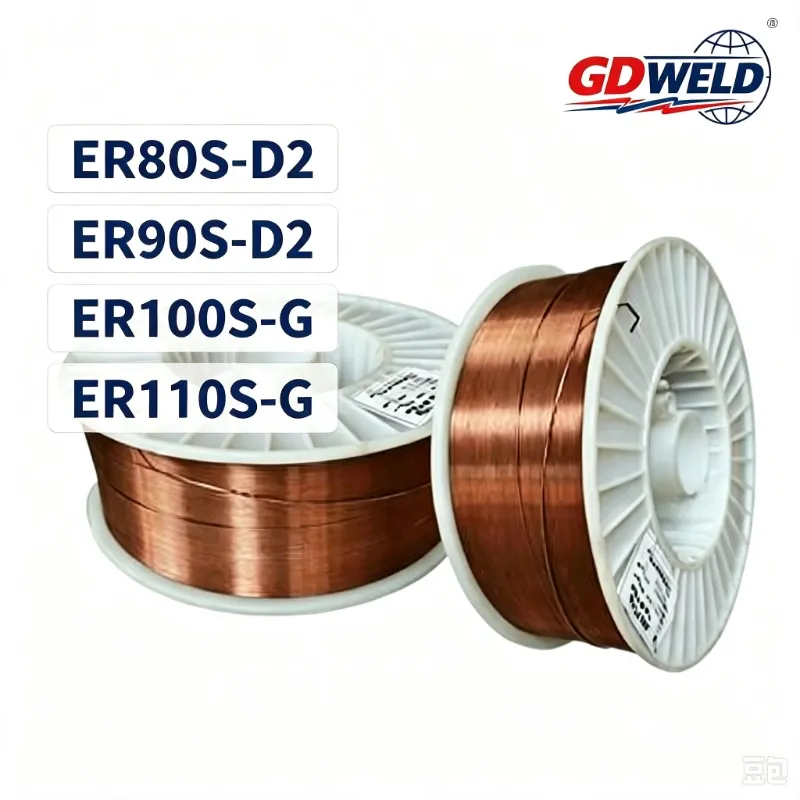
Why Porosity Keeps Appearing on High-Strength Solid Wire Welds
The Hidden Problem: You Cleaned the Surface, You Adjusted Gas — But Porosity Returns
You cleaned the workpiece. You checked the gas flow rate. The surface looks clean. Everything seems right.
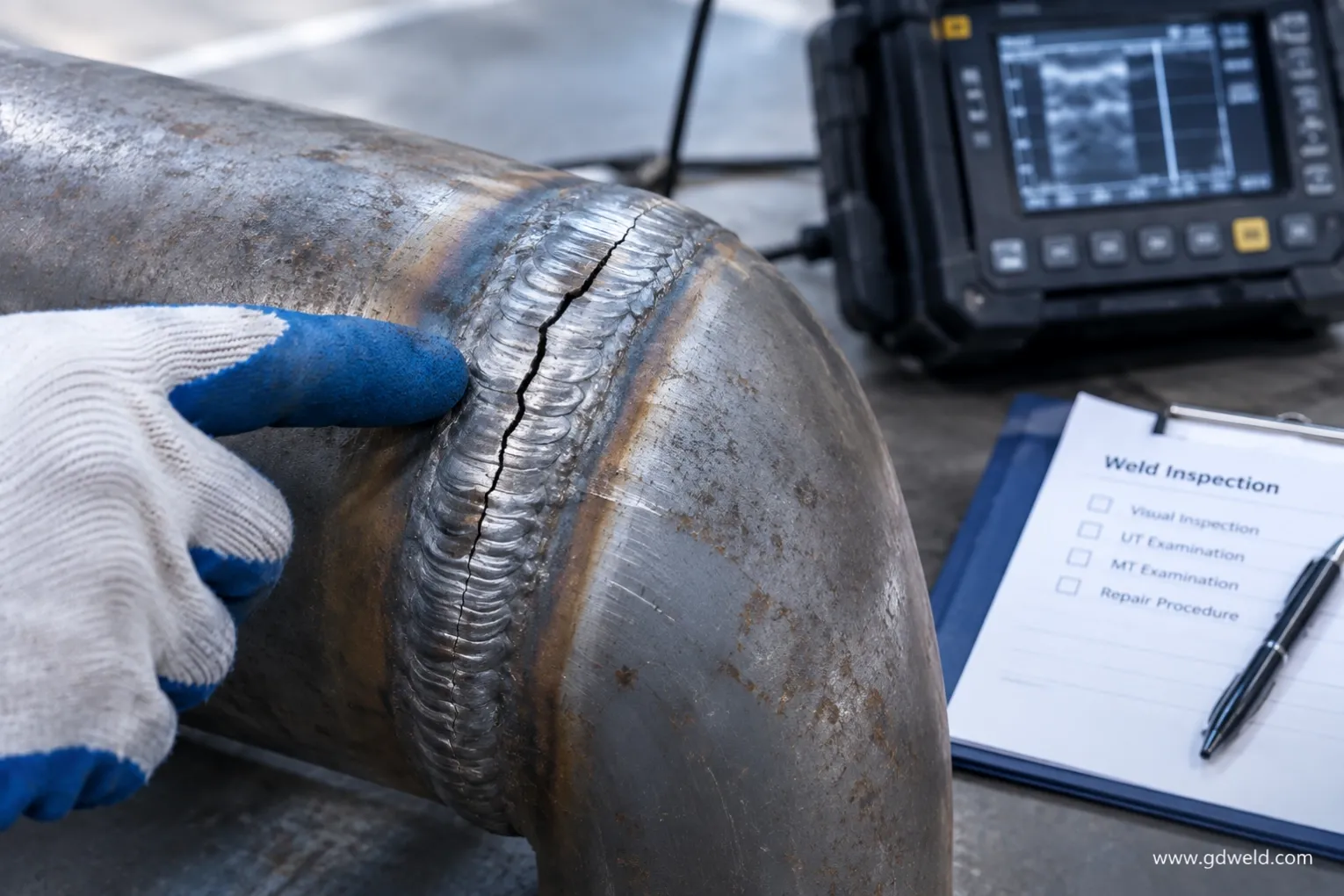
Then you take the weld to NDT — and the X-ray shows internal gas cavities. The weld fails inspection. You grind it out and re-weld. The same problem appears again.
This frustrating scenario is all too common for fabricators welding with high-strength solid wires like ER80S-D2, ER90S-D2, ER100S-G, and ER110S-G.
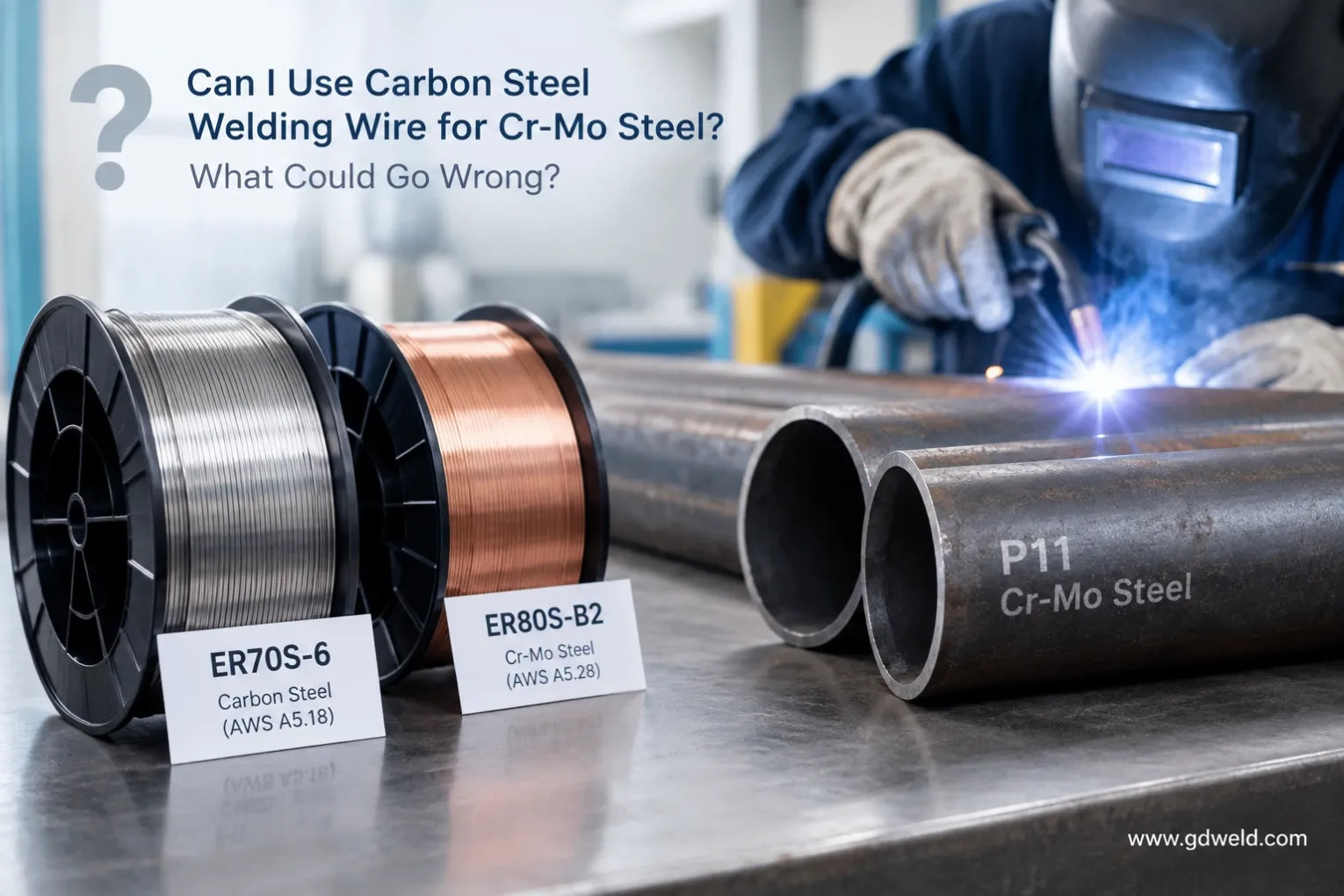
Here is what many people ignore: high-alloy solid wires are fundamentally more porosity-sensitive than mild steel wires. Their deoxidation systems are calibrated for high-strength applications, not for forgiving shop floor conditions. Minor contaminants that would cause no issue with ER70S-6 can ruin a high-strength weld.
Why High-Strength Solid Wires Are Porosity-Sensitive
To understand why, you need to look at the metallurgy.
High-strength solid wires contain higher levels of alloying elements — manganese, silicon, chromium, nickel, molybdenum, and others. These elements enable the high tensile and yield strengths that make these wires suitable for HSLA and quenched-and-tempered steels.
However, the same alloying system affects how the weld metal responds to contaminants. The deoxidation system — primarily manganese (Mn) and silicon (Si) — is designed to bind with oxygen and prevent gas formation. But this system has limits. When contaminants exceed the deoxidation capacity, the excess oxygen and hydrogen form gas bubbles that get trapped in the solidifying weld pool.
For alloy-rich wires, the oxygen tolerance is narrower. What a mild steel wire can "absorb" without porosity will cause cavities in ER100S-G.
Where Porosity Comes From — The Real Causes
Moisture — The Invisible Contaminant
Moisture is the most overlooked porosity source in high-strength welding. It comes from:
- Humid workshop air — especially in coastal or summer conditions
- Condensation on cold wire — when wire is moved from storage to shop floor
- Damp base metal surface — even light mist or dew on the plate
When moisture enters the arc, it dissociates into hydrogen and oxygen. The oxygen combines with alloying elements; the hydrogen forms gas bubbles that become trapped as pores.
Critical fact: High-strength wires have less tolerance for moisture than mild steel wires. The alloying elements that provide strength also reduce the weld metal's ability to dissolve hydrogen, increasing the likelihood of porosity — and cold cracking.
Light Rust — You Might Not See It, But It Is There
Rust is iron oxide. When heated in the arc, it releases oxygen into the weld pool. This oxygen consumes the deoxidation elements (Mn and Si) that would otherwise protect the weld from porosity.
Even light, barely visible rust is enough to overwhelm the deoxidation capacity of high-strength solid wires. The result is internal cavities that only show up on X-ray.
Common culprits:
- Base metal stored outdoors
- Cut edges with minor surface oxidation
- Plate that was descaled but not immediately welded
Impure Shielding Gas — Not All Gas Is Equal
Gas flow rate is not the only variable. Gas quality matters just as much.
Common gas-related porosity causes:
Issue | Source | Effect |
|---|---|---|
Moisture in gas line | Condensation in hoses or cylinders | Hydrogen-induced porosity |
Air entrainment | Excessive gas flow or draft in workshop | Oxygen contamination |
Gas contamination | Low-quality industrial gas blends | Unstable arc and gas cavities |
Inadequate gas coverage | Nozzle too far from workpiece, improper torch angle | Atmospheric air mixing |
For high-strength welding, 80/20 Ar/CO₂ is the minimum standard. Argon-rich mixes (85/15 or 92/8) provide better arc stability and reduce porosity risk. CO₂-rich mixes increase spatter and oxidation.
The Cost of Porosity: X-Ray Rejection and Rework
Porosity is not a cosmetic defect. It is a structural problem.
Cost Factor | Impact |
|---|---|
X-ray rejection | Entire weldment rejected, project delays |
Grinding and rework | Labor-intensive, increases welding time 2-3x |
Consumable waste | Additional wire and gas for rework |
Production schedule disruption | Rejected parts disrupt downstream processes |
NDT inspection re-cost | Repeat radiographic or ultrasonic testing |
In critical applications like pressure vessels, offshore structures, and heavy machinery, X-ray acceptance is non-negotiable. One porosity rejection can cost hundreds of dollars and multiple days of schedule delay.
3 Steps to Reduce Porosity Risk
1. Use Qualified Shielding Gas — 80/20 Ar/CO₂ or Better
Do not cut corners on shielding gas. For high-strength solid wires:
- Minimum: 80% Argon / 20% CO₂
- Preferred: 85% Argon / 15% CO₂ or 92% Argon / 8% CO₂
- Flow rate: 15-25 L/min depending on conditions
Additional gas management practices:
- Use dry, clean gas lines — purge hoses before welding
- Install gas regulators with flow meters — monitor flow, not just cylinder pressure
- Protect the weld zone from drafts and fans that disrupt gas coverage
- Replace cylinders when pressure drops below 500 psi to prevent contamination
2. Clean Grooves Thoroughly — Down to Bare Metal
Surface preparation is not optional for high-strength welding. Requirements:
Action | Requirement |
|---|---|
Grinding | Remove all surface oxide, rust, and mill scale |
Degreasing | Remove oil, grease, and cutting fluids |
Drying | Heat or air-dry to remove moisture |
Timing | Weld within 4-8 hours of cleaning to prevent re-oxidation |
Note: For Q690 and above, some specifications require preheating to 100-150°C specifically for moisture removal before welding.
3. Store High-Strength Wires in a Dry Warehouse
Wire storage is critical for high-alloy grades. Best practices:
- Temperature: 15-25°C
- Humidity: Below 60% relative humidity
- Open spools: Use within 24 hours of opening
- Storage time: Use oldest wire first (FIFO)
- Vacuum packaging: Leave wire in sealed packaging until ready to use
For wires that have been exposed to humid conditions, some specifications allow baking at 250-300°C for 1-2 hours to drive off absorbed moisture before use.
How Optimized Deoxidation Helps Resist Porosity
The best defense against porosity is a wire deoxidation system designed for the application.
GD-WELD high-strength solid wires — ER80S-D2, ER90S-D2, ER100S-G, and ER110S-G — use an optimized Mn-Si deoxidation formula. This provides:
- Higher oxygen tolerance — the weld metal can absorb more contaminants without forming gas cavities
- Better arc stability — smooth metal transfer reduces spatter and inclusions
- Improved wetting — the molten metal flows better, allowing gas bubbles to escape before solidification
The result is X-ray-quality welds with consistent internal soundness, even in demanding shop floor conditions.
Get Reliable, X-Ray-Quality Welds
Porosity does not have to be a recurring problem. With the right wire, the right gas, and the right practices, you can achieve consistent, defect-free high-strength welds.
GD-WELD high-strength solid wires deliver:
- Optimized Mn-Si deoxidation for porosity resistance
- Consistent chemical composition batch to batch
- Clean, dry packaging for reliable storage
- Full range: ER80S-D2, ER90S-D2, ER100S-G, ER110S-G
Switch to a wire that works with your process — not against it.
FAQs
Q: Why does porosity appear even when I clean the workpiece?
A: Moisture in the air, humidity on the wire surface, or impure shielding gas can all cause porosity even when the base metal is clean. High-strength wires are more sensitive to these hidden contaminants than mild steel wires.
Q: What is the best shielding gas for ER100S-G?
A: 80/20 Ar/CO₂ is the minimum. Argon-rich mixes like 85/15 or 92/8 provide better arc stability and reduce porosity risk. Avoid pure CO₂ or gas blends with high oxygen content.
Q: Does storage humidity really affect weld quality?
A: Yes. High-strength solid wires can absorb surface moisture in humid conditions. When this moisture enters the arc, it generates hydrogen and oxygen, causing porosity. Store wires below 60% relative humidity.
Q: What if my wire has been exposed to humidity?
A: For ER80S-D2 and similar grades, baking at 250-300°C for 1-2 hours can drive off absorbed moisture. Follow your wire manufacturer's recommended procedure.
Q: How does Mn-Si deoxidation prevent porosity?
A: Manganese and silicon combine with oxygen in the weld pool to form stable oxide inclusions that float to the surface. This prevents oxygen from forming gas bubbles that get trapped in the solidifying weld metal.
Q: What is the maximum acceptable porosity for X-ray quality?
A: Requirements vary by standard, but many structural specifications require porosity-free welds or maximum individual pore sizes below 1.5 mm with total cumulative porosity under 1-3% of the weld area. Check your specific code requirement.