Can E6011 Weld Through Rust or Paint? What Should You Remove First?
Can E6011 weld through rust or paint? Learn what surface contamination it can tolerate, what must be removed first, and how to prevent weld defects.
Can You Weld Rusty or Painted Steel with E6011?
Do you need to remove all the rust before using E6011? Can you weld over old paint or primer without grinding the surface first?
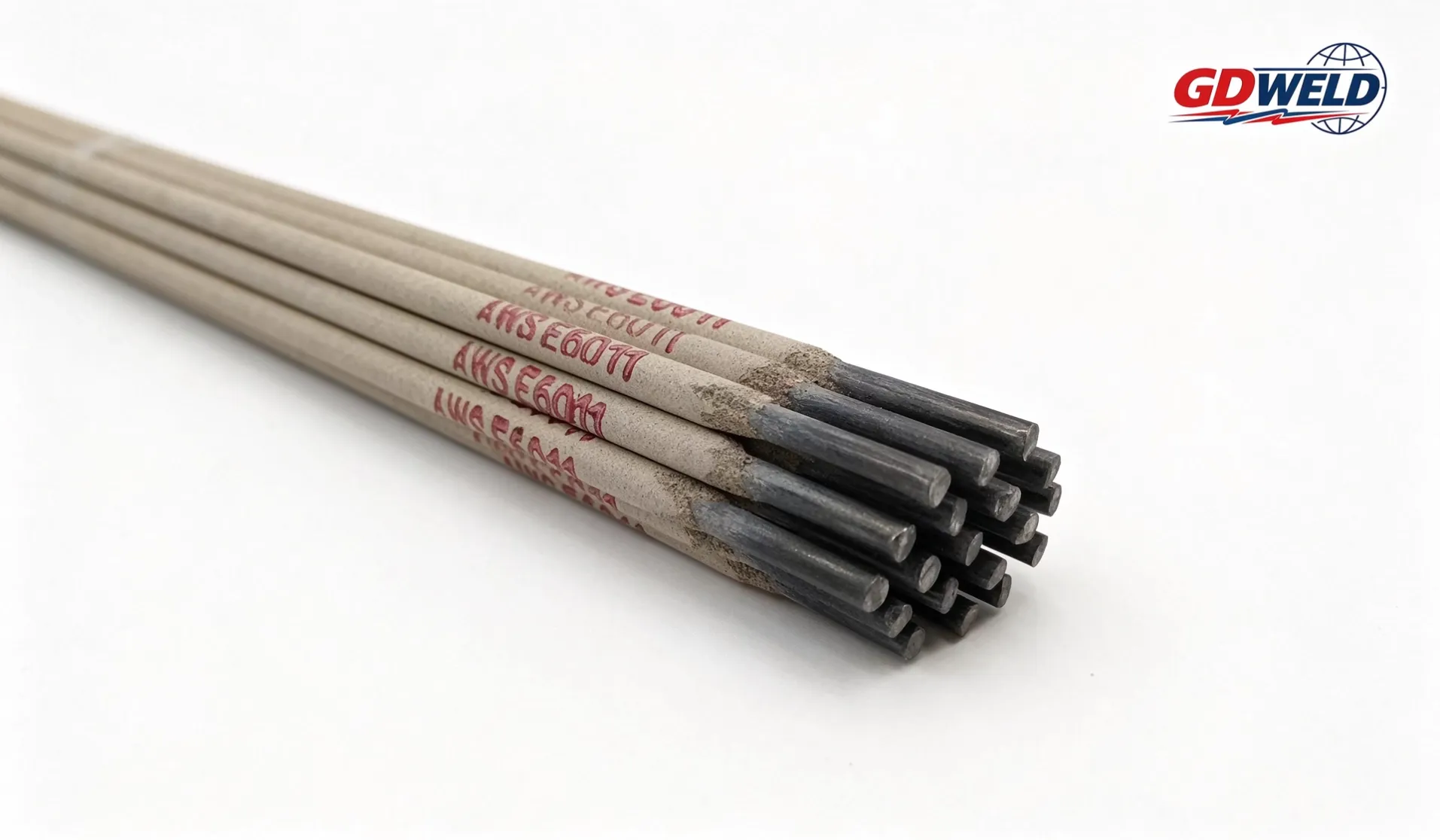
E6011 is known for its forceful arc and deep penetration. Certain E6011 electrodes can tolerate light surface rust and mill scale, making them useful for selected repair and maintenance applications.
However, E6011 is not designed to eliminate the need for proper surface preparation. Heavy rust, oil, grease, moisture and paint contamination can still affect weld quality and safety.
Here is what you should know before welding.
1. Can E6011 Weld Through Rust?
Yes. E6011 can tolerate some light surface rust, depending on the electrode product and application.
However, heavily corroded or loose material should be removed before welding.
Rust condition | Recommended action |
|---|---|
Light surface rust | May be tolerated; remove loose rust |
Moderate rust | Clean the joint and remove loose corrosion |
Heavy or flaky rust | Grind to sound metal |
Deep pitting | Check base metal thickness and structural condition |
Important: E6011's deep penetration cannot compensate for steel that has lost thickness due to corrosion.
For critical welds, follow the surface preparation requirements in the approved welding procedure.
2. Can E6011 Weld Through Paint or Primer?
Some E6011 products are intended for certain less-than-perfect surface conditions. However, welding directly over paint or primer is generally not recommended.
When heated, coatings can release hazardous fumes and introduce contamination into the weld area.
Before welding painted steel:
- Identify the coating whenever possible.
- Remove paint and primer around the weld area as required.
- Clean the surrounding surface where necessary.
- Provide suitable ventilation and fume extraction.
Do not assume that E6011 can safely burn through every type of paint or coating.
3. What Must You Remove Before Welding with E6011?
This is one of the most important steps for preventing unnecessary weld defects.
Surface condition | Recommended preparation |
|---|---|
Light rust | Remove loose rust |
Heavy rust | Grind to sound metal |
Loose mill scale | Remove loose or heavy scale |
Paint and primer | Remove around the weld area as required |
Oil and grease | Clean completely |
Moisture | Dry before welding |
Galvanized coating | Follow an approved procedure and control zinc-containing fumes |
Oil, grease and moisture should not be ignored, even when using E6011.
For galvanized steel, take additional precautions because heating zinc coatings can produce hazardous fumes. Use effective ventilation and follow applicable workplace safety requirements.
4. What Happens If You Weld on Dirty Steel?
Poor surface preparation can contribute to welding defects and unnecessary rework.
Welding problem | Possible contributing factors |
|---|---|
Porosity | Oil, moisture, paint residues or contamination |
Incomplete fusion | Heavy rust, scale or poor joint preparation |
Excessive spatter | Surface contamination or unsuitable parameters |
Poor weld appearance | Inconsistent cleaning or welding technique |
Not every defect is caused by dirty steel. Incorrect current, excessive arc length, electrode condition and travel speed can also affect weld quality.
If you experience porosity when using E6011, check both the workpiece condition and welding technique.
For product characteristics and selection information, visit our E6011 Welding Electrode product page.
5. Is E6011 Suitable for Repair and Field Welding?
E6011 is commonly used for selected carbon steel repair, maintenance and field welding applications.
Its main characteristics include:
- Forceful arc with relatively deep penetration.
- High-cellulosic potassium coating.
- AC or DCEP operation, depending on the specific product.
- Suitability for certain applications involving light rust or mill scale.
However, electrode selection still depends on the base metal, joint condition, welding position, power source and project requirements.
If you are comparing electrodes for pipe welding, read our guide: E6011 vs E6010 Welding Electrodes for Pipe Welding: Key Differences.
Conclusion: E6011 Can Tolerate Some Rust, but Preparation Still Matters
E6011 is a practical choice for many carbon steel repair and maintenance applications. Certain products can tolerate light rust and mill scale, but this does not mean heavy corrosion, paint, oil or grease can be ignored.
Remove harmful contaminants, prepare the joint properly and follow the approved welding procedure.
Looking for E6011 welding electrodes for repair, maintenance or general carbon steel applications?
Contact GD WELD with your required AWS classification, electrode diameter and application for product information and supply support.