Oct 15, 2026
Can I Substitute One AWS Welding Wire for Another? What Should I Check?
Can you replace one AWS welding wire with another? Check classification, base material, mechanical properties and welding procedure requirements before approving a substitute.
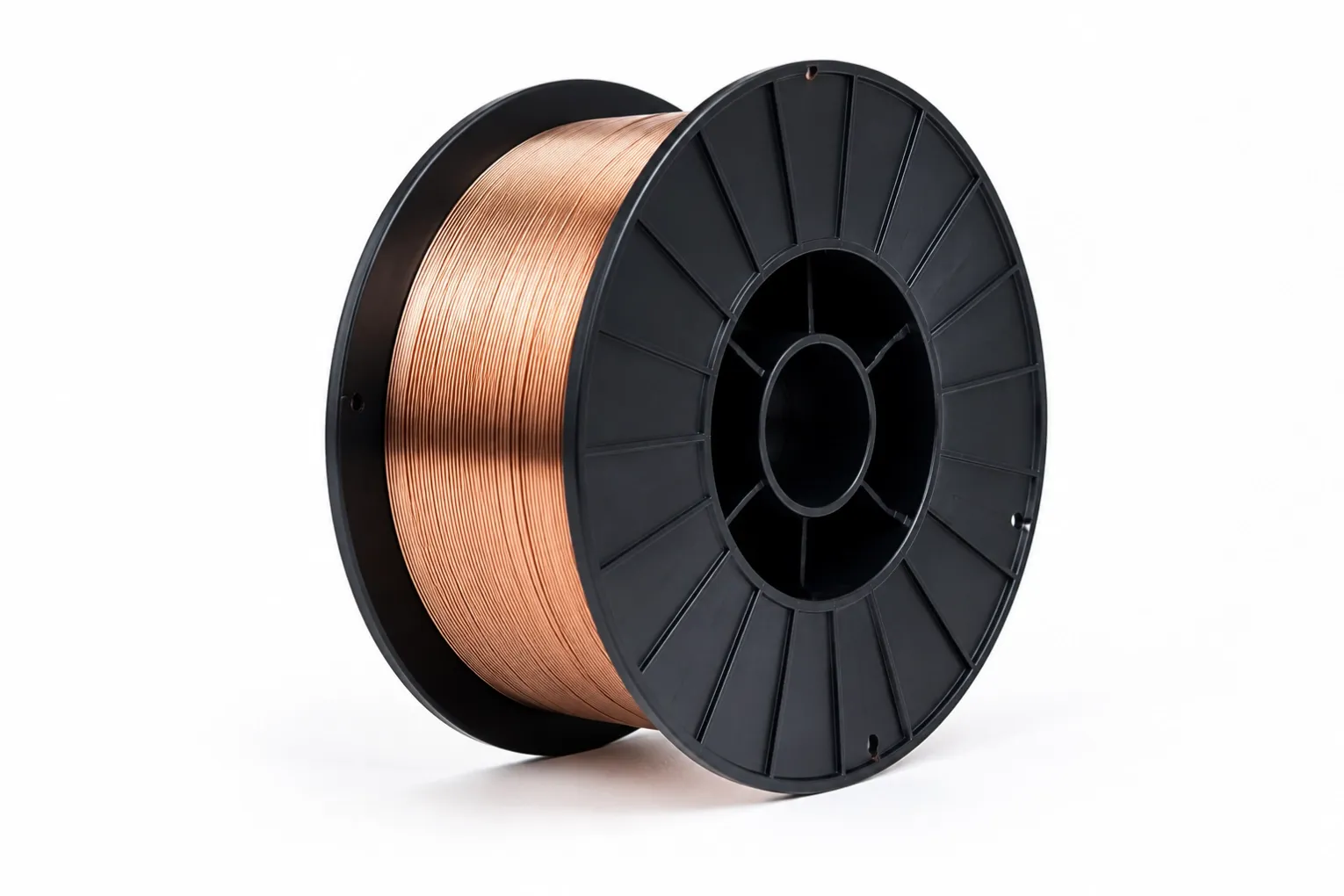
Your regular welding wire is out of stock, and your supplier recommends another AWS classification. The new wire looks similar—or even offers higher tensile strength.
Can you use it without affecting weld quality or project approval?
Not necessarily. Two welding wires with similar AWS classifications or strength levels are not automatically interchangeable. An unsuitable substitution may affect weld-metal properties, impact toughness, testing results or compliance with project requirements.
Before approving an AWS welding wire substitute, check these five factors.
1. Compare the Complete AWS Classification
Start by checking the full AWS classification, not just the strength number or a similar-looking model name.
For example, ER80S-D2, ER90S-D2 and ER100S-G belong to different classification categories or strength levels. Their suitability depends on the application and specified requirements, not simply on which wire offers higher strength.
Also confirm the applicable AWS specification and product form. A solid wire, flux-cored wire and covered electrode may have different classification requirements and cannot be treated as equivalent merely because their deposited weld metal has similar strength.
What to check:
- Full AWS classification and applicable specification
- Welding process and consumable type
- Manufacturer's technical data sheet
- Any additional project or customer requirements
2. Confirm the Base Material and Service Conditions
A welding wire that works for one steel grade may not be suitable for another.
Before choosing an equivalent welding wire, identify the base material and the conditions the weld must withstand.
Consider:
- Base material grade and strength requirements
- Operating temperature and impact toughness requirements
- Corrosion, heat or other service conditions
- Joint design and welding position, where relevant
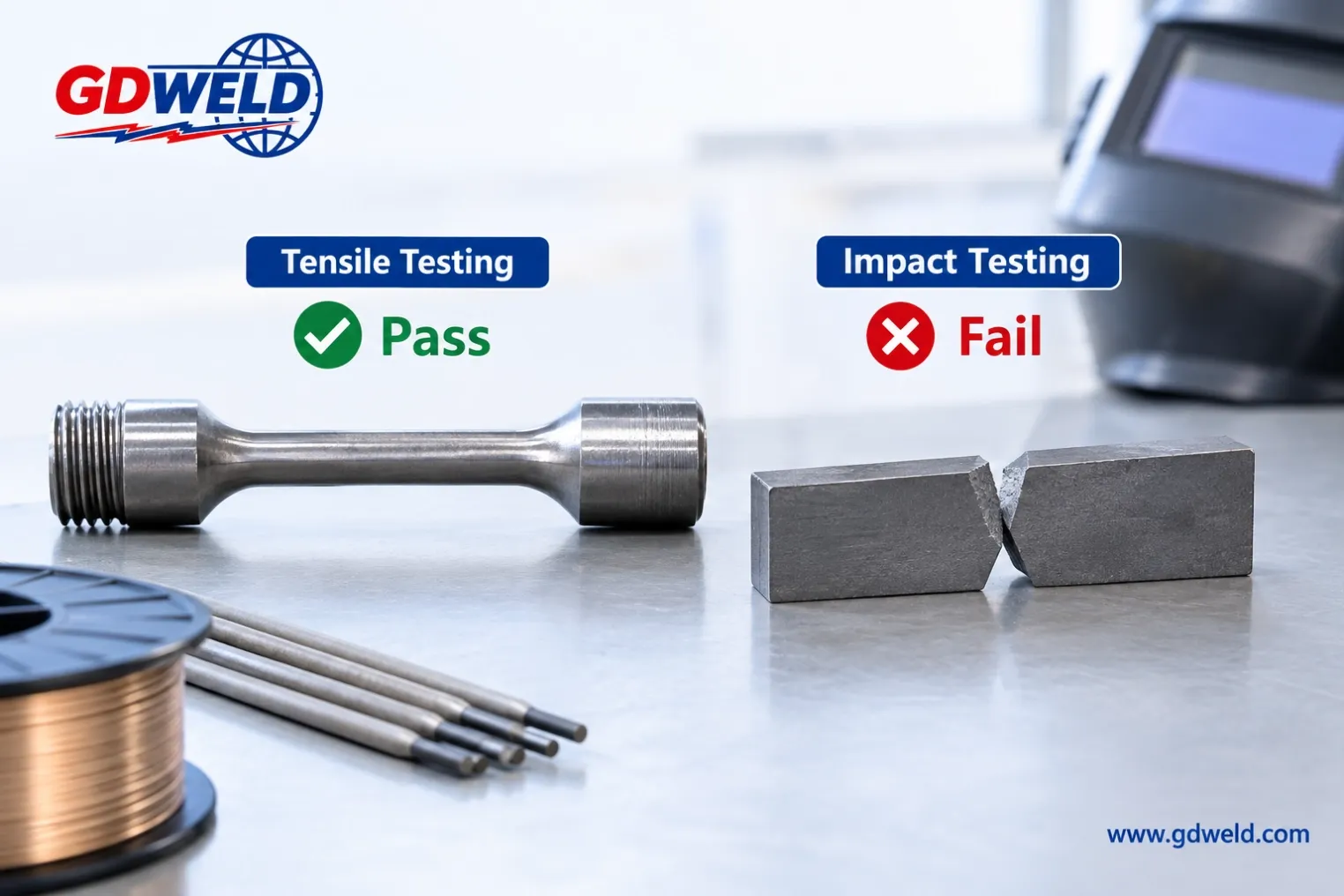
For low-temperature steel, for example, meeting tensile strength requirements does not guarantee adequate Charpy impact toughness at the specified test temperature. The replacement must satisfy the applicable toughness requirements as well.
3. Compare Mechanical Properties and Weld-Metal Chemistry
Do not judge an AWS welding wire replacement by tensile strength alone.
Review the properties required by the project, including:
- Yield strength and tensile strength
- Elongation and ductility
- Charpy impact toughness at the specified temperature
- Weld-metal chemical composition, where relevant
A higher-strength wire is not automatically a better substitute. It may produce a different balance of strength, ductility and toughness.
For classifications ending in G, do not assume that every product has the same chemical composition or properties. Check the actual manufacturer's data and the applicable classification requirements.
4. Check WPS/PQR and Approval Requirements
Even if a proposed welding wire appears technically suitable, the substitution may not be permitted under the applicable welding procedure qualification, construction code or project specification.
Before making the change, confirm:
- Whether the alternative consumable is permitted by the qualified WPS and supporting PQR
- Whether the change affects an essential variable under the applicable code
- Whether additional qualification or testing is required
- Whether the customer, inspector or project engineer must approve the change
Do not assume that replacing one AWS classification with another is an administrative change. Follow the governing code and project approval process.
5. Verify Performance Before Full Production
Once the proposed substitute passes the initial checks, confirm that it performs as required under the approved welding procedure.
Depending on the application, verification may include reviewing test certificates, checking deposited weld-metal properties, conducting required qualification tests and confirming suitable welding parameters.
If the original wire was selected for a demanding requirement—such as low-temperature impact toughness, elevated-temperature service or high-strength steel—pay particular attention to that requirement.
The goal is not simply to find a wire that can be used. It is to find one that meets the same essential technical and project requirements.
Examples: When Should You Be Careful?
- ER100S-G to ER110S-G: A higher strength classification does not by itself establish interchangeability. Review required properties and qualification requirements.
- ER80S-Ni1 to ER80S-Ni2: Check the base material, specified impact temperature, impact energy requirements and applicable approvals.
- One solid wire to a flux-cored wire: Confirm that the different consumable type and welding process are permitted for the application.
Related guides:
- Anchor text: Can I Replace ER100S-G With ER110S-G? What Should I Check?
- Anchor text: Can ER80S-Ni2 Replace ER80S-Ni1 for Low-Temperature Steel?Link to: The corresponding GD WELD article on ER80S-Ni2 and ER80S-Ni1 substitution. Confirm the published URL before inserting the link.
FAQ
Can two AWS welding wires with the same strength level be substituted?
Not automatically. Their chemistry, impact toughness, classification requirements, intended applications and project approval conditions may differ.
Is a higher-strength welding wire always a suitable replacement?
No. Higher tensile strength does not guarantee equivalent ductility, impact toughness or compliance with the qualified welding procedure.
What information should I provide when requesting a substitute?
Provide the original AWS classification, base material grade, welding process, service temperature, required mechanical properties and applicable code or customer specification.
Conclusion
When an AWS welding wire is unavailable, do not approve a substitute based only on a similar model name or higher strength.
Compare the classification, match the application, verify the required properties and confirm the welding procedure and project approvals before making the change.
Need help checking a difficult-to-source welding wire? Send GD WELD the original AWS classification, base material, diameter, application and key technical requirements. We can help review suitable alternatives against your stated requirements.
SEO Keywords
Primary keyword: AWS welding wire substitution
Secondary keywords: AWS welding wire replacement, equivalent welding wire, welding consumable substitution, AWS filler metal classification, welding wire alternatives, ER100S-G vs ER110S-G, ER80S-Ni1 vs ER80S-Ni2.