Oct 12, 2026
Can ER80S-Ni2 Replace ER80S-Ni1 for Low-Temperature Steel?
Can ER80S-Ni2 replace ER80S-Ni1 for low-temperature steel welding? Understand the differences in nickel content, toughness requirements and filler metal selection before substitution.
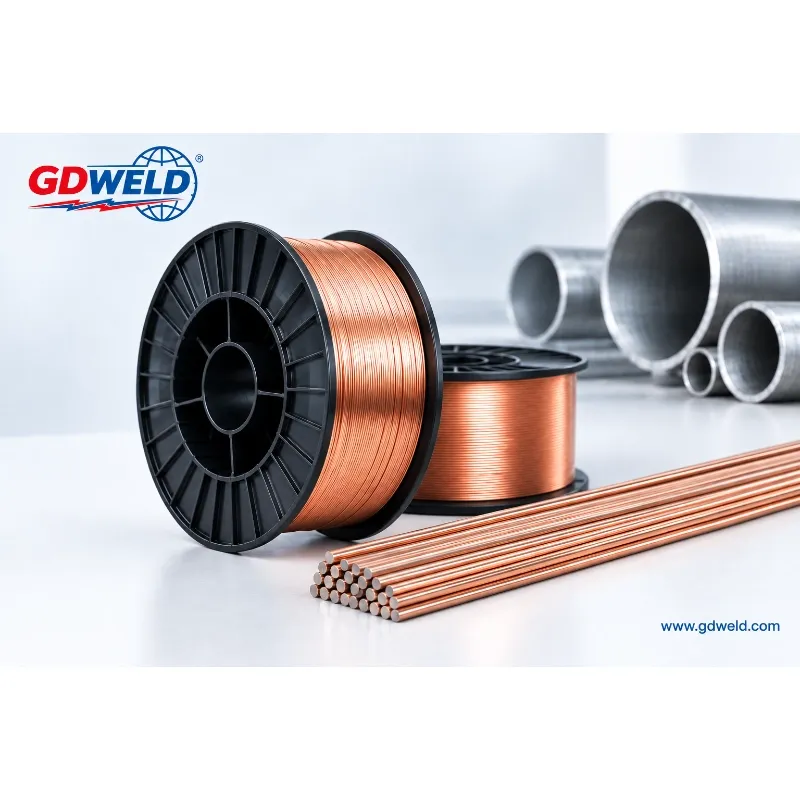
When selecting nickel alloy welding wire for low-temperature steel, engineers often compare ER80S-Ni1 and ER80S-Ni2.
Because both welding wires belong to the AWS A5.28 ER80S nickel-alloy classification, some users may assume that ER80S-Ni2 can directly replace ER80S-Ni1.
However, ER80S-Ni2 is not always a direct replacement for ER80S-Ni1.
Although ER80S-Ni2 contains a higher nickel alloy level, the correct filler metal selection depends on:
- Base material grade
- Required weld-metal chemistry
- Service temperature
- Charpy impact toughness requirements
- Qualified welding procedure (WPS/PQR)
For low-temperature steel welding, the best welding wire is not necessarily the one with more alloy content, but the one that meets the required weld performance.
ER80S-Ni1 vs ER80S-Ni2: What Is the Difference?
The main difference between ER80S-Ni1 and ER80S-Ni2 is the nickel content and corresponding weld-metal classification.
Item | ER80S-Ni1 | ER80S-Ni2 |
|---|---|---|
AWS Classification | ER80S-Ni1 | ER80S-Ni2 |
Strength Level | ER80 | ER80 |
Alloy Type | Nickel-alloyed welding wire | Nickel-alloyed welding wire |
Nickel Content | Approx. 1% Ni | Approx. 2% Ni |
Main Selection Factor | Required chemistry and toughness | Higher nickel alloy system and toughness requirement |
Typical Application | Low-temperature steel welding | Low-temperature service requiring specific toughness performance |
Both wires are designed for applications where weld-metal toughness is important.
However, higher nickel content does not automatically mean better performance in every welding application.
Can ER80S-Ni2 Directly Replace ER80S-Ni1?
The answer is:
Not without checking the application requirements.
ER80S-Ni2 may be suitable as an alternative in some projects, but replacing ER80S-Ni1 requires evaluation.
Check the following before substitution:
Check Item | Why It Matters |
|---|---|
Base material | Weld-metal compatibility depends on the steel grade |
Design temperature | Low-temperature service requires verified toughness |
Charpy impact toughness | Impact performance may determine filler selection |
AWS classification | ER80S-Ni1 and ER80S-Ni2 have different classifications |
WPS/PQR qualification | Procedure approval may be required |
The key question is not:
“Does ER80S-Ni2 have more nickel?”
The better question is:
“Can ER80S-Ni2 provide the required weld-metal properties for this application?”
Does More Nickel Always Mean Better Low-Temperature Performance?
Nickel is an important alloying element for improving low-temperature toughness, but weld performance depends on the complete welding system.
Factors affecting weld-metal properties include:
- Chemical composition
- Welding heat input
- Cooling rate
- Microstructure
- Welding procedure
For low temperature service, engineers usually consider:
- Tensile strength
- Elongation
- Charpy impact toughness
- Weld-metal reliability
A higher alloy welding wire may not provide better results if it does not match the base material and project requirements.
When Should I Choose ER80S-Ni1 or ER80S-Ni2?
Choose ER80S-Ni1 when:
- The specification requires ER80S-Ni1 classification
- The welding procedure is qualified with Ni1 filler metal
- The required low-temperature toughness can be achieved
Choose ER80S-Ni2 when:
- ER80S-Ni2 classification is specified
- The application requires its nickel alloy system
- Additional toughness performance is required
The final choice should always follow the approved welding procedure and project specification.
For related product information:
👉 Internal Link 1:
Anchor text: ER80S-Ni1 Welding Wire for Low-Temperature Steel Applications
Link to: ER80S-Ni1 Welding Wire for Low-Temperature Steel Applications
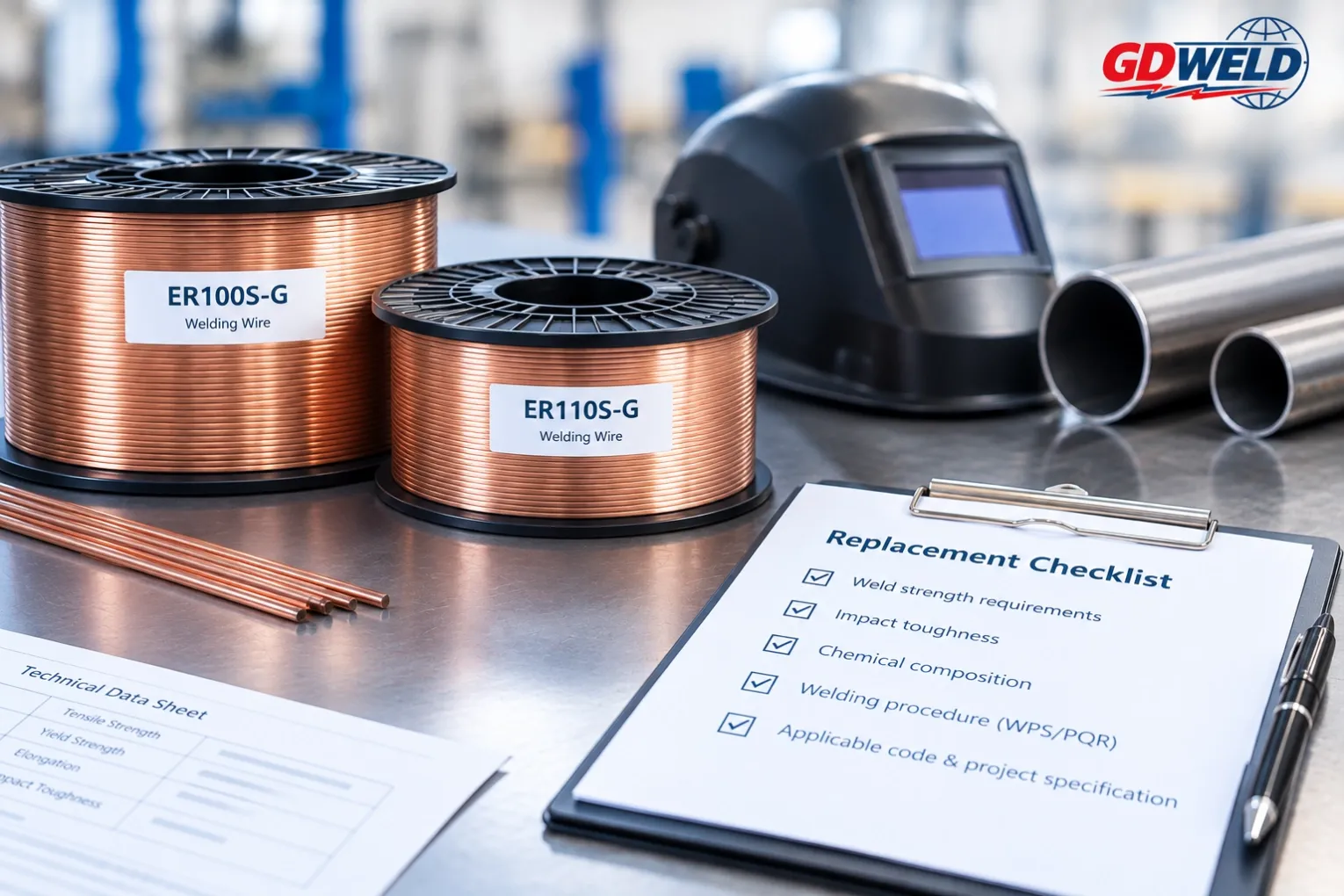
What Should I Check Before Changing ER80S-Ni1 to ER80S-Ni2?
Before replacing a welding wire, review:
1. Base Material
Confirm the steel grade and required weld-metal chemistry.
2. Mechanical Requirements
Check:
- Tensile strength
- Yield strength
- Elongation
- Charpy impact toughness
3. Service Conditions
Verify the design temperature and operating environment.
4. Welding Procedure
Confirm WPS/PQR requirements before changing filler metal.
5. Technical Documents
Review:
- AWS classification
- Chemical composition
- Mechanical test results
- Certificate information
Changing welding consumables without checking these factors may cause unexpected weld performance problems.
Conclusion
ER80S-Ni2 cannot be considered a universal replacement for ER80S-Ni1 in low-temperature steel welding.
Although both are AWS A5.28 nickel-alloyed welding wires, they have different classifications and weld-metal characteristics.
The correct selection depends on:
- Base material
- Required toughness
- Service temperature
- Welding procedure qualification
Choose the welding consumable that matches the application requirement, not simply the one with higher nickel content.