Sep 30, 2026
Can I Use Carbon Steel Welding Wire for Cr-Mo Steel? What Could Go Wrong?
Can you use ER70S-6 carbon steel welding wire for Cr-Mo steel? What could go wrong, and when should ER80S-B2 or another Cr-Mo welding wire be used instead?
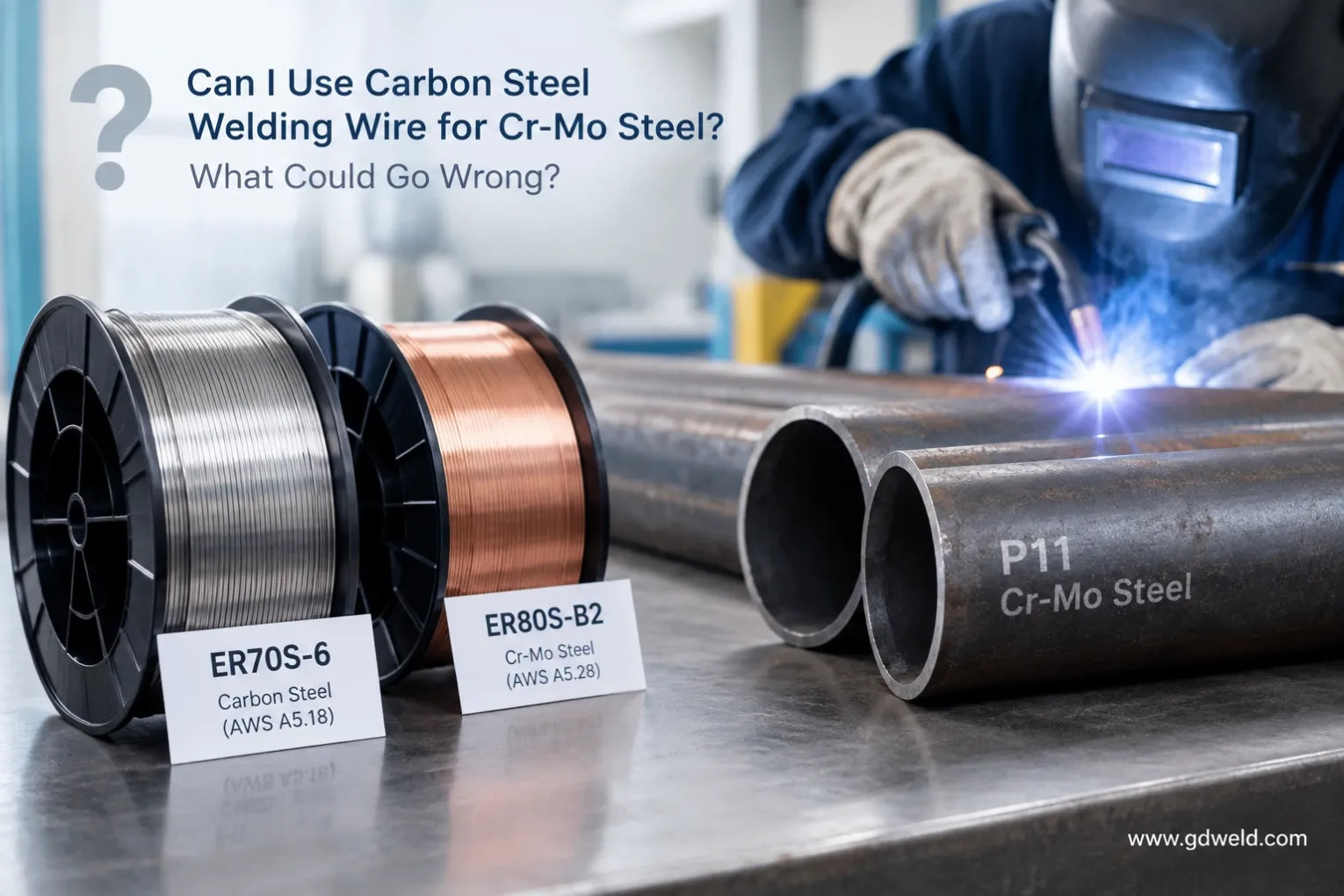
You need to weld a Cr-Mo steel component, but the specified welding wire is not available.
There is ER70S-6 in stock. It is easy to source, widely used and may appear strong enough for the job.
So you may wonder:
Can I use carbon steel welding wire for Cr-Mo steel?
The answer should not be based on tensile strength or weld appearance alone.
The important question is whether the filler metal is chemically and procedurally suitable for the base metal and qualified welding procedure.
The Problem With “It Looks Close Enough”
This is where wire substitution can become confusing.
ER70S-6 is a carbon-steel solid wire classified under AWS A5.18. ER80S-B2 is a low-alloy steel wire under AWS A5.28, associated with the 1¼Cr-½Mo system.
They may both produce a clean-looking solid-wire weld, but they are not designed around the same weld-metal chemistry.
So:
Similar wire → No
Similar strength → Not necessarily
Similar appearance → Not enough
The consumable needs to be appropriate for the actual joint and welding procedure.
What Could Go Wrong?
1. The Weld-Metal Chemistry May Be Wrong
This is the main concern.
Cr-Mo welding consumables are selected to provide weld-metal chemistry appropriate for the corresponding Cr-Mo steel and service conditions.
ER80S-B2, for example, contains chromium and molybdenum consistent with the 1¼Cr-½Mo system. Manufacturer data identifies it for creep-resistant Cr-Mo steels and elevated-temperature applications.
A general carbon-steel wire such as ER70S-6 does not provide the same Cr-Mo filler-metal chemistry.
That means a weld can look acceptable while not meeting the intended weld-metal requirements.
2. The Problem May Only Appear Later
This is an important point for the person making the substitution.
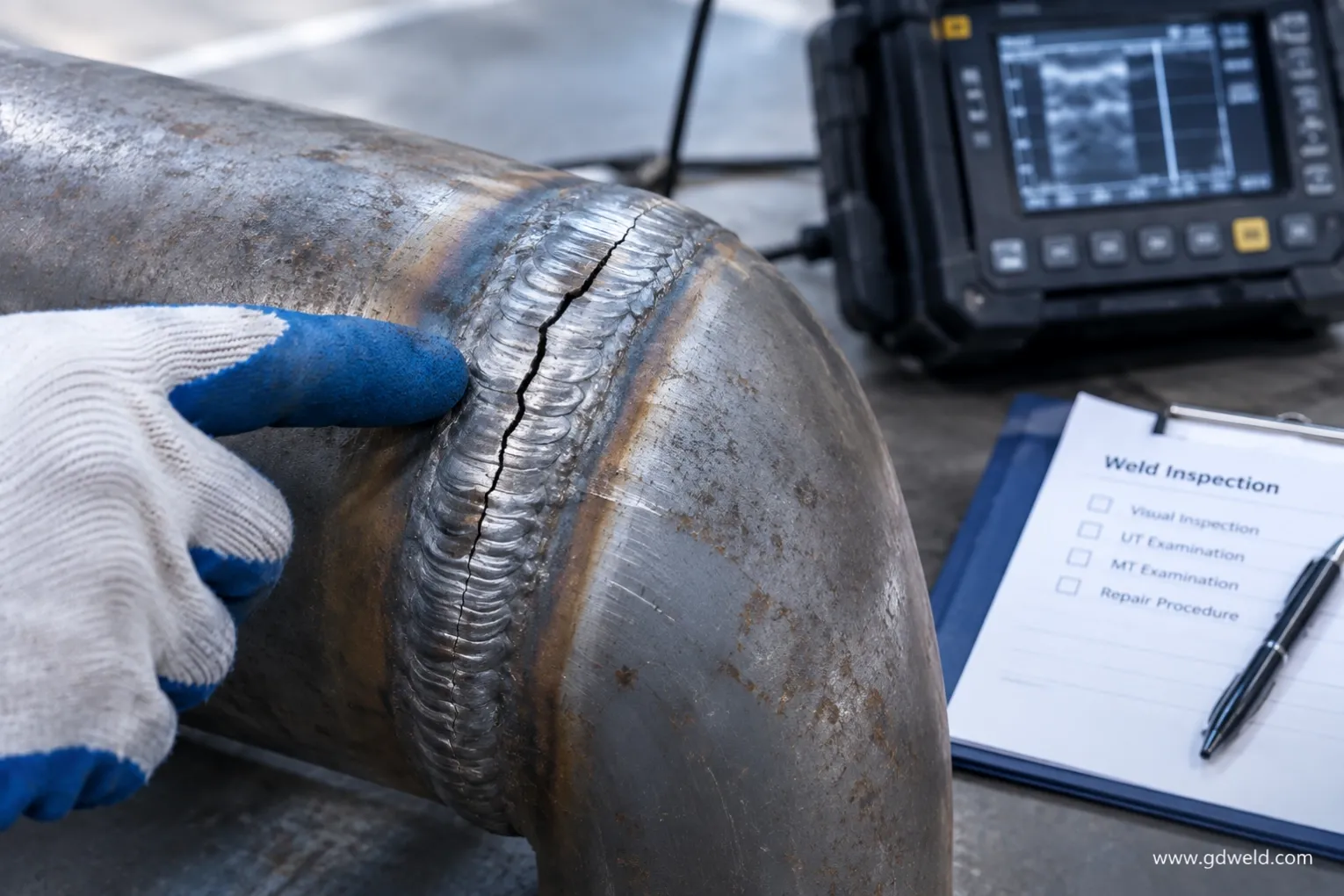
The weld may pass a basic visual inspection.
But the actual application may also depend on:
- Weld-metal chemistry
- Tensile properties
- Toughness
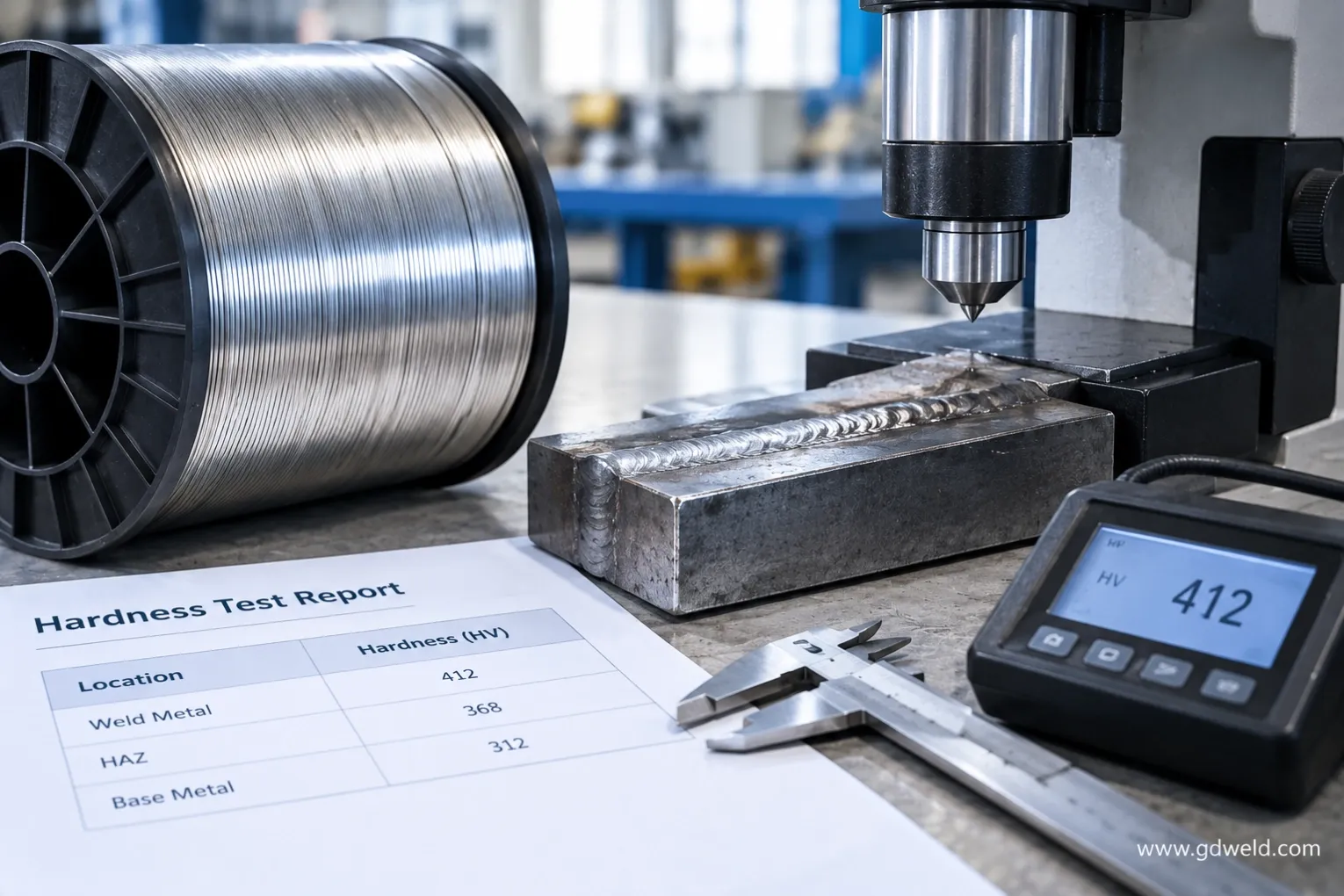
- Hardness
- PWHT response
- Elevated-temperature performance
- Applicable code requirements
This matters particularly for P11, P22 and other Cr-Mo components used in pressure or high-temperature service.
In other words:
A good-looking weld is not proof that the consumable is interchangeable.
What If the Material Is P11?
Suppose the base metal is P11 and the WPS calls for ER80S-B2.
ER80S-B2 is associated with the 1¼Cr-½Mo system and is commonly used for P11/T11 applications.
Now imagine ER80S-B2 is temporarily unavailable and ER70S-6 is sitting in the warehouse.
The question should not be:
“Can ER70S-6 make a weld?”
Of course it can make a weld.
The real question is:
“Is ER70S-6 an approved consumable for this specific P11 joint and qualified procedure?”
That is a very different question.
👉 Internal Link 1:
Anchor text: ER80S-B2 welding wire
Link to: What Is ER80S-B2 Welding Wire? AWS Classification, Applications and Selection
What About Other Cr-Mo Grades?
The same principle applies when the base metal changes.
For example, P22 does not automatically use the same consumable as P11, and higher-alloy Cr-Mo grades require their own consumable considerations.
This is why it is better to start with the base-metal grade rather than starting with whatever welding wire happens to be available.
👉 Internal Link 2:
Anchor text: Cr-Mo welding consumables
Link to: What Are Cr-Mo Welding Consumables? Grades, Materials and Applications
Before You Substitute a Welding Wire
If the specified wire is unavailable, check these in order:
Base metal
What grade are you welding?
Specified AWS classification
What does the WPS actually require?
WPS/PQR
Was the proposed consumable qualified?
Service conditions
Will the weld operate at elevated temperature or pressure?
Project requirements
Does the applicable code or customer specification permit the change?
If these questions have not been answered, changing the wire simply because it is available is not a sound basis for substitution.
ER70S-6 vs ER80S-B2: The Practical Difference
| ER70S-6 | ER80S-B2 |
|---|---|---|
AWS specification | A5.18 | A5.28 |
General system | Carbon steel | Cr-Mo low-alloy steel |
Typical application | Carbon/mild steel | 1¼Cr-½Mo applications |
Cr-Mo filler chemistry | No | Yes |
Automatic substitute for the other | No | No |
The important difference is therefore not just strength.
It is the filler-metal system and its suitability for the application.
So, Can You Use Carbon Steel Wire for Cr-Mo Steel?
Don't treat it as a direct substitute.
There may be specially qualified procedures or dissimilar-metal applications where a different filler metal is appropriate. But that decision needs to come from the qualified welding procedure and applicable requirements, not from wire availability alone.
If you are welding P11/T11, for example, ER80S-B2 is the Cr-Mo wire family associated with the 1¼Cr-½Mo system.
The Simple Rule for Wire Substitution
When the specified Cr-Mo wire is unavailable, don't ask:
“Which wire has similar strength?”
Ask:
“Which consumable is qualified for this base metal, WPS and service condition?”
That shift in thinking can prevent a simple welding-wire shortage from becoming a much larger quality problem.