Sep 7, 2026
What Are Cr-Mo Welding Consumables? Grades, Materials and Applications
Learn about Cr-Mo welding consumables, including ER80S-B2, ER90S-B3, ER80S-B6, ER80S-B8 and ER90S-B9, with grades, materials, applications and selection tips.
What Are Cr-Mo Welding Consumables? Grades, Materials and Applications
Choosing welding consumables for Cr-Mo steel can be challenging. Buyers often see grades such as ER80S-B2, ER90S-B3, ER80S-B6, ER80S-B8 and ER90S-B9, but the differences are not always obvious.
The most common mistake is selecting a filler metal based only on strength or price.
For Cr-Mo steel welding, base-metal chemistry, service temperature, welding process and qualified WPS/PQR are key factors.
So, what are Cr-Mo welding consumables, and how do you choose the right grade?
Quick Answer
Cr-Mo welding consumables are filler metals designed for chromium-molybdenum alloy steels used in high-temperature and pressure-service applications.
They are available as:
- MIG/GMAW welding wire
- TIG/GTAW welding wire or rod
- SMAW coated electrodes
- SAW and flux-cored consumables
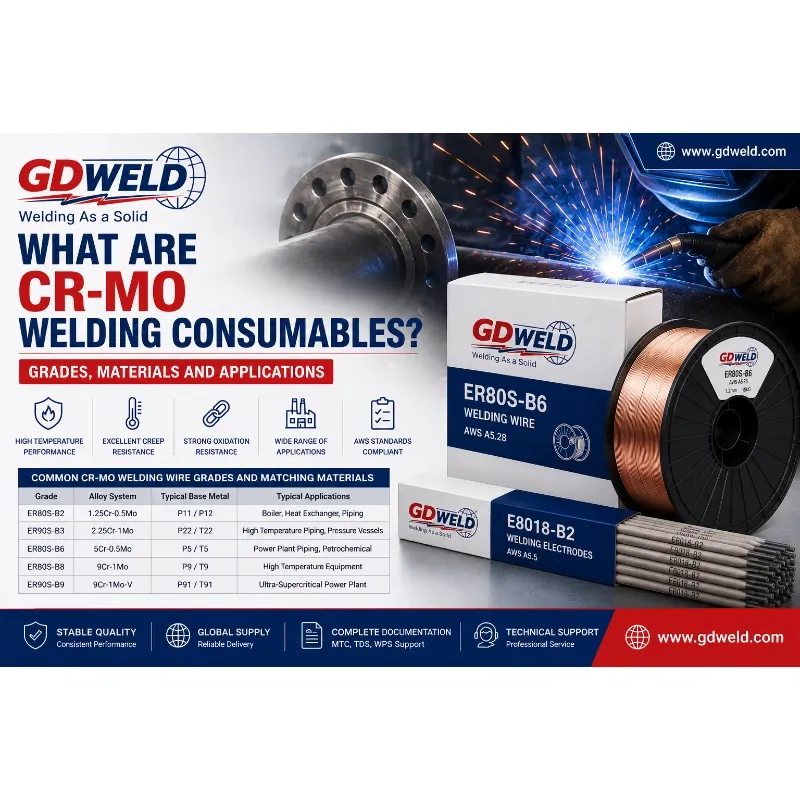
Common AWS grades include:
Cr-Mo Steel System | Solid Wire | Typical Base Metal |
1.25Cr-0.5Mo | ER80S-B2 | P11 / P12 |
2.25Cr-1Mo | ER90S-B3 | P22 / T22 |
5Cr-0.5Mo | ER80S-B6 | P5 / T5 |
9Cr-1Mo | ER80S-B8 | P9 / T9 |
9Cr-1Mo-V | ER90S-B9 | P91 / T91 |
These classifications are associated with different alloy systems and should not be treated as interchangeable. AWS references and industry welding procedures show different filler-metal classifications for these Cr-Mo material groups.
What Are Cr-Mo Welding Consumables?
Cr-Mo means chromium-molybdenum.
Chromium contributes to high-temperature oxidation resistance, while molybdenum contributes to strength and resistance to creep at elevated temperatures.
Because of these properties, Cr-Mo steels are widely used in equipment operating under demanding temperature and pressure conditions.
Typical applications include:
- Power plants
- Boilers
- Steam piping
- Pressure vessels
- Heat exchangers
- Oil refineries
- Petrochemical equipment
- Chemical processing systems
The filler metal must be selected to provide appropriate compatibility with the Cr-Mo base metal and the required service conditions.
Why Is Cr-Mo Welding Consumable Selection Important?
A common procurement problem is:
“The welding wire has enough tensile strength. Why can't we use it?”
For Cr-Mo steel, tensile strength is only one part of the selection process.
The filler metal also needs to consider:
Chemical composition → Base-metal compatibility → Welding procedure → Heat treatment → Service conditions
For example, ER80S-B2 and ER90S-B3 are both Cr-Mo welding wires, but they are associated with different alloy systems.
Using the wrong filler metal can result in a weld that does not meet the project specification, even if the weld visually appears acceptable.
What Are the Main Cr-Mo Welding Consumable Grades?
ER80S-B2 — 1.25Cr-0.5Mo
ER80S-B2 is an AWS A5.28 low-alloy solid welding wire associated with the 1.25Cr-0.5Mo system.
It is commonly used for materials such as:
- ASTM A335 P11
- ASTM A213 T11
- ASTM A387 Grade 11
Typical applications include boiler piping, heat exchangers, power plant equipment and petrochemical systems.
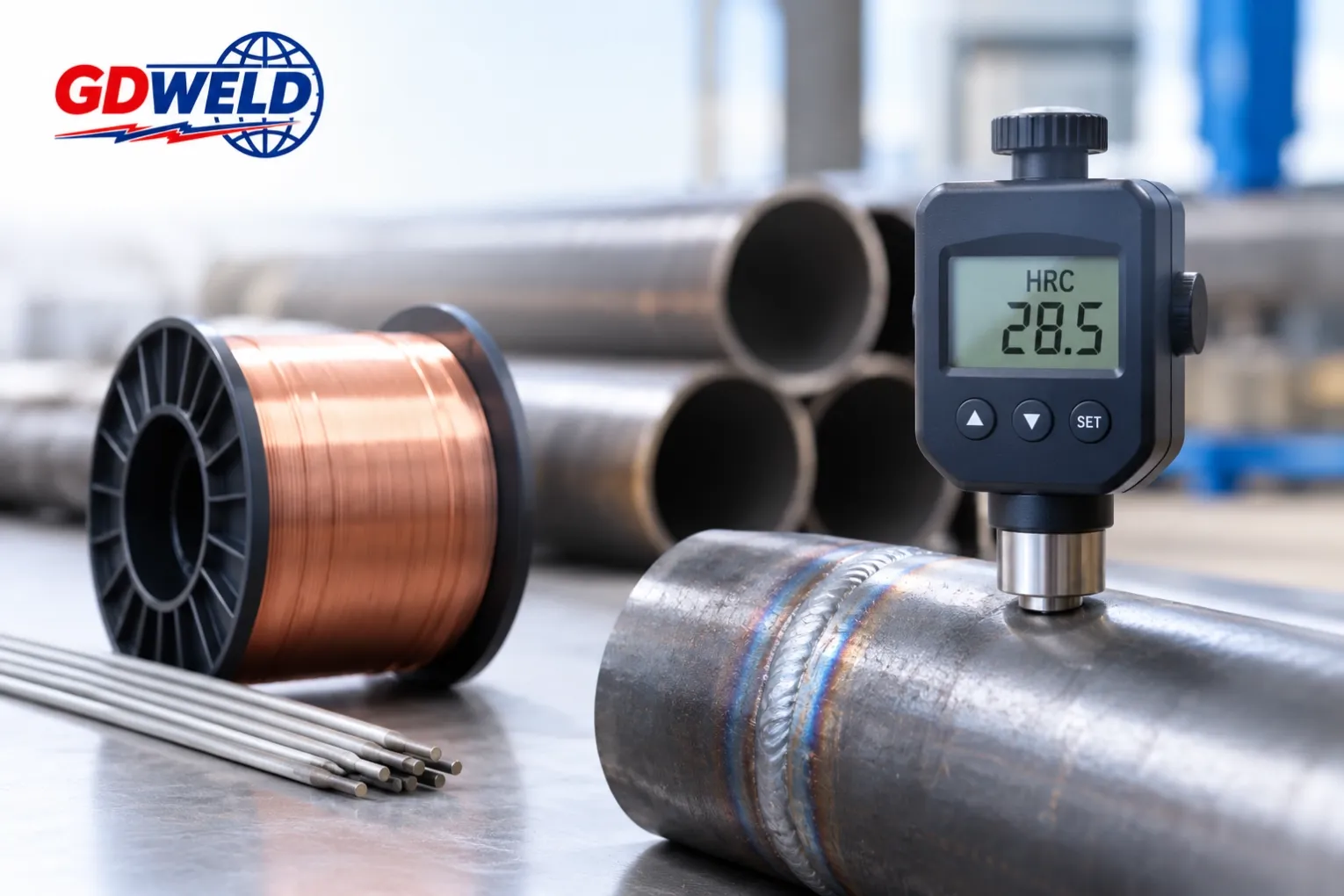
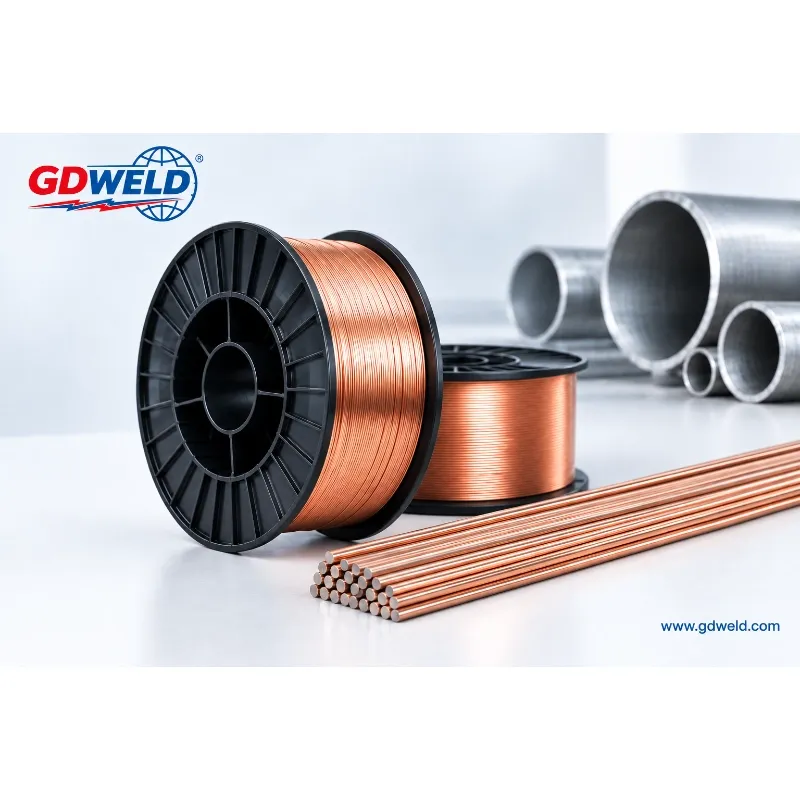
GD WELD supplies copper-coated ER80S-B2 welding wire for MIG/TIG welding of P11 and compatible Cr-Mo steels.
ER90S-B3 — 2.25Cr-1Mo
ER90S-B3 is associated with the 2.25Cr-1Mo alloy system.
Typical compatible materials include:
- ASTM A335 P22
- ASTM A213 T22
- ASTM A387 Grade 22
It is commonly used in high-temperature piping, boilers, pressure vessels and petrochemical equipment.
The higher Cr-Mo alloy content makes ER90S-B3 different from B2 and suitable for a different group of Cr-Mo steels. AWS procedure references list ER90S-B3 for 2.25Cr-1Mo applications.
ER80S-B6 — 5Cr-0.5Mo
ER80S-B6 is associated with the 5Cr-0.5Mo alloy system.
Lean more: What is ER80S-B6 Welding Wire?
It is commonly used for compatible materials such as:
- ASTM A335 P5
- ASTM A213 T5
- ASTM A387 Grade 5
This grade is frequently used for high-temperature piping, pressure equipment and petrochemical applications.
Because B6 is an air-hardening Cr-Mo alloy system, appropriate welding procedure controls such as preheat and PWHT can be particularly important.
ER80S-B8 — 9Cr-1Mo
ER80S-B8 is associated with the 9Cr-1Mo system.
It is used for compatible high-chromium Cr-Mo steels, commonly including P9/T9-type materials.
Compared with B2, B3 and B6, B8 contains substantially more chromium and therefore belongs to a different material and application group. AWS A5.28 references describe B8 as approximately 9Cr-1Mo filler metal.
ER90S-B9 — 9Cr-1Mo-V
For advanced high-temperature applications, ER90S-B9 is associated with 9Cr-1Mo-V steels such as P91/T91.
These materials are used in demanding power-generation applications where high-temperature strength and creep resistance are critical.
B9 should not be considered simply a higher-grade replacement for B8. Its alloy design and welding requirements are different.
Cr-Mo Welding Wire vs Welding Electrode
Cr-Mo consumables are available for different welding processes.
Welding Process | Typical Consumable |
GTAW / TIG | ER80S-B2 / ER90S-B3 / ER80S-B6 |
GMAW / MIG | ER80S-B2 / ER90S-B3 / ER80S-B6 |
SMAW | E8018-B2 / E9018-B3 / E8018-B6 |
SAW | Matching Cr-Mo flux/wire systems |
FCAW | Matching Cr-Mo flux-cored grades |
For example, ER80S-B2 is commonly paired with E8018-B2 for different welding processes on 1.25Cr-0.5Mo materials, while ER90S-B3 and E9018-B3 are used for compatible 2.25Cr-1Mo applications.
The exact consumable should always be determined by the qualified welding procedure.
How to Select the Right Cr-Mo Welding Consumable?
A practical selection process is:
1. Identify the Base Metal
First confirm the exact grade:
P11? P22? P5? P9? P91?
Do not select the filler metal from the service temperature alone.
2. Check the Alloy System
Identify the approximate Cr-Mo chemistry of the base metal.
For example:
P11 → 1.25Cr-0.5Mo → ER80S-B2
P22 → 2.25Cr-1Mo → ER90S-B3
P5 → 5Cr-0.5Mo → ER80S-B6
3. Confirm the Welding Process
Determine whether the project uses:
- TIG
- MIG
- SMAW
- SAW
- FCAW
The consumable classification depends on the welding process.
4. Check WPS/PQR and Heat Treatment
Preheat, interpass temperature and PWHT requirements should be established by the qualified welding procedure and applicable code—not simply copied from a product catalog.
What Should Buyers Check When Purchasing Cr-Mo Welding Consumables?
For industrial procurement, the product name alone is not enough.
Before ordering, buyers should verify:
- AWS classification
- Chemical composition
- Mechanical properties
- Base-metal compatibility
- MTC / CoA
- Batch traceability
- Wire diameter or electrode size
- Packaging
- WPS/PQR requirements
This is particularly important for power, petrochemical and pressure-equipment projects where documentation and batch consistency can be critical.
Why Choose GD WELD for Cr-Mo Welding Consumables?
GD WELD focuses on special AWS-standard welding consumables for international industrial applications.
Our Cr-Mo welding consumable range includes products such as:
ER80S-B2 · ER90S-B3 · ER80S-B6 · ER80S-B8
For industrial buyers and distributors, GD WELD supports:
- Stable chemical composition
- Consistent production quality
- Technical documentation
- Batch traceability
- Export packaging
- OEM supply
- Sample support
The goal is to help buyers select the right Cr-Mo consumable for the right material and application, rather than simply choosing a higher-strength or lower-cost product.
Frequently Asked Questions
What welding wire is used for Cr-Mo steel?
It depends on the base-metal grade. Common examples include ER80S-B2 for P11, ER90S-B3 for P22 and ER80S-B6 for P5.
What is the difference between B2, B3 and B6 welding wire?
The primary difference is their alloy system:
B2 → 1.25Cr-0.5Mo
B3 → 2.25Cr-1Mo
B6 → 5Cr-0.5Mo
They are designed for different Cr-Mo base metals and should not be considered interchangeable.
Can ER70S-6 be used for Cr-Mo steel?
ER70S-6 is a carbon-steel welding wire and should not automatically replace a Cr-Mo filler metal. For critical Cr-Mo applications, the filler metal should comply with the qualified welding procedure and project requirements.
Conclusion
Cr-Mo welding consumables are specialized filler metals designed for chromium-molybdenum steels used in high-temperature and pressure-service applications.
The most common AWS solid-wire grades include:
- ER80S-B2 → P11 / 1.25Cr-0.5Mo
- ER90S-B3 → P22 / 2.25Cr-1Mo
- ER80S-B6 → P5 / 5Cr-0.5Mo
- ER80S-B8 → P9 / 9Cr-1Mo
- ER90S-B9 → P91 / 9Cr-1Mo-V
The correct choice depends on base-metal chemistry, welding process, service conditions, applicable code and qualified WPS/PQR.
If you are sourcing Cr-Mo welding wire or electrodes, GD WELD can provide product specifications, technical documentation and sample support.