E6011 vs E7018: Which Welding Electrode Should You Choose?
Compare E6011 vs E7018 welding electrodes. Learn about coating, penetration, strength, applications and storage to choose the right electrode.
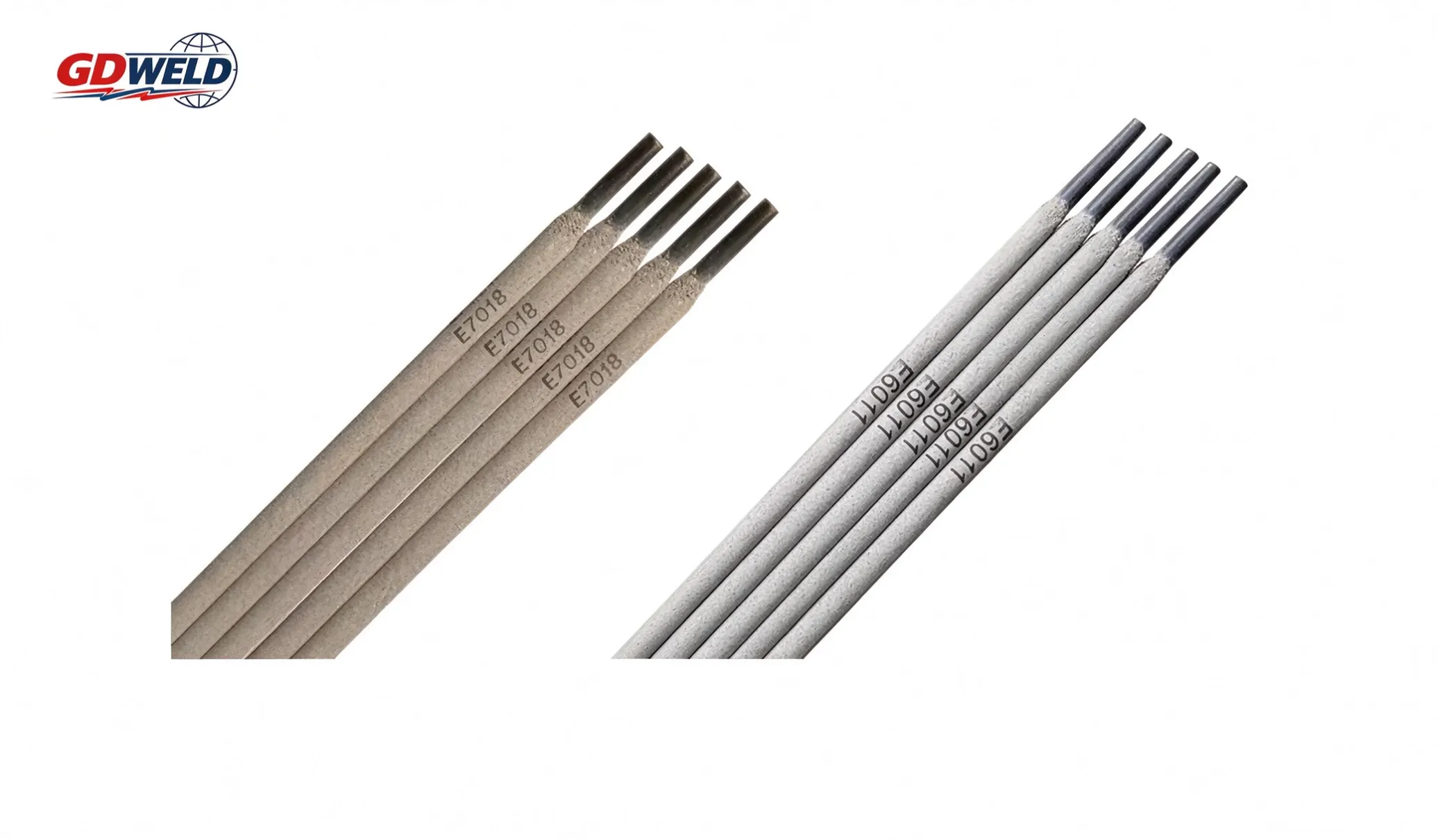
Choosing between E6011 and E7018? Both are widely used carbon steel welding electrodes, but they have different coating types, penetration characteristics and weld-metal properties.
The right choice depends on your base material, welding conditions and project requirements. Here are the key differences to help you decide.
1. E6011 vs E7018: Main Differences
The biggest difference between E6011 and E7018 is their electrode coating. E6011 uses a cellulose-based coating, while E7018 has a low-hydrogen iron powder coating.
Comparison | E6011 | E7018 |
|---|---|---|
AWS Classification | E6011 | E7018 |
Coating Type | High-cellulose potassium | Low-hydrogen potassium iron powder |
Tensile Strength Level | 60 ksi (414 MPa) | 70 ksi (483 MPa) |
Penetration | Deep | Medium |
Weld Characteristics | Strong, forceful arc | Smooth arc and good weld appearance |
Current | AC or DCEP | AC or DCEP, subject to product specifications |
Main Advantage | Deep penetration | Low-hydrogen weld metal |
Typical Applications | Pipe welding and field repairs | Structural steel and heavy fabrication |
Both electrodes are available for multiple welding positions. Always check the specific electrode classification and manufacturer's recommendations.
2. What Is E6011 Welding Electrode Used For?
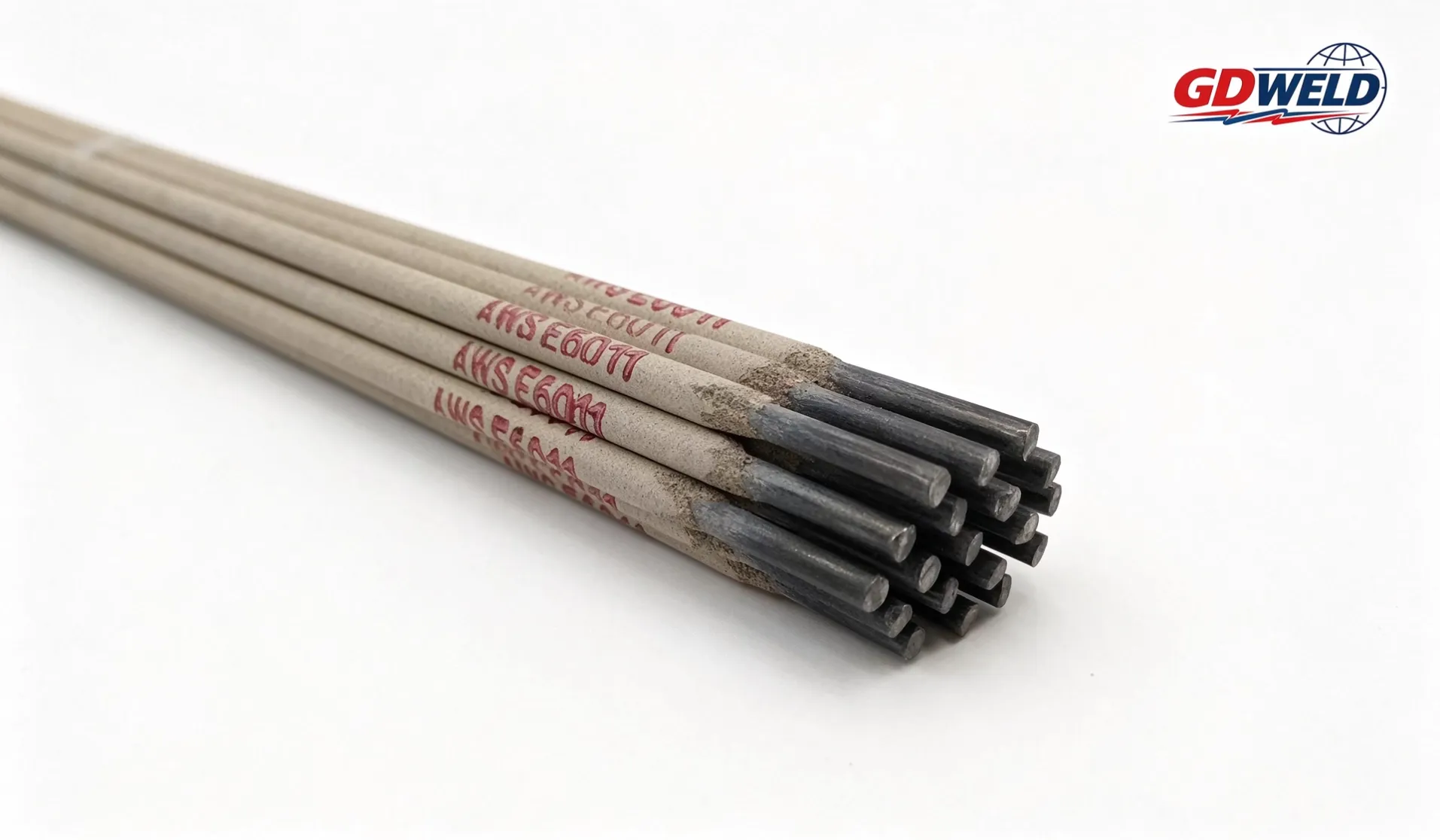
E6011 is a cellulose-coated welding electrode known for its strong arc and deep penetration.
Its main characteristics include:
- Deep penetration for suitable joint configurations.
- Strong arc force and good arc stability.
- Suitable for various welding positions.
- Operates with AC or DCEP.
- Commonly used for pipe welding, maintenance and field repairs.
E6011 is often selected for field work where strong penetration and reliable arc performance are important. It can also be used on certain less-than-perfectly-clean surfaces, although removing oil, paint, rust and other contaminants is still recommended.
Looking for this electrode? Explore our E6011 Welding Electrode product page for specifications and product information.
If you are comparing cellulosic electrodes for pipeline work, read our guide to E6011 vs E6010 welding electrodes for pipe welding.
3. What Is E7018 Welding Electrode Used For?
E7018 is a low-hydrogen iron powder electrode designed for applications requiring higher weld-metal strength and controlled hydrogen levels.
Its main characteristics include:
- 70 ksi minimum tensile strength classification.
- Low-hydrogen coating to help reduce hydrogen-related cracking risks.
- Smooth arc characteristics and good weld appearance.
- Iron powder coating that supports higher deposition efficiency.
- Commonly used for structural steel and heavy fabrication.
E7018 is often selected for structural components and projects where low-hydrogen welding procedures are specified.
However, its low-hydrogen performance depends on proper storage, handling and exposure-time control. Follow the manufacturer's instructions and applicable welding codes.
For product details, see our E7018 Low Hydrogen Welding Electrode page.
4. E6011 or E7018: Which One Should You Choose?
The right electrode depends on what your welding project requires.
Welding Requirement | Electrode to Consider |
|---|---|
Deep penetration | E6011 |
Pipe welding and field repairs | E6011, when permitted by the WPS |
Low-hydrogen welding requirements | E7018 |
Higher minimum tensile strength classification | E7018 |
Structural steel fabrication | E7018, when specified |
Maintenance and general repair | E6011, depending on the application |
Choose E6011 when deep penetration, strong arc force and field welding performance are important.
Choose E7018 when your project requires higher weld-metal strength and low-hydrogen welding characteristics.
Remember: E7018 is not automatically a replacement for E6011 just because it has a higher tensile strength classification. Check the base-metal grade, joint design, welding position and approved welding procedure before changing electrodes.
For more product information, see our E6011 welding electrode and browse the GD WELD welding electrode product range.
5. E6011 vs E7018: Storage and Handling
Storage is especially important for E7018 because its low-hydrogen coating can absorb moisture from the atmosphere.
To maintain its intended performance:
- Keep unopened electrodes in their original sealed packaging.
- Store opened electrodes under the conditions specified by the manufacturer.
- Use suitable holding ovens when required.
- Follow the specified rebaking and exposure-time requirements.
- Do not use electrodes that exceed the permitted exposure time.
E6011 also needs proper storage to protect its coating condition, but it does not have the same low-hydrogen handling requirements as E7018.
Conclusion: Choose the Right Electrode for Your Project
E6011 and E7018 serve different welding requirements.
E6011 is commonly selected for deep penetration, pipe welding and field repairs. E7018 is preferred for applications requiring higher weld-metal strength and low-hydrogen characteristics.
The best choice depends on the base material, welding procedure and project specifications—not strength rating alone.
Looking for E6011 or E7018 welding electrodes?
Contact GD WELD for product specifications, technical information and a quotation.
Related Welding Electrodes
- Internal Link 1: Anchor text: E6011 Welding Electrode Link to: E6011 Product Page
- Internal Link 2: Anchor text: E7018 Low Hydrogen Welding Electrode Link to: E7018 Product Page