Oct 8, 2026
ER80S-D2 vs ER90S-D2 vs ER100S-G vs ER110S-G: How to Choose?
Which welding wire should you choose—ER80S-D2, ER90S-D2, ER100S-G or ER110S-G? Compare strength, toughness and application requirements before selecting the right grade.
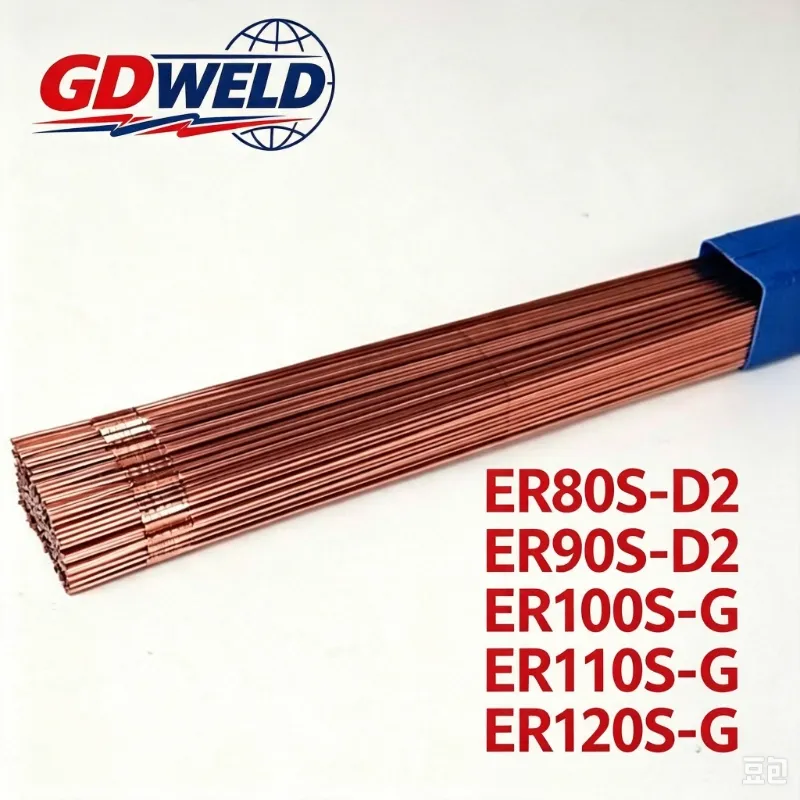
Quick Answer: Which Welding Wire Should You Choose?
Welding Wire | Strength Class | Main Selection Focus |
|---|---|---|
ER80S-D2 | ER80 | When ER80-level weld strength is sufficient |
ER90S-D2 | ER90 | When higher weld strength is required |
ER100S-G | ER100 | When ER100-level weld strength is required |
ER110S-G | ER110 | When an even higher strength classification is required |
These classifications represent different weld-metal strength levels, not a simple better-to-worse ranking.
Welding Wire Selection Matrix
If your priority is... | Start by evaluating... |
|---|---|
ER80-level strength is sufficient | ER80S-D2 |
Higher weld strength is required | ER90S-D2 |
ER100-level strength is required | ER100S-G |
Still higher weld strength is required | ER110S-G |
Low-temperature toughness is critical | Impact requirements and test data |
A G-classification wire is specified | Actual chemistry, properties and MTC |
Use this as a starting point, not as a direct base-metal matching chart. Final selection should follow the applicable specification and WPS/PQR.
1. Start With the Base-Metal Grade
Before comparing welding wires, identify the exact steel grade and specification.
“High-strength steel” covers many HSLA and low-alloy steels with different strength, alloy and toughness requirements.
Check:
- Base-metal grade and specification
- Yield and tensile strength
- Service temperature
- Project or customer requirements
Our guide to strength-mismatch risk in HSLA steel welding explains why filler-metal selection should not be based on strength alone.
2. ER80S-D2: When Is It Enough?
ER80S-D2 is an AWS A5.28 low-alloy solid welding wire with an ER80 classification.
Consider it when:
- ER80-level weld strength is sufficient
- The base metal is compatible
- Required toughness can be achieved
- The WPS/PQR permits the classification
If ER80S-D2 meets all requirements, moving to a higher-strength wire may provide no practical advantage.
3. ER90S-D2: When Do You Need More Strength?
ER90S-D2 provides a higher weld-metal strength classification than ER80S-D2.
It may be considered when the required weld strength cannot be adequately achieved with an ER80-class filler metal.
However, strength alone should not determine the choice. Check toughness, chemistry, welding procedure and service conditions as well.
4. ER100S-G: For Higher-Strength Requirements
ER100S-G belongs to the higher-strength range and can be considered when project requirements exceed what ER80 or ER90 classifications can provide.
The G classification is important. ER100S-G does not represent one single fixed alloy chemistry. Product chemistry and mechanical properties can vary within the applicable classification requirements.
When purchasing ER100S-G, compare:
Chemical composition + mechanical properties + impact data + TDS/MTC
Do not assume that every ER100S-G product has identical chemistry or application performance.
5. ER110S-G: When Is a Higher Classification Required?
ER110S-G is intended for applications requiring a higher weld-metal strength classification.
It should be selected only when the base metal, design requirements and qualified welding procedure justify the higher-strength filler metal.
A higher classification is not automatically a better choice. Excessive weld strength can create an unnecessary strength mismatch or affect other required weld properties.
Check Toughness and Service Conditions
Before making the final decision, check more than tensile strength.
For low-temperature or impact-critical applications, review:
- Required Charpy impact toughness
- Minimum service temperature
- Ductility requirements
- Heat input limitations
- PWHT requirements
The welding procedure and heat treatment can significantly affect final weld-metal properties.
Check the WPS/PQR Before Ordering
The final selection should follow the applicable AWS classification, WPS/PQR, project specification and welding code.
Confirm:
Filler classification → Welding process → Shielding gas → Preheat/interpass → Heat input → PWHT → Mechanical properties
Do not replace ER80S-D2 with ER90S-D2, ER100S-G or ER110S-G simply because the new wire has a higher strength classification.
Frequently Asked Questions
Can ER80S-D2 Be Used Instead of ER90S-D2?
Only when the base-metal requirements, required weld strength, toughness and qualified WPS/PQR allow an ER80-class filler metal. The lower classification should not be substituted without checking the applicable requirements.
Is ER100S-G Stronger Than ER80S-D2?
ER100S-G represents a higher weld-metal strength classification than ER80S-D2. However, higher strength does not automatically make it the better choice. Toughness, chemistry, service conditions and welding procedure must also be considered.
Is ER110S-G Always Better for High-Strength Steel?
No. ER110S-G should be used when its higher-strength classification is required by the application or qualified procedure. Selecting a stronger wire without a technical reason can create unnecessary strength mismatch or other weld-property concerns.
Simple Selection Process
Use this sequence:
Base metal
↓
Required weld strength
↓
Toughness and service temperature
↓
Consumable chemistry
↓
WPS/PQR and applicable code
↓
Select the lowest-strength grade that fully meets the requirements
Bottom Line
ER80S-D2, ER90S-D2, ER100S-G and ER110S-G should be selected according to the complete welding requirement—not by strength classification alone.
If ER80S-D2 meets the required strength and toughness, it may be the right choice. If higher weld-metal strength is required, evaluate ER90S-D2, ER100S-G or ER110S-G according to the base metal, WPS/PQR and application.
If you are unsure which grade to order, provide the base-metal grade, required weld strength, welding process, wire diameter, toughness requirements and application. These details allow a more reliable welding wire selection.