Sep 21, 2026
ER80S-Ni1 Welding Wire: Low-Temperature Steel Applications & Selection
Learn how ER80S-Ni1 welding wire is used for low-temperature steel, including pipelines, pressure vessels and tanks. Compare toughness, applications and key selection factors.
ER80S-Ni1 Welding Wire: Low-Temperature Steel Applications & Selection
What Is ER80S-Ni1 Welding Wire?
ER80S-Ni1 is an AWS A5.28 low-alloy solid welding wire with approximately 1% nickel, designed for compatible low-temperature and high-strength steel applications.
Unlike general-purpose carbon steel welding wires, ER80S-Ni1 is selected when the welded joint needs suitable low-temperature impact toughness as well as adequate strength and ductility.
Nickel is the key alloying element in the Ni1 classification. It can improve weld-metal toughness at reduced temperatures, which is why ER80S-Ni1 is used for applications such as low-temperature pipelines, pressure vessels, tanks, offshore structures and other equipment where sub-zero service may be involved.
For buyers, the important question is therefore not:
“Is ER80S-Ni1 stronger than ordinary welding wire?”
It is:
“Does the weld metal meet the required impact toughness at the actual design temperature?”
Know more of ER80S-Ni1,
Why Is ER80S-Ni1 Used for Low-Temperature Steel?
When steel equipment operates at low temperatures, tensile strength alone is not enough to evaluate welding consumables.
A weld may have adequate tensile strength but still fail to meet the required impact toughness at the design temperature.
This is why low-temperature welding projects often specify:
- Charpy V-notch impact testing
- Minimum absorbed energy
- Specific test temperature
- Weld-metal chemical composition
- Qualified welding procedure
- Specific AWS classification
ER80S-Ni1 provides a nickel-alloyed weld-metal system intended for this type of application.
Nickel can help maintain weld-metal toughness at reduced temperatures, making Ni1 consumables relevant to fine-grained and low-temperature steels.
Customer pain point:
A common purchasing mistake is to compare welding wires only by tensile strength and price. For low-temperature service, the Charpy impact requirement may be more important than a small difference in tensile strength.
Where Is ER80S-Ni1 Welding Wire Used?
ER80S-Ni1 is used for compatible low-alloy and fine-grained steels where low-temperature weld-metal toughness is required.
Typical application areas include:
Low-Temperature Pipelines
ER80S-Ni1 can be used for compatible pipeline steels where the design temperature requires improved weld-metal toughness.
Pressure Vessels
It may be selected for pressure vessels exposed to reduced operating temperatures, provided the base material and welding procedure are qualified for the consumable.
Storage Tanks
Low-temperature storage tanks and equipment handling refrigerated or liquefied products may require nickel-alloyed welding consumables.
Offshore Structures
Offshore structures can experience low ambient temperatures and demanding service conditions. ER80S-Ni1 is used for compatible low-temperature structural steels in some applications.
Oil & Gas Equipment
Pipeline, process-piping and other oil and gas applications may specify Ni1-type consumables when low-temperature toughness is required.
However, ER80S-Ni1 should not be selected simply because an application is described as “cold.” The actual base material, design temperature and impact-test requirement should determine the filler metal.
What Steel Is ER80S-Ni1 Used For?
ER80S-Ni1 is associated with low-alloy and fine-grained steels requiring good low-temperature toughness.
Depending on the specific product and qualification, examples can include:
- ASTM A333 Grade 6
- ASTM A334 Grade 6
- ASTM A350 LF2
- ASTM A352 LCB/LCC
- API 5L X65
- S355/S460 low-temperature structural steels
- Other compatible Ni-bearing or fine-grained steels
Published product data from different manufacturers show somewhat different base-metal lists and impact-test conditions, so buyers should always confirm the exact product documentation rather than assuming every ER80S-Ni1 wire has identical approved applications.
This is particularly important when the project specification requires a specific impact temperature.
ER80S-Ni1 and Low-Temperature Impact Toughness
This is the most important selection factor for ER80S-Ni1.
A typical procurement specification may require something like:
Charpy V-notch → Test Temperature → Minimum Impact Energy
For example, current product data from suppliers shows ER80S-Ni1 products tested at temperatures such as -45°C, -50°C or -60°C, depending on the product and applicable standard.
Therefore, buyers should not simply ask:
“Do you have ER80S-Ni1?”
A better purchasing question is:
“Can your ER80S-Ni1 meet our required Charpy impact temperature and absorbed energy?”
This small change can prevent a major procurement problem.
ER80S-Ni1 vs Ordinary Carbon Steel Welding Wire
One of the most common mistakes is using a general-purpose carbon steel wire because it has a similar tensile strength.
For example, a buyer may compare an ER80-class Ni1 wire with another ER80-class wire and assume they are interchangeable.
They are not automatically interchangeable.
Factor | ER80S-Ni1 | General Carbon Steel Wire |
Strength class | ER80 | Product dependent |
Main alloy feature | ~1% Ni | Primarily C-Mn |
Main selection focus | Low-temperature toughness | General fabrication |
Low-temperature impact | Important consideration | Depends on product |
Typical application | Low-temperature / low-alloy steel | General carbon steel |
AWS classification | ER80S-Ni1 | Classification dependent |
The important difference is weld-metal chemistry and toughness, not simply the “ER80” strength level.
ER80S-Ni1 vs ER80S-Ni2: What's the Difference?
ER80S-Ni1 and ER80S-Ni2 are both nickel-alloyed ER80 consumables, but they belong to different AWS alloy classifications.
Know more of ER80S-Ni2,
Please visit,
In general:
Feature | ER80S-Ni1 | ER80S-Ni2 |
Nickel level | ~1% | ~2% |
Strength class | ER80 | ER80 |
Main focus | Low-temperature toughness | Low-temperature toughness / higher Ni alloy system |
Typical application | Low-temperature steels | Compatible low-temperature steels |
Selection | Base material + impact requirement | Base material + impact requirement |
A higher nickel content does not automatically mean that Ni2 is a better replacement for Ni1.
The correct choice depends on the required AWS classification, base material, design temperature, impact requirements and qualified WPS/PQR.
GD WELD's ER80S-Ni2 product information also emphasizes that Ni1 and Ni2 should not be substituted simply based on nickel content.
What Should Buyers Check Before Purchasing ER80S-Ni1?
This is where many low-temperature welding projects run into problems.
Before ordering ER80S-Ni1, confirm the following:
1. Base Material
Provide the exact material grade rather than simply saying “low-temperature steel.”
2. Design Temperature
What is the minimum operating or design temperature?
3. Impact Requirement
Check:
- Charpy test temperature
- Minimum absorbed energy
- Test condition
- Welded condition
4. AWS Classification
Confirm that the project specifically requires ER80S-Ni1.
5. Welding Process
Determine whether the wire will be used for:
- GMAW/MIG
- GTAW/TIG
ER80S-Ni1 products are available in different product forms, so the actual product data should be checked.
6. Shielding Gas
The shielding gas must match the product and qualified welding procedure.
7. Wire Diameter
Confirm the required diameter based on joint design, welding process and WPS.
8. Documentation
For industrial purchasing, request:
- TDS
- MTC/CoA
- Chemical composition
- Mechanical properties
- Charpy impact data
- Batch traceability
- Required certificates
What About Preheat and PWHT for ER80S-Ni1?
ER80S-Ni1 does not have one universal preheat or PWHT requirement for every application.
The actual welding procedure depends on:
- Base material
- Material thickness
- Joint design
- Welding process
- Welding heat input
- Design temperature
- Applicable code
- WPS/PQR
Some ER80S-Ni1 product data indicates that preheat and PWHT may not be necessary for certain applications, while other projects may require thermal controls based on the base material and construction code.
Therefore, buyers should avoid using a generic temperature from a supplier datasheet as a substitute for the qualified welding procedure.
The WPS/PQR and applicable project specification should control the actual welding conditions.
Common Problems When Selecting ER80S-Ni1
Problem 1: Checking Tensile Strength but Not Impact Toughness
A wire can meet the required tensile strength but fail to satisfy the specified low-temperature impact requirement.
Solution: Confirm Charpy temperature and absorbed energy before purchasing.
Problem 2: Choosing the Wire Only by “Ni Content”
More nickel does not automatically make a wire suitable for every application.
Solution: Match the AWS classification and base material to the WPS/PQR.
Problem 3: Assuming All ER80S-Ni1 Products Are Identical
Different manufacturers may provide different product forms, typical chemistry, impact data and recommended applications.
Solution: Check the actual TDS and MTC/CoA for the product being purchased.
Problem 4: Replacing Ni1 with Another ER80 Wire
The “ER80” strength level does not define the complete alloy system.
Solution: Compare chemistry, impact requirements, base material and applicable specification before substitution.
ER80S-Ni1 Selection Checklist
Before placing an order, confirm:
Base Material → What steel grade is being welded?
Design Temperature → How cold will the equipment operate?
AWS Classification → Is ER80S-Ni1 specified?
Impact Requirement → What Charpy temperature and energy are required?
Welding Process → GMAW/MIG or GTAW/TIG?
Wire Diameter → What diameter does the WPS require?
Shielding Gas → Does the gas match the product and procedure?
Heat Treatment → Are preheat, interpass or PWHT requirements specified?
Documentation → Are TDS, MTC/CoA and impact reports required?
This checklist helps buyers avoid selecting a welding wire based only on price or a general “low-temperature” description.
Final Takeaway
ER80S-Ni1 is not simply an ER80-strength welding wire. Its key value is the nickel-alloyed weld-metal system and its suitability for applications where low-temperature toughness is important.
For pipelines, pressure vessels, tanks, offshore structures and other low-temperature equipment, the correct consumable should be selected according to:
Base Material + Design Temperature + Impact Requirement + AWS Classification + Welding Process + WPS/PQR
Do not select ER80S-Ni1 only because the project operates in a cold environment. Confirm the required Charpy impact temperature and minimum absorbed energy first.
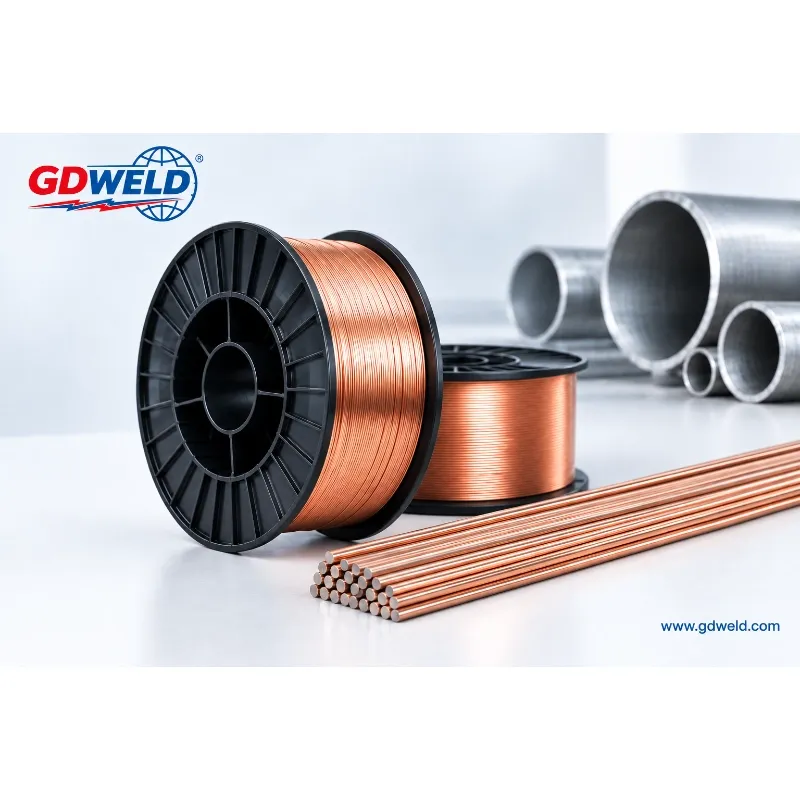
GD WELD supplies copper-coated ER80S-Ni1 welding wire for compatible low-temperature and high-strength steel applications. Buyers can provide the base material, design temperature, AWS classification, diameter, welding process and documentation requirements to confirm the appropriate product.