Aug 21, 2026
How to Avoid Brittle HAZ Cracking When Using High Strength Solid Welding Wire
Learn how to avoid brittle HAZ cracking when welding HSLA steel with high strength solid wires such as ER80S-D2, ER90S-D2, ER100S-G, and ER110S-G.
How to Avoid Brittle HAZ Cracking When Using High Strength Solid Welding Wire
Why High Strength Welding Wire Does Not Always Guarantee Welding Reliability
High strength solid welding wires such as ER80S-D2, ER90S-D2, ER100S-G, and ER110S-G are widely used in heavy-duty welding applications, including construction machinery, mining equipment, transportation structures, pressure components, and high-strength steel fabrication.
However, many fabricators focus only on the mechanical properties of the weld metal and ignore the performance of the Heat Affected Zone (HAZ).
A common welding failure occurs when:
- The weld metal passes tensile and impact tests
- The weld appearance meets requirements
- The welding wire has excellent strength
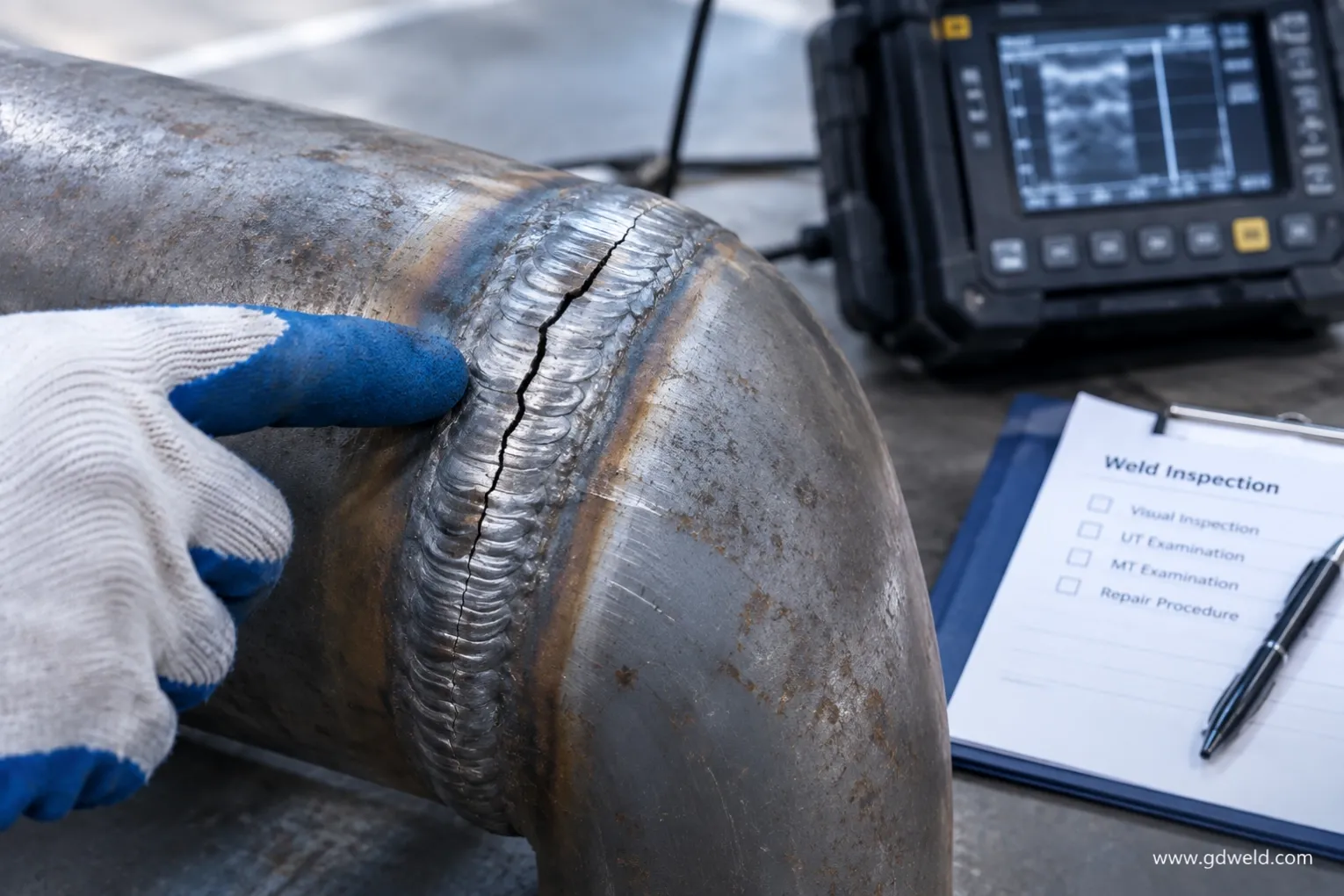
But cracks still appear in the HAZ of the base metal during operation.
This type of failure is especially dangerous because it may cause sudden fracture of heavy-load components without obvious warning.
The key principle is:
The strength of welding wire is only one part of welded joint performance. The HAZ microstructure determines the actual reliability of high-strength steel welding.
What Is the Heat Affected Zone (HAZ)?
The Heat Affected Zone is the area of base metal close to the weld that does not melt but experiences significant changes due to welding heat.
A welded joint normally contains three different regions:
Base Metal
|
|
Heat Affected Zone (HAZ)
|
|
Weld Metal
The weld metal is controlled by the welding wire composition, but the HAZ depends mainly on:
- Base steel chemistry
- Cooling rate
- Welding heat input
- Preheat temperature
- Interpass temperature
- Joint restraint
- Hydrogen content
Therefore, even a high-performance welding wire cannot prevent HAZ problems if the welding thermal cycle is not properly controlled.
Why HSLA Steel Has Higher HAZ Cracking Risk
High-strength low-alloy steel (HSLA) achieves high strength through alloying and controlled manufacturing processes.
Typical alloying elements include:
- Carbon (C)
- Manganese (Mn)
- Chromium (Cr)
- Molybdenum (Mo)
- Nickel (Ni)
- Vanadium (V)
- Niobium (Nb)
- Titanium (Ti)
These elements improve strength and hardenability.
However, higher hardenability also means the HAZ is more likely to transform into hard martensitic structures during rapid cooling.
The relationship is:
Higher alloy content
↓
Higher hardenability
↓
Faster martensite formation
↓
Higher HAZ hardness
↓
Lower toughness
↓
Higher cracking risk
The Main Cause: Excessive Cooling Rate During Welding
During welding, the HAZ experiences a rapid thermal cycle:
The Main Cause: Excessive Cooling Rate During Welding
During welding, the HAZ experiences a rapid thermal cycle:
Rapid heating
↓
Austenite formation
↓
Fast cooling
↓
Martensite formation
↓
Hard and brittle HAZ
↓
Crack initiation
Martensite provides high strength, but excessive martensite in the HAZ can significantly reduce toughness.
When combined with:
- Residual welding stress
- Diffusible hydrogen
- High joint restraint
the welded structure becomes vulnerable to cold cracking.
Carbon Equivalent and Steel Hardenability
The weldability of high-strength steel is commonly evaluated by Carbon Equivalent (CE).
One commonly used CE formula is:
A higher CE value indicates:
- Increased hardenability
- Higher HAZ hardness
- Greater need for preheating
- Higher risk of hydrogen cracking
For high-strength steels such as those used with ER100S-G and ER110S-G welding wires, CE evaluation is an important part of welding procedure development.
Why Preheating Is Critical for High Strength Steel Welding
Many welding defects caused by brittle HAZ formation are related to insufficient preheating.
The purpose of preheating is not simply to increase temperature. It mainly helps to:
- Reduce cooling speed
- Control HAZ hardness
- Improve hydrogen diffusion
- Reduce thermal stress
Without proper preheat:
800°C
↓↓↓
500°C
Very rapid cooling
↓
Hard martensitic HAZ
With suitable preheat:
800°C
↓
500°C
Controlled cooling
↓
Improved HAZ structure
According to AWS D1.1 Structural Welding Code – Steel, preheat and interpass temperatures should be selected based on factors including steel grade, thickness, hydrogen level, and welding conditions. :contentReference[oaicite:0]{index=0}
Cooling Rate and t8/5 Cooling Time
In welding metallurgy, cooling behavior is often described by the t8/5 cooling time.
It represents the time required for the welded area to cool from:
800°C → 500°C
The cooling rate strongly affects the final HAZ microstructure.
Cooling Condition | Typical Structure | Welding Effect |
|---|---|---|
Very fast cooling | Martensite | High hardness, brittle |
Controlled cooling | Bainite | Good strength and toughness |
Slow cooling | Ferrite/Bainite | Lower cracking sensitivity |
For high-strength steels, the goal is not the fastest cooling, but the correct cooling range.
Heat Input Control: Finding the Correct Welding Window
Heat input has a direct influence on HAZ properties.
Too Low Heat Input
Possible problems:
- Excessive cooling rate
- Increased martensite formation
- Higher HAZ hardness
- Increased cracking risk
Too High Heat Input
Possible problems:
- Coarse grain growth
- Reduced impact toughness
- Lower mechanical performance
Therefore, welding parameters must be controlled through a qualified Welding Procedure Specification (WPS).
Common Mistake: Choosing Stronger Welding Wire Alone
A frequent misunderstanding in high-strength steel fabrication is:
"If we use ER110S-G welding wire, the welded joint will automatically become stronger."
This is incorrect.
The weld metal may have:
- High tensile strength
- Good toughness
- Excellent chemical composition
But the HAZ remains the original base material.
The actual failure sequence can be:
High strength welding wire
↓
Strong weld metal
↓
Weak brittle HAZ
↓
Structural failure
For critical components, the complete welded joint must be evaluated, not only the weld metal.
Recommended Practices to Prevent Brittle HAZ Failure
1. Evaluate Base Steel Weldability
Before welding, check:
- Steel grade
- Chemical composition
- Carbon Equivalent
- Plate thickness
- Joint restraint
2. Select Proper Preheat Temperature
Preheat requirements depend on:
- Steel chemistry
- Thickness
- Hydrogen level
- Welding process
AWS D1.1 provides methods for determining minimum preheat and interpass temperatures, including approaches based on steel composition and welding conditions. :contentReference[oaicite:1]{index=1}
3. Control Interpass Temperature
Incorrect interpass temperature may cause:
- Excessive cooling
- Excessive grain growth
- Reduced toughness
Maintaining a stable thermal cycle is essential for high-strength steel welding.
4. Control Hydrogen Level
Hydrogen-assisted cracking requires three major factors:
- Susceptible steel microstructure
- Hydrogen source
- Tensile stress
Reduce risk by:
- Using low-hydrogen welding consumables
- Keeping welding wire dry
- Protecting shielding gas quality
- Cleaning oil, moisture, and contaminants
5. Verify HAZ Performance
For critical applications, consider:
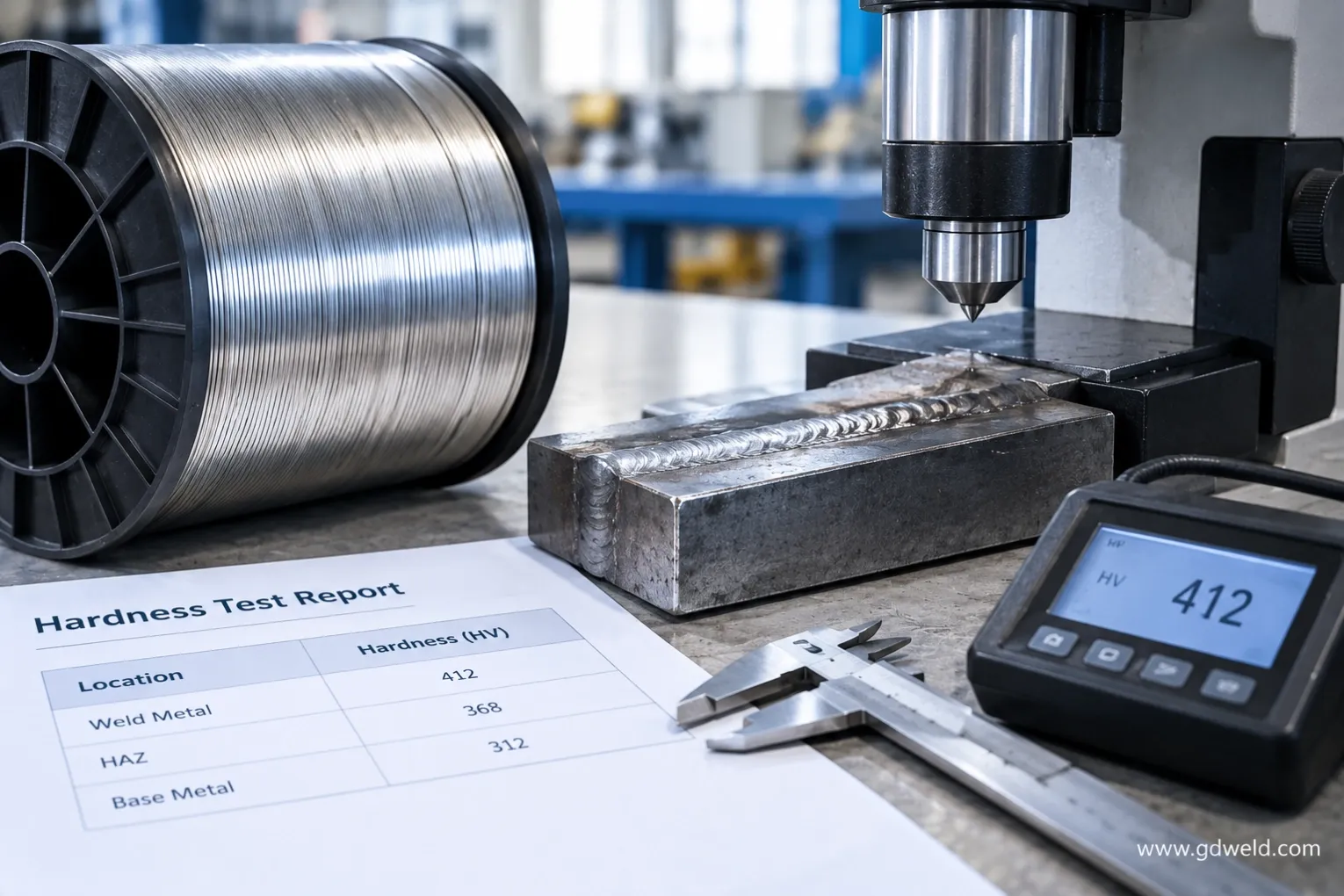
- HAZ hardness testing
- Impact toughness testing
- Welding procedure qualification testing
- Metallographic examination
Applications With High Brittle HAZ Risk
Brittle HAZ failure is especially critical in:
- Excavators
- Cranes
- Mining equipment
- Heavy trucks
- Offshore structures
- Pressure equipment
- High-strength structural components
Technical References
1. AWS D1.1/D1.1M Structural Welding Code – Steel
American Welding Society (AWS)
Main technical references:
- Preheat and interpass temperature requirements
- Hydrogen cracking prevention
- Welding procedure control
- HAZ hardness considerations
:contentReference[oaicite:2]{index=2}
2. AWS D14.8M / Cold Crack Prevention Guidelines
AWS methods consider:
- Steel chemical composition
- Carbon equivalent
- Diffusible hydrogen
- Joint restraint
- Plate thickness
These factors are used to determine appropriate preheat requirements. :contentReference[oaicite:3]{index=3}
3. Welding Metallurgy Principles
General welding metallurgy references recognize that:
- Faster cooling increases hard martensite formation
- Higher alloy content increases hardenability
- Thermal cycle control is essential for high-strength steel welding
Conclusion
When welding HSLA and high-strength steels with ER80S-D2, ER90S-D2, ER100S-G, and ER110S-G solid welding wires, weld metal strength is only one factor affecting final joint performance.
The biggest hidden risk is often the brittle Heat Affected Zone (HAZ).
Reliable high-strength steel welding requires control of:
- Preheat temperature
- Heat input
- Cooling rate
- Interpass temperature
- Hydrogen level
- Residual stress
The most important engineering principle is:
A high-strength welding wire can improve weld metal performance, but only proper welding procedure control can prevent brittle HAZ failure.
For manufacturers and welding consumable suppliers, understanding HAZ behavior is essential for producing safe and durable heavy-load welded structures.
Frequently Asked Questions (FAQ)
1. Why does the HAZ crack even when the welding wire passes all tests?
The HAZ can crack because welding wire performance only represents the weld metal properties. The Heat Affected Zone is the original base steel that experiences rapid heating and cooling during welding.
For high-strength steels, fast cooling can create hard martensitic structures in the HAZ. When combined with hydrogen and welding stress, brittle cracking may occur even if the weld metal meets all mechanical requirements.
2. Can high strength welding wire prevent HAZ cracking?
No. High strength welding wire alone cannot prevent HAZ cracking.
Products such as ER80S-D2, ER90S-D2, ER100S-G, and ER110S-G are designed to provide strong weld metal properties, but HAZ performance depends mainly on:
- Base steel chemistry
- Carbon equivalent (CE)
- Preheat temperature
- Heat input
- Cooling rate
- Hydrogen control
A properly selected welding procedure is required to achieve a reliable welded joint.
3. Why is preheating important when welding HSLA steel?
Preheating slows down the cooling rate of the welded area.
For HSLA and high-strength steels, insufficient preheat can cause rapid cooling and martensite formation in the HAZ, increasing hardness and reducing toughness.
Proper preheating helps:
- Reduce HAZ hardness
- Improve toughness
- Reduce hydrogen cracking risk
- Lower residual stress
4. What causes brittle martensite formation in the HAZ?
Brittle martensite forms when the HAZ cools too quickly after welding.
The main factors include:
- High carbon equivalent steel
- Thick plate sections
- Low heat input
- Low preheat temperature
- Cold environmental conditions
A faster cooling cycle increases the possibility of forming hard martensitic structures.
5. What is t8/5 cooling time in welding?
The t8/5 cooling time is the time required for the weld area to cool from 800°C to 500°C.
It is an important welding metallurgy parameter because it affects HAZ microstructure.
A short t8/5 time usually means:
- Faster cooling
- Higher hardness
- More martensite formation
A longer and controlled t8/5 time usually improves HAZ toughness.
6. What welding wires are commonly used for high-strength steel?
Common high-strength solid welding wires include:
Welding Wire | Typical Application |
|---|---|
ER80S-D2 | High strength structural steel |
ER90S-D2 | Heavy fabrication and engineering structures |
ER100S-G | High-strength machinery and equipment |
ER110S-G | Ultra-high-strength steel applications |
The correct wire selection depends on the base steel grade, required mechanical properties, and welding procedure.
7. How can hydrogen cracking be prevented in high-strength steel welding?
Hydrogen cracking prevention requires controlling three factors:
- Hydrogen source
- Susceptible microstructure
- Welding stress
Recommended practices include:
- Use low-hydrogen welding consumables
- Keep welding wire dry
- Remove oil, moisture, and contaminants
- Apply correct preheat temperature
- Control cooling rate
- Reduce joint restraint where possible
8. What welding parameters should be controlled when using ER110S-G welding wire?
When welding with ER110S-G or similar high-strength welding wires, control:
- Welding current and voltage
- Travel speed
- Heat input
- Preheat temperature
- Interpass temperature
- Shielding gas condition
- Hydrogen level
A qualified Welding Procedure Specification (WPS) should define these parameters.
9. How can HAZ quality be verified after welding?
For critical high-load components, HAZ quality can be evaluated through:
- Hardness testing
- Impact testing
- Weld procedure qualification testing
- Metallographic examination
- Non-destructive testing (NDT)
These inspections help confirm that the HAZ has sufficient toughness and crack resistance.
10. What industries need special attention to brittle HAZ risk?
Brittle HAZ control is especially important in industries where welded structures experience high loads or safety-critical service conditions, including:
- Construction machinery
- Mining equipment
- Cranes
- Heavy transportation equipment
- Offshore structures
- Pressure vessels
- High-strength steel fabrication
Key Takeaway
When using high-strength solid welding wires, the strongest weld metal does not always mean the strongest welded structure.
Preventing brittle HAZ failure requires a complete welding strategy:
Correct welding wire + Proper preheat + Controlled cooling + Low hydrogen practice + Qualified welding procedure
Only by controlling the entire welding process can high-strength steel structures achieve long-term reliability.