Low Alloy & High Strength
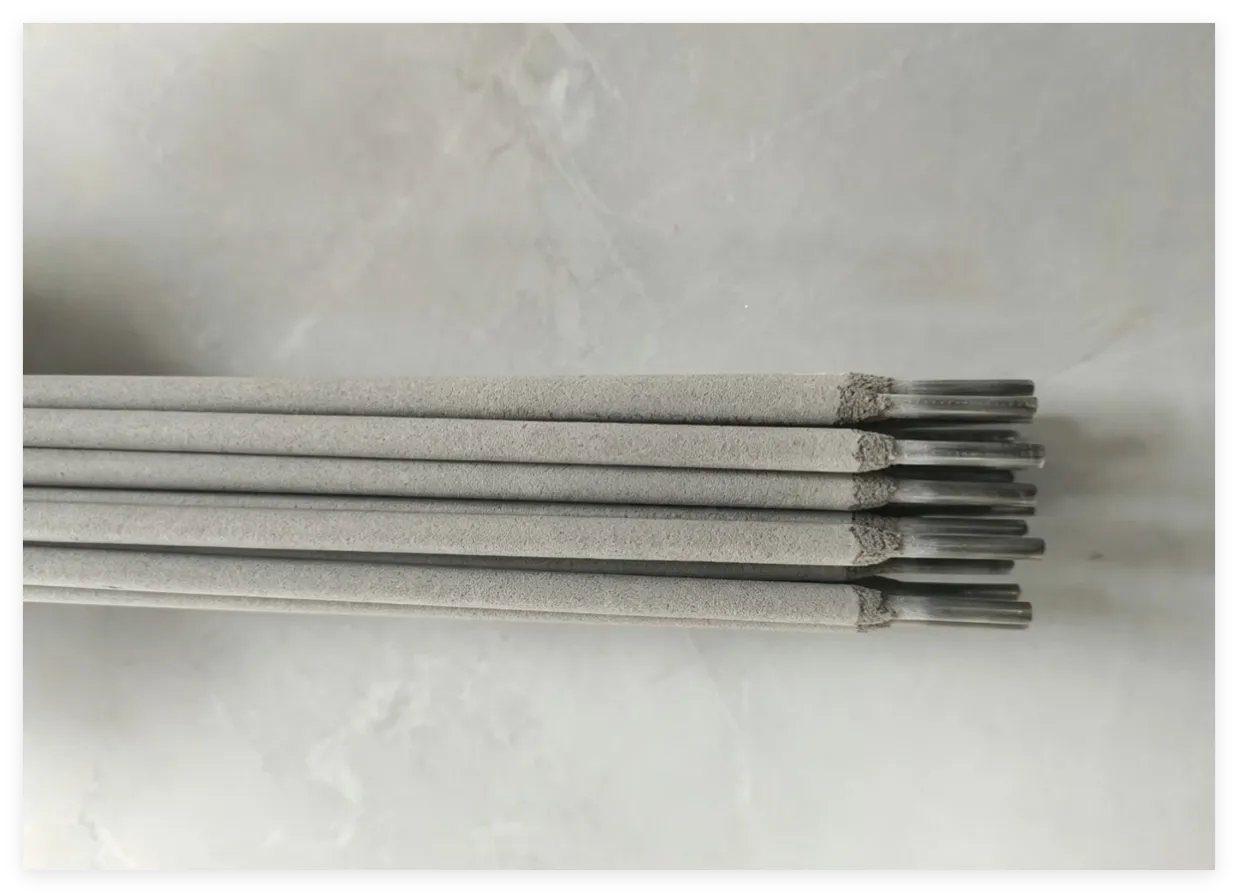
E10018-G High Strength Low Alloy Welding Electrode
E10018-G is a 100 ksi high-strength low-hydrogen SMAW electrode for welding high-strength and low-alloy steels. Depending on the qualified product formulation, it can be used for HSLA structures, X80 pipeline steel, pressure equipment and other demanding industrial applications. As a G-type AWS classification, E10018-G does not represent one fixed weld-metal chemistry. The actual formulation and toughness performance should be confirmed from the product TDS and MTC.
E10018-G Welding Electrode | 100 ksi High Strength Low Hydrogen
E10018-G welding electrode for 100 ksi high-strength and low-alloy steel welding. Suitable for HSLA, X80 pipeline and demanding industrial applications.
E10018-G for HSLA and X80 Steel
E10018-G is intended for applications requiring a 100 ksi-class weld metal, making it suitable for selected high-strength and low-alloy steels where higher weld-metal strength is required.
Typical applications include:
- HSLA structural steel fabrication
- X80 pipeline steel welding
- Pressure vessels and pipes
- Heavy structural equipment
- Offshore and marine structures
- Cranes and heavy machinery
Some E10018-G products are specifically developed for X80 pipeline welding, while other formulations target different high-strength steels. The electrode should therefore be selected according to the base-metal grade and qualified WPS rather than the AWS designation alone.
AWS Mechanical Requirements
AWS A5.5/A5.5M E10018-G is classified at the 100 ksi tensile-strength level.
Property | AWS Minimum |
|---|---|
Tensile Strength | ≥690 MPa (100 ksi) |
Yield Strength | ≥600 MPa (87 ksi) |
Elongation | ≥16% |
Impact toughness requirements can vary according to the specific product and project specification. When low-temperature service is involved, the required Charpy test temperature and acceptance value should be confirmed before approval.
Why E10018-G Chemistry Varies
Unlike fixed-alloy electrodes such as E9018-B3 or E9018-B91, E10018-G does not define one complete universal weld-metal chemistry.
Qualified commercial products may use different alloy systems, including combinations of Mn, Ni and Mo, to achieve the required strength, toughness and weldability.
For procurement, buyers should compare:
- Weld-metal chemical composition
- Tensile and yield strength
- Charpy impact performance
- Hydrogen designation
- Base-metal compatibility
- Welding procedure requirements
This is particularly important when replacing one E10018-G product with another.
Welding Parameters
E10018-G is generally supplied as a basic low-hydrogen covered electrode for SMAW. Common commercial diameters include 2.5, 3.2, 4.0 and 5.0 mm.
Diameter | Reference Current |
|---|---|
2.5 mm | 60–90 A |
3.2 mm | 90–150 A |
4.0 mm | 130–200 A |
5.0 mm | 170–240 A |
These are commercial reference ranges, not AWS requirements. Final current, polarity, preheat, interpass temperature and PWHT should follow the manufacturer's TDS and qualified WPS.
Low-hydrogen electrodes should be stored and redried according to the manufacturer's instructions.
E10018-G vs E9018-G
Both are high-strength low-alloy SMAW electrodes, but E10018-G provides a higher AWS strength classification.
| E9018-G | E10018-G |
|---|---|---|
Tensile class | 90 ksi | 100 ksi |
Minimum tensile strength | 620 MPa | 690 MPa |
Classification | G | G |
Chemistry | Product specific | Product specific |
When a project requires a 100 ksi-class weld metal, E10018-G may be considered where its chemistry, toughness and welding procedure are compatible with the base material.
Classification and Supply
AWS: A5.5/A5.5M E10018-G
ASME: SFA-5.5 E10018-G, when certified
Process: SMAW
Electrode Type: Low-hydrogen covered electrode
Strength Level: 100 ksi
Typical Sizes: 2.5, 3.2, 4.0 and 5.0 mm
GD WELD supplies E10018-G high-strength low-alloy welding electrodes for HSLA, pipeline, structural and industrial applications. Send the required AWS classification, base-metal grade, diameter and application for product and certification confirmation.
Tags
E10018-G welding electrode, E10018-G electrode, E10018-G welding rod, 100 ksi welding electrode, high strength welding electrode, HSLA welding electrode, low hydrogen welding electrode, X80 welding electrode, X80 pipe welding electrode, low alloy welding electrode, E10018-G SMAW electrode, E10018-G supplier
Internal Links
👉 Internal Link 1: Anchor text: E9018-G high strength low alloy welding electrode Link to: E9018-G High Strength Low Alloy Welding Electrode
👉 Internal Link 2: Anchor text: E9018-B91 Cr-Mo welding electrode for P91 steel