Low Alloy & High Strength
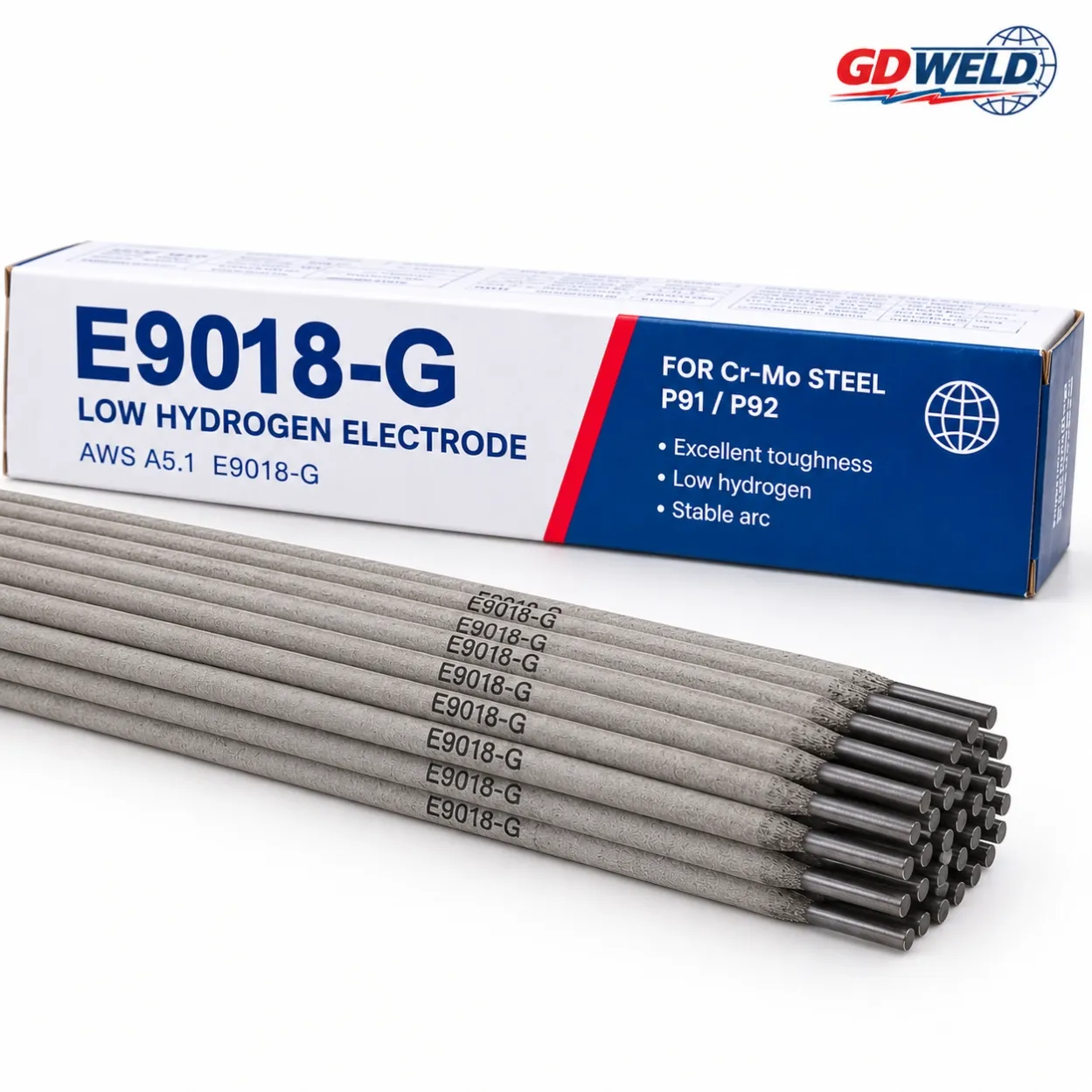
E9018-G High Strength Low Alloy Welding Electrode
E9018-G is a 90 ksi high-strength low-alloy steel welding electrode classified under AWS A5.5/A5.5M. It is a basic, low-hydrogen SMAW electrode for high-strength steel and demanding low-alloy welding applications. Unlike fixed-alloy classifications such as E9018-B2, E9018-B3 and E9018-B91, the E9018-G classification allows an agreed weld-metal chemistry. The manufacturer's TDS and MTC are therefore important when selecting the electrode for a specific steel grade or application.
E9018-G for High-Strength Low-Alloy Steel
E9018-G is intended for applications requiring a combination of weld-metal strength, toughness and controlled alloy chemistry.
Typical applications include:
- High-strength low-alloy steel fabrication
- Heavy steel structures
- Pressure vessels and tanks
- Penstocks and hydraulic equipment
- Heavy machinery and industrial equipment
The suitable base-metal grades depend on the specific E9018-G product chemistry and qualified welding procedure.
What Does the “G” Mean?
The G designation does not define one universal chemical composition.
Unlike B2, B3 and B91 electrodes, which have defined alloy systems, commercial E9018-G electrodes may use different alloying elements such as Ni, Mo, Cr or V, depending on the intended weld-metal properties.
For procurement, the AWS classification alone is therefore not enough. Buyers should confirm the actual weld-metal chemistry, mechanical properties, impact requirements and hydrogen designation in the manufacturer's TDS/MTC.
This is particularly important when replacing an existing electrode or matching E9018-G to a specific high-strength steel.
Mechanical Requirements
AWS A5.5/A5.5M classification minimums include:
Property | Minimum Requirement |
|---|---|
Tensile Strength | ≥620 MPa (90 ksi) |
Yield Strength | ≥530 MPa (77 ksi) |
Elongation | ≥17% |
Where low-temperature impact toughness is required, the specified test temperature and impact value should be confirmed against the product documentation and purchase specification.
Welding Parameters
Process: SMAW
Coating: Basic, low hydrogen
Typical polarity: AC or DCEP/DC+
Hydrogen designation: H4/H4R only when certified
Typical commercial current ranges:
Electrode Diameter | Typical Current |
|---|---|
2.5 mm | 70–100 A |
3.2 mm | 90–140 A |
4.0 mm | 140–180 A |
5.0 mm | 180–230 A |
These are commercial reference values, not universal AWS requirements. Final current, polarity and welding position should follow the manufacturer's TDS and qualified WPS.
Preheat, Interpass and PWHT
E9018-G has no single universal preheat or PWHT temperature, because G-class electrodes can have different weld-metal chemistries and applications.
Preheat and interpass temperatures should be established by the qualified WPS based on the base-metal grade, thickness, carbon equivalent, joint restraint and hydrogen control requirements.
PWHT, when required, should follow the applicable code and qualified welding procedure rather than a generic E9018-G temperature.
E9018-G vs E9018-B91
| E9018-G | E9018-B91 |
|---|---|---|
Classification | General alloy chemistry | Defined Grade 91 chemistry |
Typical steel | High-strength / low-alloy steels | P91 / T91 |
Weld-metal chemistry | Product-specific | AWS-defined range |
Selection basis | TDS + base metal + WPS | Grade 91 requirements |
Main service | Structural and industrial applications | High-temperature creep service |
If a project specifies E9018-B91 for P91/T91 steel, E9018-G should not be substituted without verifying chemistry, mechanical properties and WPS compatibility.
AWS Classification & Supply
- AWS: A5.5/A5.5M E9018-G
- ASME: SFA-5.5 E9018-G, when certified
- Process: SMAW
- Coating: Basic, low hydrogen
- Strength level: 90 ksi
GD WELD supplies E9018-G high-strength low-alloy welding electrodes for heavy fabrication, pressure equipment, structural components, penstocks, tanks and industrial applications. Product chemistry, mechanical test data, impact requirements, sizes, packaging and certification can be confirmed according to project specifications.
Tags
E9018-G welding electrode, E9018-G electrode, E9018-G low hydrogen electrode, high strength welding electrode, high strength low alloy welding electrode, low alloy welding electrode, HSLA welding electrode, 90 ksi welding electrode, high tensile steel electrode, AWS A5.5 E9018-G, SMAW low alloy electrode
Internal Links
👉 Internal Link 1: Anchor text: E9018-B91 welding electrode for P91 steel
👉 Internal Link 2: Anchor text: E9018-B3 welding electrode for P22 steel