Low Alloy & High Strength
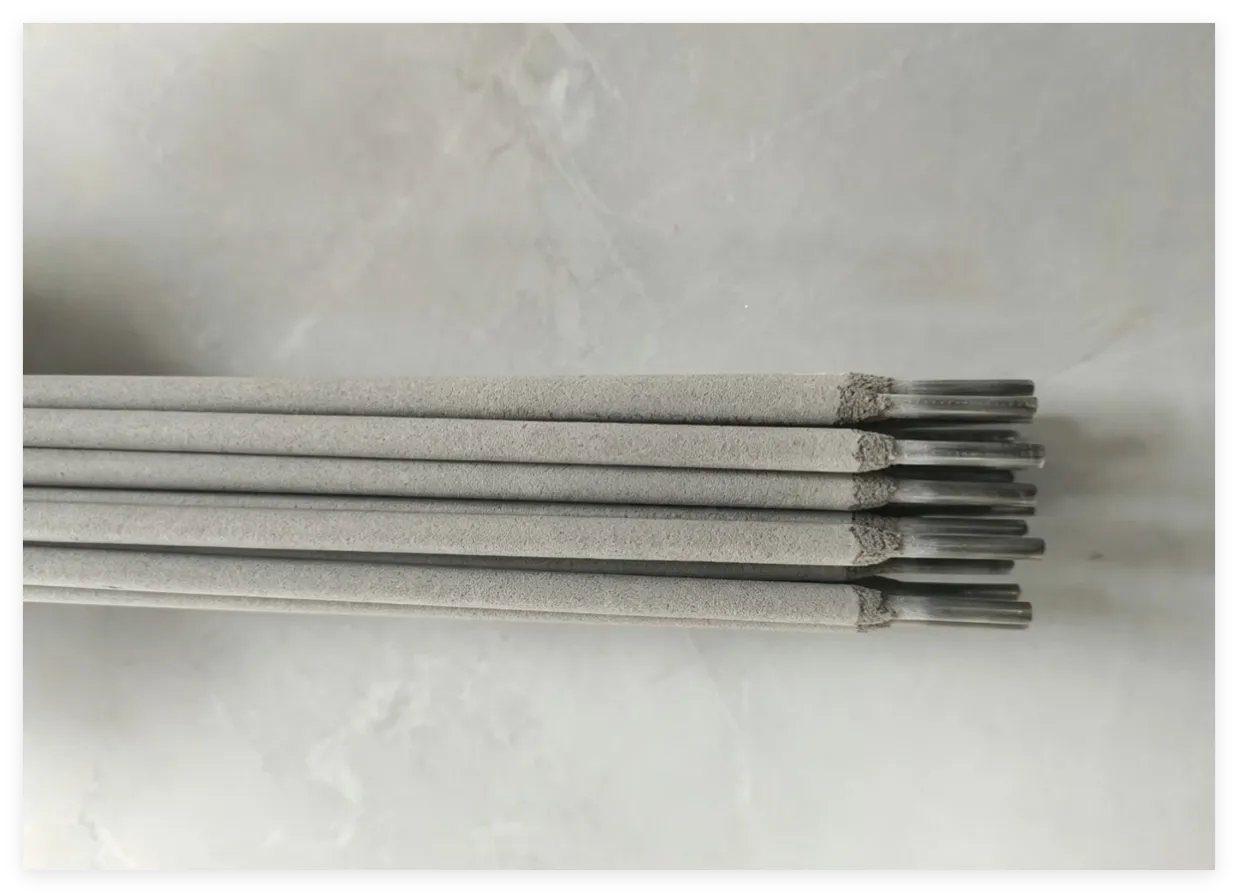
E11018-G High Strength Low Alloy Welding Electrode
E11018-G is a 110 ksi high-strength low-hydrogen welding electrode for SMAW. It is designed for welding high-strength and low-alloy steels where high weld-metal strength, suitable toughness and controlled hydrogen levels are required. Depending on the qualified product formulation, E11018-G can be used for Q&T steels, fine-grained structural steels, T-1-type steels and heavy industrial fabrication.
When Do You Need a 110 ksi Welding Electrode?
E11018-G is considered when a project requires a higher weld-metal strength level than E10018-G or E9018-G.
Typical application areas include:
- Q&T high-strength steel fabrication
- Fine-grained structural steel
- T-1-type high-strength steel
- Heavy cranes and machinery
- Penstocks and heavy structures
- Pressure equipment and industrial fabrication
The correct electrode should be selected by matching the base-metal grade, strength, toughness requirements and qualified WPS. A higher tensile classification alone does not automatically make an electrode suitable for every high-strength steel.
AWS E11018-G Mechanical Requirements
AWS A5.5/A5.5M E11018-G is classified at the 110 ksi tensile-strength level.
Property | AWS Minimum |
|---|---|
Tensile Strength | ≥760 MPa (110 ksi) |
Yield Strength | ≥670 MPa (97 ksi) |
Elongation | ≥15% |
These are AWS classification minimums. Commercial E11018-G electrodes may achieve higher strength or additional low-temperature impact performance. Where Charpy toughness is required, the test temperature and acceptance value should be confirmed from the specific product specification.
Why E11018-G Chemistry Is Not Universal
The “G” designation does not define one complete weld-metal chemistry. Qualified E11018-G electrodes can use different alloy systems to achieve the required strength, toughness and weldability.
Commercial products may contain combinations of Mn, Ni and Mo, with other alloying elements controlled according to the manufacturer's formulation.
For procurement, compare the actual:
- Weld-metal chemical composition
- Tensile and yield strength
- Charpy impact results
- Hydrogen designation
- Base-metal compatibility
- WPS and PWHT requirements
This is particularly important when replacing an existing E11018-G electrode.
Welding E11018-G
E11018-G is generally supplied as a basic low-hydrogen covered electrode for SMAW. Common commercial diameters include 2.5, 3.2, 4.0 and 5.0 mm.
Diameter | Reference Current |
|---|---|
2.5 mm | 60–100 A |
3.2 mm | 90–150 A |
4.0 mm | 140–200 A |
5.0 mm | 180–250 A |
These are commercial reference ranges, not AWS requirements. Final current, polarity, preheat, interpass temperature and PWHT should follow the manufacturer's TDS and qualified WPS.
Low-hydrogen electrodes should be stored and redried according to the manufacturer's instructions.
E11018-G vs E10018-G
For buyers comparing 100 ksi and 110 ksi electrodes, the primary difference is weld-metal strength.
| E10018-G | E11018-G |
|---|---|---|
Tensile class | 100 ksi | 110 ksi |
Minimum tensile strength | 690 MPa | 760 MPa |
Minimum yield strength | 600 MPa | 670 MPa |
Classification | G | G |
E11018-G is appropriate when the project requires the higher 110 ksi-class weld-metal strength and its chemistry and toughness meet the base-metal and WPS requirements. If 100 ksi strength is sufficient, E10018-G may provide a closer strength match.
E11018-G Welding Electrode Supply
AWS: A5.5/A5.5M E11018-G
ASME: SFA-5.5 E11018-G, when certified
Process: SMAW
Electrode Type: Low-hydrogen covered electrode
Strength Level: 110 ksi
Typical Sizes: 2.5, 3.2, 4.0 and 5.0 mm
GD WELD supplies E11018-G high-strength low-alloy welding electrodes for Q&T steels, fine-grained structural steels and demanding industrial applications. Product chemistry, mechanical properties, impact requirements, sizes and certification can be confirmed according to the project specification.
Tags
E11018-G welding electrode, E11018-G electrode, E11018-G welding rod, 110 ksi welding electrode, high strength welding electrode, high strength low alloy electrode, HSLA welding electrode, low hydrogen welding electrode, Q&T steel welding electrode, T1 welding electrode, E11018-G SMAW electrode, E11018-G supplier
Internal Links
👉 Internal Link 1: Anchor text: E10018-G 100 ksi high strength welding electrode Link to: E10018-G High Strength Low Alloy Welding Electrode
👉 Internal Link 2: Anchor text: E9018-G 90 ksi high strength welding electrode