Welding Wire
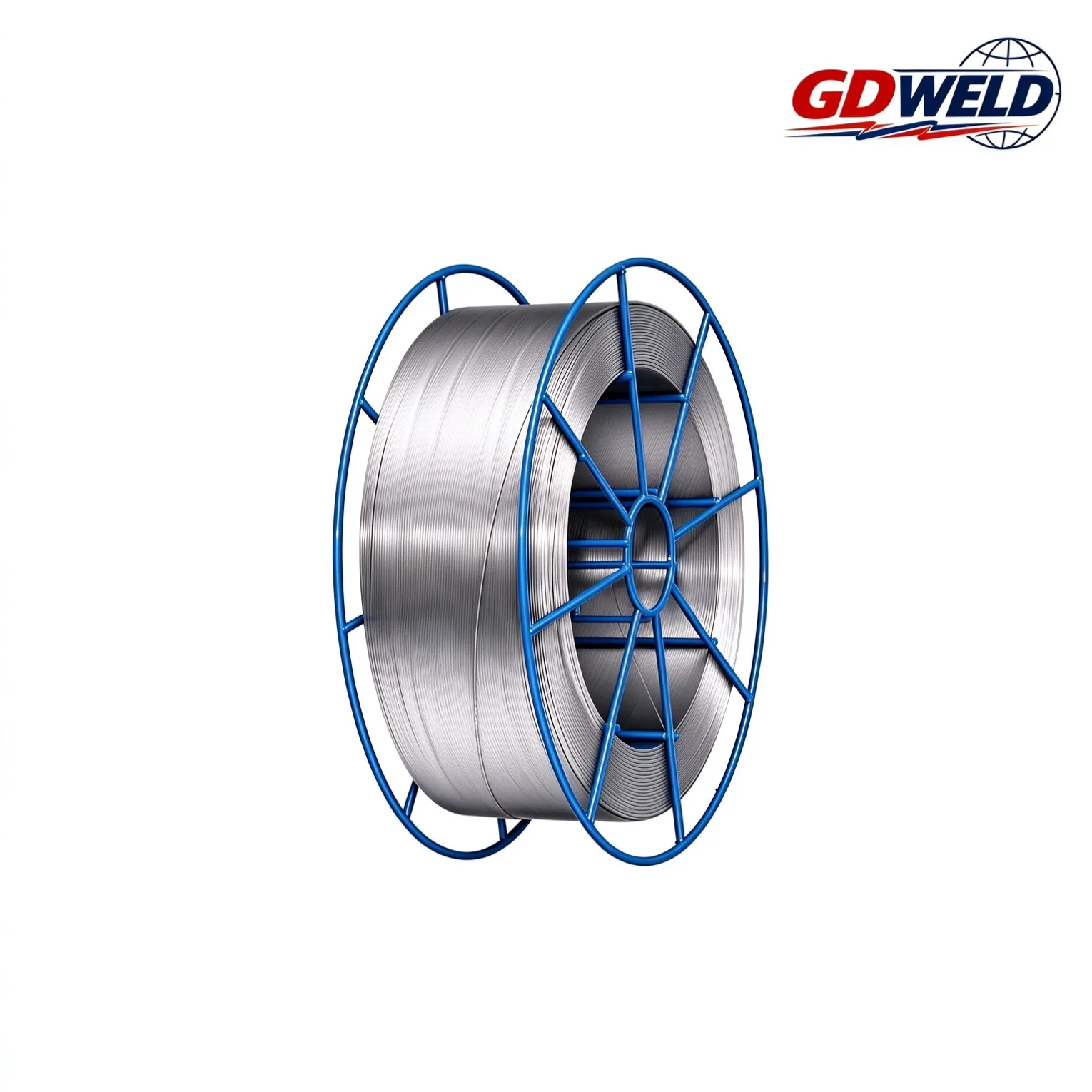
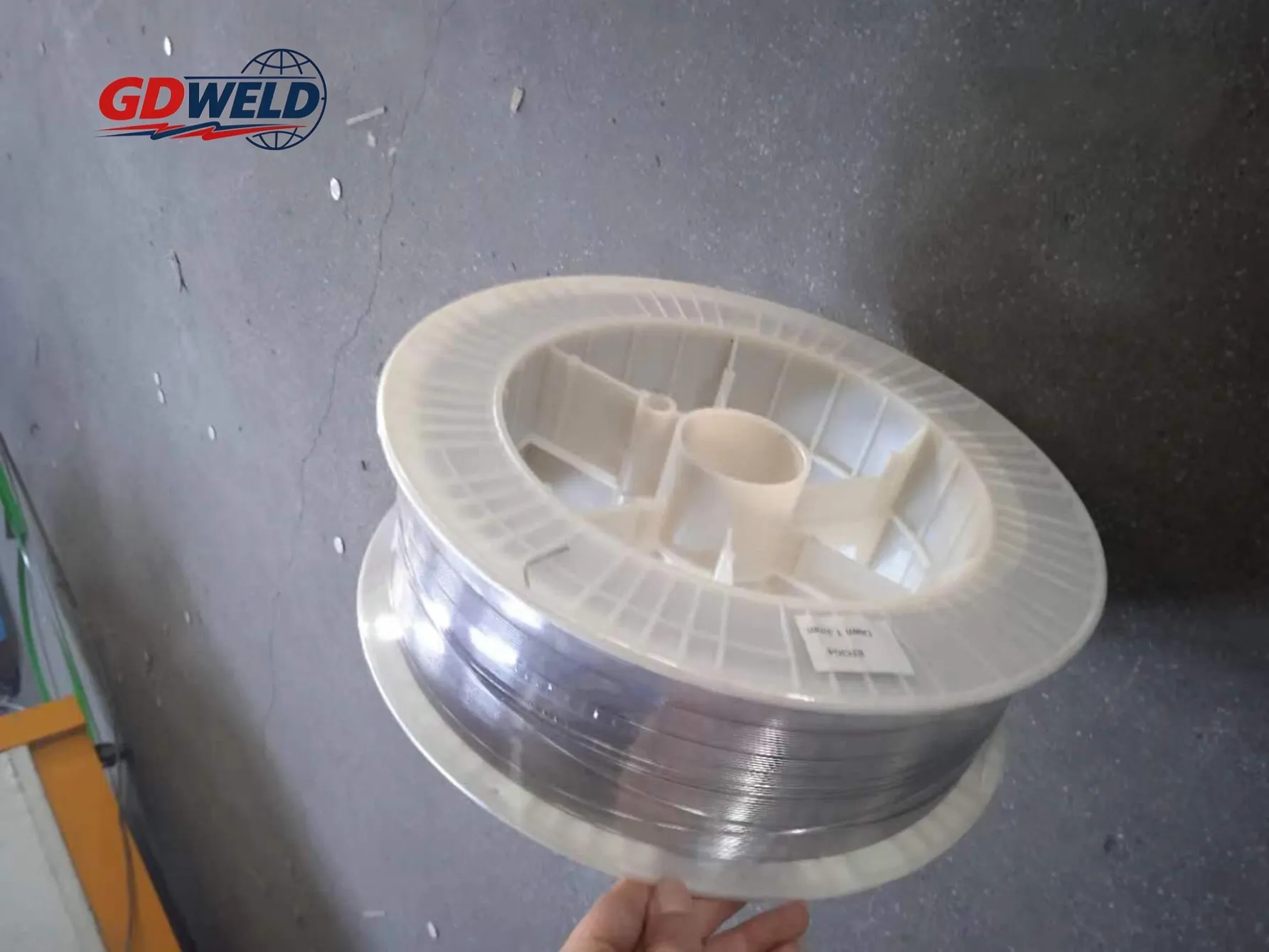
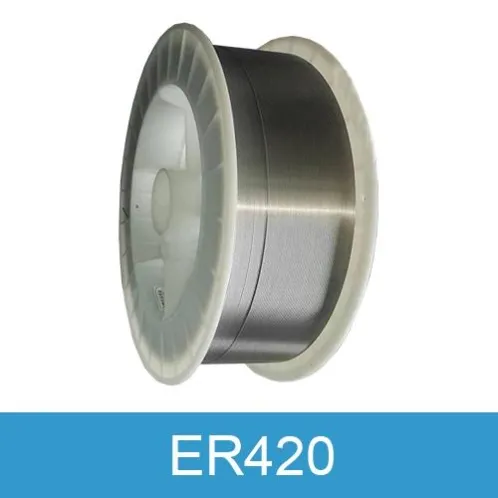
ER420 Stainless Steel Welding Wire | AWS A5.9 TIG & MIG Filler Metal
ER420 is a high-carbon 13% chromium martensitic stainless steel solid welding wire and hardfacing filler metal classified under AWS A5.9. With higher carbon content than ER410, it delivers superior weld-metal hardness and abrasion resistance, making it ideal for welding matching 420 stainless steel and repairing or surfacing wear-resistant components.
1. Product Overview
ER420 stainless steel welding wire is a high-carbon martensitic stainless steel filler metal containing approximately 13% chromium. It is engineered for industrial applications requiring high hardness, superior wear resistance, and moderate corrosion resistance.
Compared with ER410, ER420 contains significantly more carbon (0.25–0.40%), which increases the hardness of the deposited weld metal—typically achieving 45–55 HRC depending on dilution and heat treatment—and enhances resistance to metal-to-metal friction and abrasive wear.
ER420 is suitable for both GTAW (TIG) and GMAW (MIG/MAG) welding processes, widely used for joining matching 420 base metals as well as hardfacing and rebuilding worn martensitic stainless steel parts.
Classifications & Equivalent Standards:
- AWS A5.9 / ASME SFA 5.9: ER420
- UNS: S42080
- Comparable Base Metal Standards: AISI 420 / DIN 1.4021 / EN 1.4028 / SUS420J2
2. Chemical Composition of ER420
The following table outlines the standard AWS A5.9 chemical composition limits for ER420 stainless steel welding wire:
Element | AWS A5.9 Reference (%) |
Carbon (C) | 0.25 – 0.40 |
Chromium (Cr) | 12.0 – 14.0 |
Manganese (Mn) | ≤ 0.60 |
Silicon (Si) | ≤ 0.50 |
Nickel (Ni) | ≤ 0.60 |
Molybdenum (Mo) | ≤ 0.75 |
Copper (Cu) | ≤ 0.75 |
Phosphorus (P) | ≤ 0.03 |
Sulfur (S) | ≤ 0.03 |
3. Key Characteristics & Mechanical Properties
- High Weld-Metal Hardness (45–55 HRC): The elevated carbon content produces a hard martensitic deposit. Depending on base metal dilution, cooling rate, and tempering cycle, weld deposits typically achieve 45–55 HRC, suitable for edge retention and high-stress contact.
- Superior Abrasion & Wear Resistance: ER420 outperforms ER410 in surfacing and hardfacing applications, resisting galling, metal-to-metal friction, and moderate abrasive wear.
- Hardenable Martensitic Structure: The weld deposit transforms into martensite upon cooling, providing high tensile strength and surface durability while requiring strict thermal control to prevent hydrogen-induced cracking.
- Moderate Corrosion Resistance: With ~13% chromium, ER420 resists oxidation, fresh water, steam, and mild organic acids. However, it should not substitute austenitic grades (such as ER308L or ER316L) in chloride-rich or severe chemical environments.
4. Typical Applications of ER420 Welding Wire
ER420 filler metal is extensively used across manufacturing, tooling, and heavy maintenance industries for joining matching 420 alloys and hardfacing carbon or alloy steels:
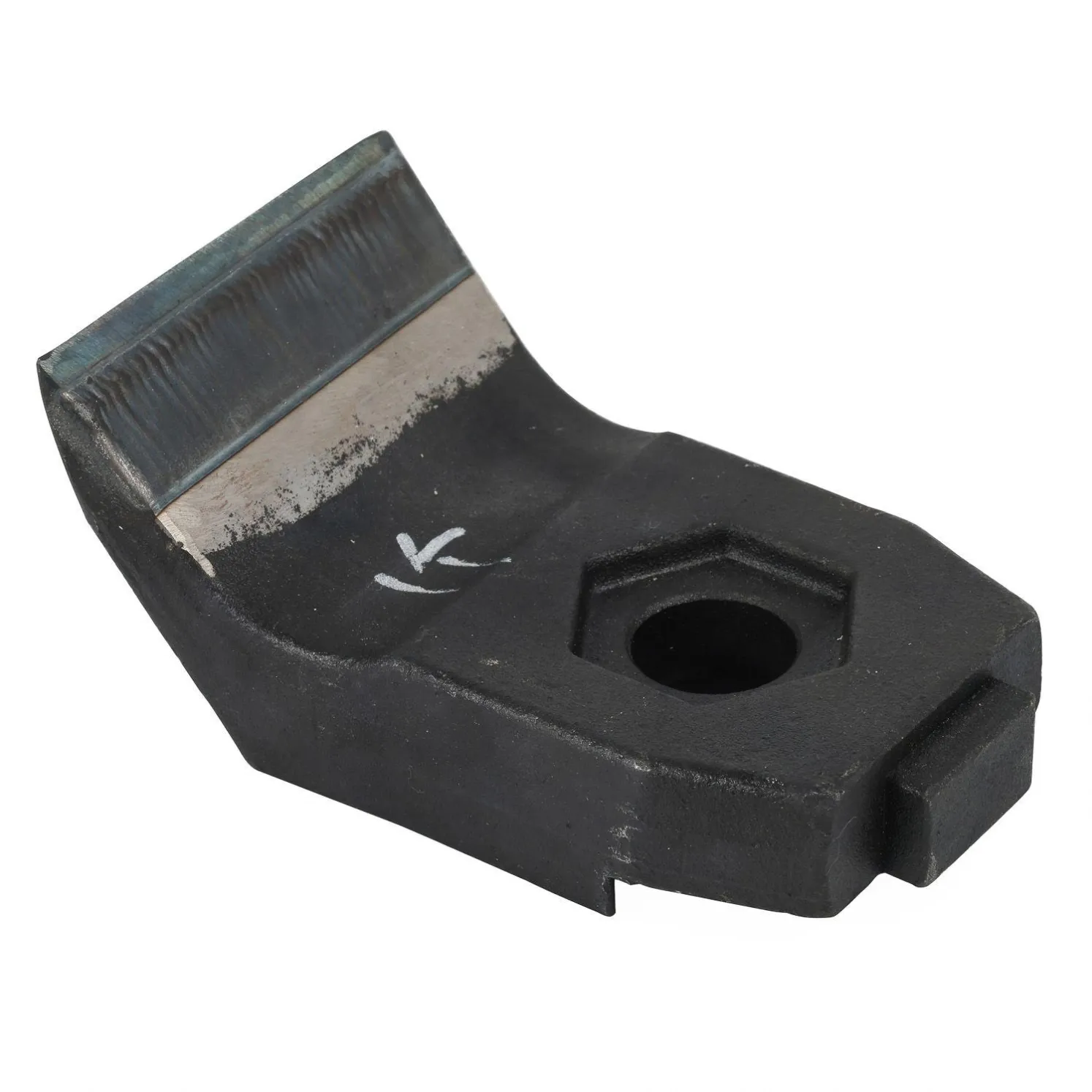
- Plastic Injection Mold Repair: Rebuilding parting lines, cavities, and worn edges on 420 / 1.2083 mold steels.
- Cutting Tools & Industrial Blades: Surfacing shear blades, slitters, and agricultural/industrial knives.
- Pump & Valve Components: Repairing pump shafts, impellers, valve seats, and stems exposed to erosion and wear.
- Rollers & Mechanical Shafts: Hardfacing continuous caster rollers, guide rolls, and wear-resistant sleeves.
- Turbine & Hydro Components: Rebuilding worn surfaces on martensitic stainless steel mechanical parts.
5. ER420 Welding Processes & Recommended Parameters
ER420 is manufactured with precision surface finishes for smooth feeding in automated and manual welding operations.
TIG Welding (GTAW)
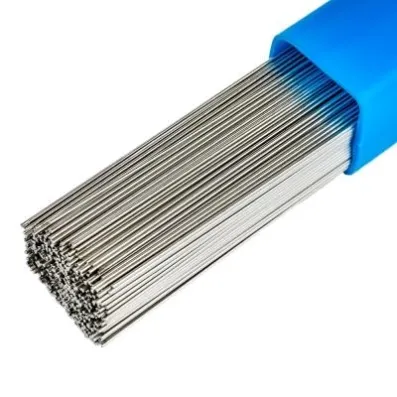
ER420 TIG cut lengths (filler rods) are ideal for precision mold repair, root passes, and controlled low-dilution weld deposition.
- Process: GTAW / TIG
- Shielding Gas: 100% High-Purity Argon (99.99% min)
- Typical Gas Flow: 8–14 L/min
- Polarity: DCEN (DC Straight Polarity / Electrode Negative)
MIG Welding (GMAW)
ER420 MIG solid wire is engineered for higher deposition rates in semi-automatic and robotic hardfacing or production welding.
- Process: GMAW / MIG
- Shielding Gas: 98% Argon + 2% Oxygen (or 98% Ar + 2% CO₂)
- Typical Gas Flow: 20–25 L/min
- Polarity: DCEP (DC Reverse Polarity / Electrode Positive)
Reference MIG Welding Current & Voltage Ranges:
Wire Diameter | Reference Current (A) | Reference Voltage (V) |
0.8 mm (0.030") | 70 – 140 A | 17 – 21 V |
1.0 mm (0.040") | 90 – 180 A | 18 – 23 V |
1.2 mm (0.045") | 130 – 200 A | 20 – 25 V |
6. Preheating, Interpass & Post-Weld Heat Treatment (PWHT)
Because ER420 forms a hard, brittle martensitic microstructure upon cooling, proper thermal management is critical to prevent cold cracking:
- Preheating & Interpass Temperature: Preheat the base metal to 200–250°C (390–480°F) and maintain this range as the maximum interpass temperature during multi-pass welding.
- Controlled Cooling: Allow the welded component to cool slowly in still air or under thermal insulation blankets down to room temperature before stress relieving.
- Post-Weld Heat Treatment (PWHT): Tempering immediately after cooling is strongly recommended—typically at 600–700°C (1110–1290°F) for 1 to 2 hours—to relieve residual stresses, improve ductility, and achieve the target final hardness. (For mold repair requiring maximum hardness, lower tempering temperatures around 200–300°C may be specified per WPS).
7. ER420 vs ER410 Welding Wire: Key Differences
Both ER420 and ER410 Stainless Steel Welding Wireare 13% chromium martensitic filler metals under AWS A5.9, but their carbon content dictates very different performance profiles:
Feature | ER420 Welding Wire | ER410 Welding Wire |
Microstructure | Martensitic | Martensitic |
Chromium (Cr) | 12.0 – 14.0% | 11.5 – 13.5% |
Carbon (C) | 0.25 – 0.40% | ≤ 0.12% |
Typical Weld Hardness | Higher (45 – 55 HRC) | Lower (35 – 42 HRC) |
Abrasion Resistance | Superior | Moderate |
Crack Sensitivity | Higher (requires strict preheat) | Moderate |
Primary Applications | Hardfacing, mold repair, cutting edges, wear parts | General 410/403 base metal joining, structural repair |
8. Available Wire Diameters & Packaging
GD WELD supplies precision-wound ER420 MIG spools and straightened, embossed TIG filler rods tailored for global industrial distribution and end-users:
Welding Process | Available Diameters | Standard Packaging Options |
MIG / GMAW | 0.8 mm, 1.0 mm, 1.2 mm, 1.6 mm | 1 kg / 5 kg plastic spools; 15 kg (300 mm) plastic or basket spools |
TIG / GTAW | 1.6 mm, 2.0 mm, 2.4 mm, 3.2 mm, 4.0 mm | 5 kg / 10 kg plastic tube |
Custom spool weights, private-label OEM packaging, and vacuum-sealed moisture-barrier bags are available upon request.
10. Source ER420 Stainless Steel Welding Wire from GD WELD
Looking for a reliable manufacturer and supplier of AWS A5.9 ER420 TIG rods or MIG wire?
GD WELD supports industrial fabricators, mold repair specialists, and welding distributors with consistent batch chemistry, smooth wire feedability, and fast international shipping.
To receive a fast quotation and technical datasheet, please share:
- Required welding process (TIG / GTAW or MIG / GMAW)
- Wire diameter and spool/tube packaging preference
- Estimated order quantity
- Destination port or delivery location
Related Martensitic & Stainless Welding Wires
👉 ER410NiMo Stainless Steel Welding Wire(13Cr-4Ni-Mo martensitic wire for hydro turbines, pumps & valves)
👉 ER2209 Duplex Stainless Steel Welding Wire(22% Cr duplex filler metal for high strength & chloride resistance)
👉 ER2594 Super Duplex Stainless Steel Welding Wire(25% Cr super duplex wire for severe offshore & chemical service)