Low Alloy & High Strength
ER80S-G
ER80S-G is a low-alloy solid welding wire classified under AWS A5.28. Unlike specific alloy classifications such as B2, B6 or Ni2, the G classification allows a manufacturer-defined chemical composition within the applicable AWS requirements. It is selected according to the base material, required weld-metal properties and qualified welding procedure.
ER80S-G Welding Wire
ER80S-G is an AWS A5.28 low-alloy solid welding wire classification for applications requiring ER80-strength weld metal and manufacturer-defined alloy chemistry.
Unlike specific classifications such as ER80S-B2, ER80S-B6, ER80S-Ni1 and ER80S-Ni2, ER80S-G does not represent one single fixed alloy system.
The actual chemical composition is established by the manufacturer within the applicable AWS classification requirements.
For buyers, this means that ER80S-G should be selected according to the actual product chemistry, base material, mechanical requirements and qualified welding procedure, rather than from the AWS classification alone.
ER80S-G at a Glance
Item | Details |
|---|---|
AWS Classification | ER80S-G |
AWS Specification | AWS A5.28 / ASME SFA-5.28 |
Product Type | Solid Welding Wire / TIG Filler Rod |
Strength Classification | ER80 |
Alloy System | Manufacturer-defined low-alloy chemistry |
Welding Processes | GMAW/MIG, GTAW/TIG |
Typical Applications | Low-alloy steel / industrial applications |
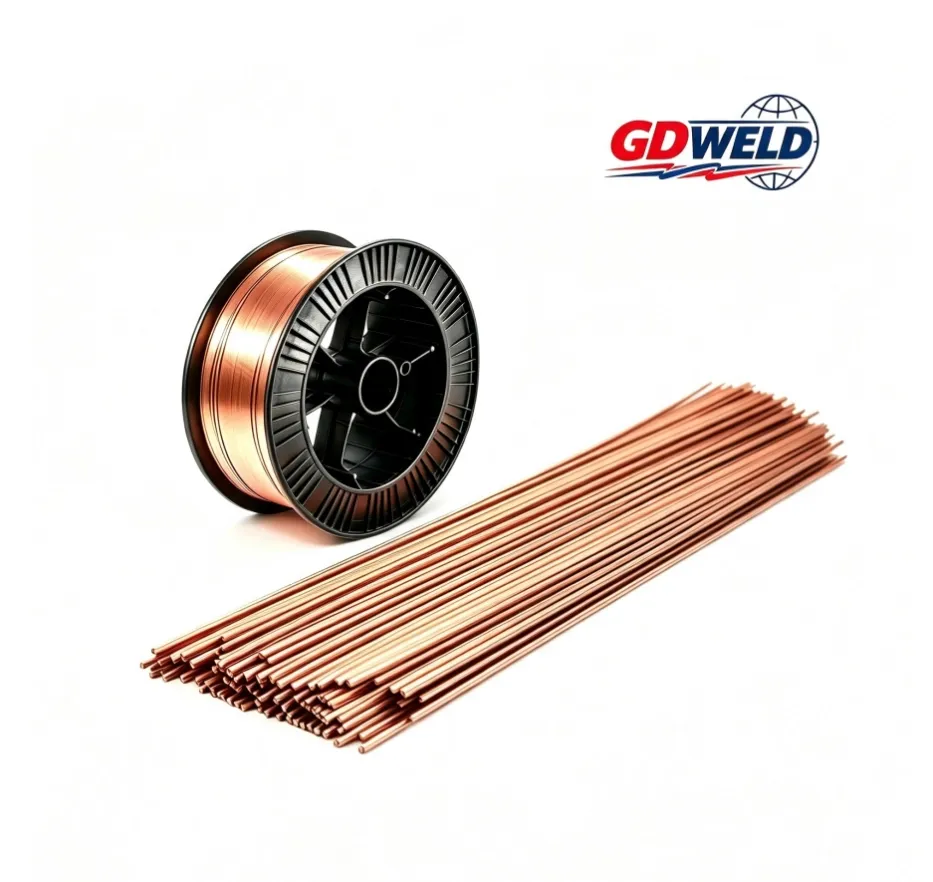
Product Form | Spool / Rod |
Key Selection Factor | Chemistry + base material + WPS/PQR |
Documentation | TDS / MTC / CoA |
What Does ER80S-G Mean?
The ER80S-G designation can be understood as:
- ER — electrode or filler metal classification
- 80 — 80 ksi-class tensile-strength level
- S — solid wire
- G — general classification with manufacturer-defined alloy chemistry
The ER80 designation identifies the strength level, but it does not tell the buyer the complete alloy chemistry.
This is the key difference between ER80S-G and more specific alloy classifications.
Before selecting the wire, buyers should confirm:
Actual Chemistry + Mechanical Properties + Base Material + Welding Process + WPS/PQR
Why Is the G Classification Important?
The G classification is the main technical and purchasing consideration for ER80S-G.
Specific classifications such as:
- ER80S-B2
- ER80S-B6
- ER80S-Ni1
- ER80S-Ni2
identify particular alloy systems.
ER80S-G, by contrast, allows the manufacturer to define the alloy chemistry within the applicable AWS classification requirements.
Therefore, two ER80S-G products from different manufacturers should not automatically be assumed to have identical chemistry or identical application recommendations.
For material approval, review the specific manufacturer's:
TDS + Chemical Composition + Mechanical Properties + MTC/CoA
This is particularly important for industrial, piping and pressure-equipment applications.
ER80S-G Technical Characteristics
Chemical Composition
ER80S-G does not have one universally fixed chemical composition.
Depending on the specific product, controlled alloying elements may include:
- Carbon
- Manganese
- Silicon
- Chromium
- Nickel
- Molybdenum
- Copper
The actual chemistry must be confirmed from the manufacturer's technical documentation.
For critical projects, the batch-specific MTC/CoA should be reviewed rather than relying only on the ER80S-G classification.
Mechanical Properties
ER80S-G belongs to the ER80 strength classification.
Typical minimum classification requirements in the supplied product information include:
Property | Minimum |
|---|---|
Tensile Strength | 550 MPa / 80 ksi |
Yield Strength | 470 MPa / 68 ksi |
Elongation | 20% |
Actual mechanical properties may depend on the specific product and testing conditions.
Relevant variables include:
- Welding process
- Shielding gas
- Heat input
- Welding parameters
- PWHT
- Test temperature
- Product chemistry
For project qualification, use the manufacturer's current TDS/MTC and qualified WPS/PQR.
When Is ER80S-G a Suitable Choice?
There is no single universal base material for every ER80S-G product.
The correct application depends on the actual chemistry and mechanical properties of the selected product.
ER80S-G may be considered when:
- An ER80-strength weld metal is required
- The required chemistry is compatible with the selected G-classification product
- The base material and consumable chemistry are compatible
- The welding procedure supports the consumable
- The applicable code or project specification permits its use
Potential application areas include:
Low-Alloy Steel Fabrication
Suitable ER80S-G products may be used for selected low-alloy steel fabrication where ER80-strength weld metal is required.
Industrial Equipment
ER80S-G may be considered for selected industrial equipment and machinery applications requiring controlled weld-metal properties.
Piping
Where permitted by the material specification and WPS/PQR, ER80S-G may be used for compatible low-alloy piping applications.
Pressure Equipment
For pressure-equipment applications, chemical composition, mechanical properties, impact requirements, heat treatment and applicable code should be verified before approval.
Heavy Machinery and General Engineering
Selected products may be relevant to heavy machinery and general engineering applications where the actual consumable chemistry meets the project requirements.
ER80S-G Welding Processes
GMAW / MIG
ER80S-G may be supplied as solid welding wire for GMAW/MIG applications according to the specific product specification.
Important welding parameters include:
- Wire diameter
- Shielding gas
- Welding current
- Voltage
- Wire-feed speed
- Travel speed
- Heat input
Actual welding parameters should follow the qualified WPS.
GTAW / TIG
Depending on product form, ER80S-G may also be supplied as TIG filler rod.
GTAW/TIG can be considered for:
- Pipe root passes
- Precision welding
- Critical joints
- Controlled deposition
ER80S-G Welding Procedure Considerations
The welding procedure should be developed around the actual ER80S-G product and base material.
Important controls may include:
Preheat → Interpass Temperature → Heat Input → Controlled Cooling → PWHT
Requirements depend on:
- Base material
- Material thickness
- Joint design
- Welding process
- Service conditions
- Applicable code
- WPS/PQR
For critical applications, ER80S-G should not be selected from the AWS classification alone. The actual consumable chemistry and qualified welding procedure should support the intended application.
ER80S-G vs Specific Alloy Classifications
ER80S-G vs ER80S-B2
| ER80S-G | ER80S-B2 |
|---|---|---|
Classification | G | B2 |
Strength | ER80 | ER80 |
Alloy Chemistry | Manufacturer-defined | Specific Cr-Mo system |
Typical Material | Product dependent | P11 / T11-related |
Selection Focus | Actual chemistry + WPS | Cr-Mo compatibility + WPS |
Typical Service | Product dependent | Elevated-temperature Cr-Mo service |
Both are ER80 classifications, but their alloy chemistry can be different.
ER80S-G should not automatically replace ER80S-B2.
ER80S-G vs ER80S-B6
| ER80S-G | ER80S-B6 |
|---|---|---|
Classification | G | B6 |
Strength | ER80 | ER80 |
Alloy System | Manufacturer-defined | Specific Cr-Mo system |
Typical Material | Product dependent | P5 / T5-related |
Chemistry | Must be verified | Specific alloy classification |
Selection Focus | Actual chemistry + WPS | Cr-Mo compatibility + WPS |
For P5/T5-related applications, the consumable should be selected according to the required Cr-Mo chemistry and qualified welding procedure.
ER80S-G vs ER80S-Ni1
| ER80S-G | ER80S-Ni1 |
|---|---|---|
Classification | G | Ni1 |
Strength | ER80 | ER80 |
Alloy System | Manufacturer-defined | Nickel-alloyed |
Typical Ni Content | Product dependent | Approximately 1% |
Main Focus | Product-specific chemistry | Nickel-alloy / toughness requirements |
Selection | Actual chemistry + WPS | Ni1 compatibility |
ER80S-Ni1 identifies a specific nickel-alloyed classification, while ER80S-G does not define one fixed alloy chemistry.
ER80S-G vs ER80S-Ni2
| ER80S-G | ER80S-Ni2 |
|---|---|---|
Classification | G | Ni2 |
Strength | ER80 | ER80 |
Alloy System | Manufacturer-defined | Nickel-alloyed |
Typical Ni Content | Product dependent | Approximately 2% |
Main Focus | Product-specific chemistry | Nickel-alloy / toughness requirements |
Selection | Actual chemistry + WPS | Ni2 compatibility |
ER80S-Ni2 should not be considered interchangeable with ER80S-G simply because both have an ER80 strength classification.
Can ER80S-G Replace Another ER80S Welding Wire?
Not automatically.
ER80S-G, ER80S-B2, ER80S-B6, ER80S-Ni1 and ER80S-Ni2 may share the ER80 strength level, but that does not make them equivalent consumables.
A substitution should be evaluated using:
Base Material + Consumable Chemistry + Mechanical Requirements + Toughness + Service Conditions + WPS/PQR + Applicable Code
For example:
- ER80S-G ≠ ER80S-B2
- ER80S-G ≠ ER80S-B6
- ER80S-G ≠ ER80S-Ni1
- ER80S-G ≠ ER80S-Ni2
The proposed alternative should be technically reviewed and qualified before use in a controlled application.
How to Select ER80S-G Welding Wire
Before purchasing ER80S-G, confirm the following:
1. Base Material
Identify the exact steel grade, specification and thickness.
2. Required Weld-Metal Strength
Confirm that the ER80 strength classification meets the project requirements.
3. Actual Product Chemistry
Request the manufacturer's chemical composition and verify compatibility with the base material and service conditions.
4. Toughness Requirements
Check whether Charpy impact testing is required and identify the required test temperature.
5. Welding Process
Confirm whether the application requires GMAW/MIG or GTAW/TIG.
6. Heat Treatment
Determine whether preheat, controlled cooling or PWHT is required.
7. Applicable Code
Identify the applicable AWS, ASME, EN or project specification.
8. WPS/PQR
Confirm that the selected ER80S-G product is covered by the required welding procedure qualification.
9. Certification
Determine whether TDS, MTC, CoA, impact-test data or third-party inspection is required.
10. Diameter and Packaging
Confirm the required wire diameter, spool or rod format and packaging quantity.
ER80S-G Procurement Information
For a quotation or technical review, provide:
AWS Classification + Base Material + Diameter + Welding Process + Application + Quantity
For critical projects, also provide:
Service Temperature + WPS/PQR Requirements + Certification Requirements
This allows the available ER80S-G product to be evaluated against the actual project requirements.
Diameter and Packaging
ER80S-G can be supplied in different diameters and packaging formats according to product availability and customer requirements.
Possible formats include:
- MIG/GMAW spools
- TIG/GTAW rods
- Different wire diameters
- Standard packaging
- Customized packaging
Available diameters and packaging should be confirmed with the specific product before ordering.
Quality and Technical Documentation
For ER80S-G projects, buyers may request:
- Technical Data Sheet (TDS)
- Mill Test Certificate (MTC)
- Certificate of Analysis (CoA)
- Chemical composition
- Mechanical properties
- Impact test data
- Certificate of Conformity
- Packaging information
- Project-specific documentation
Because the G classification does not define one fixed alloy chemistry, technical documentation is particularly important for material approval.
Frequently Asked Questions
What is ER80S-G welding wire?
ER80S-G is an AWS A5.28 low-alloy solid welding wire classification with an ER80 strength level and manufacturer-defined alloy chemistry.
What does G mean in ER80S-G?
The G designation identifies a general classification in which the alloy chemistry is not defined as one specific standardized alloy system like B2, B6, Ni1 or Ni2.
What is ER80S-G used for?
Its application depends on the actual product chemistry and qualified welding procedure. Potential applications include compatible low-alloy steel, industrial equipment, piping, pressure equipment and heavy machinery.
Is ER80S-G an ER80 welding wire?
Yes. ER80S-G belongs to the ER80 strength classification, with a tensile-strength level of approximately 80 ksi.
What is the difference between ER80S-G and ER80S-B2?
ER80S-B2 is a specific Cr-Mo classification, while ER80S-G has manufacturer-defined alloy chemistry.
What is the difference between ER80S-G and ER80S-B6?
ER80S-B6 identifies a specific Cr-Mo alloy system, while ER80S-G does not define one fixed alloy chemistry.
Can ER80S-G be used for P11 steel?
Do not assume it is suitable. P11 applications require a consumable that meets the required Cr-Mo chemistry and the applicable WPS/PQR.
Can ER80S-G be used for P5 steel?
Do not select it based on ER80 strength alone. The actual consumable chemistry and qualification requirements must be verified for P5/T5-related applications.
Can ER80S-G replace ER80S-Ni1 or ER80S-Ni2?
Not automatically. Nickel-alloy classifications have specific chemistry requirements that should be evaluated against the base material, service conditions and WPS/PQR.
What welding processes can use ER80S-G?
Depending on product form, ER80S-G may be supplied for GMAW/MIG and GTAW/TIG applications.
Does ER80S-G require PWHT?
PWHT depends on the base material, thickness, welding procedure and applicable code. Follow the qualified WPS/PQR.
Need ER80S-G Welding Wire?
Looking for ER80S-G welding wire for low-alloy steel, piping, pressure equipment, heavy machinery or industrial applications?
Send us:
AWS Classification · Base Material · Diameter · Welding Process · Application · Quantity · Certificate Requirements
Need a hard-to-source welding grade?
Tell us the AWS classification, base material, diameter and application.
Request a Quote
Send Your Specification