Sep 24, 2026
Why Is Cr-Mo Weld Hardness Too High After PWHT?
For Cr-Mo steel welding, PWHT is commonly used to reduce residual stress and obtain the required weld properties. But sometimes the weld hardness is still too high after PWHT.
Why?
The cause may be related to the welding consumable, cooling rate, preheat, welding parameters, PWHT conditions or hardness testing.
Before changing the PWHT procedure, check the complete welding process.
1. Wrong Welding Consumable
The welding wire must match the Cr-Mo base material and qualified WPS.
For example:
- ER80S-B2 is commonly associated with P11/T11-type applications.
- ER90S-B3 is commonly associated with P22/T22-type applications.
- P91 requires a specific qualified welding procedure and compatible consumable.
Using the wrong filler metal can affect weld-metal chemistry, microstructure and final hardness.
For this reason, understanding the differences between Cr-Mo welding consumables is an important first step before selecting a welding wire.
Do not select a Cr-Mo welding wire only because it has a similar strength level.
👉 Internal Link 1:
Anchor text: Cr-Mo welding consumables
Link to: What Are Cr-Mo Welding Consumables? Grades, Materials and Applications
2. Cooling Rate Is Too Fast
Fast cooling can promote harder microstructures in the weld metal or HAZ.
Possible causes include:
- Insufficient preheat
- Low interpass temperature
- Excessive heat loss
- Incorrect welding parameters
- Poor temperature control between passes
For Cr-Mo steel welding, preheat and interpass temperature should follow the qualified WPS.
This is particularly important when welding higher-alloy Cr-Mo steels, where thermal control can have a significant effect on weld and HAZ properties.
3. PWHT Temperature or Holding Time Is Insufficient
If the actual PWHT temperature is too low or the holding time is insufficient, the required tempering effect may not be achieved.
Check the:
- PWHT temperature
- Holding time
- Heating rate
- Cooling rate
- Thermocouple location
- Component thickness
However, simply increasing PWHT temperature is not a general solution. The heat-treatment procedure should remain within the applicable code and qualified WPS requirements.
If the hardness problem occurs repeatedly, review the complete welding and heat-treatment procedure rather than changing only one parameter.
4. Weld Chemistry Is Not as Expected
Cr-Mo weld hardness is also influenced by weld-metal chemistry.
Elements such as chromium, molybdenum, carbon and manganese can affect the final microstructure and hardness.
For critical projects, check the welding wire's:
- Chemical composition
- Mechanical properties
- TDS
- MTC/CoA
- Batch or heat traceability
For example, when welding P22-type Cr-Mo steel, ER90S-B3 is commonly associated with this material group. The actual consumable selection should still follow the qualified WPS and project requirements.
👉 Internal Link 2:
Anchor text: ER90S-B3 welding wire
Link to: What Is ER90S-B3 Welding Wire? AWS A5.28 Applications and Properties
5. Hardness Was Measured in the Wrong Location
A weld joint does not have one uniform hardness.
Hardness can differ between:
- Weld metal
- Fusion line
- HAZ
- Base metal
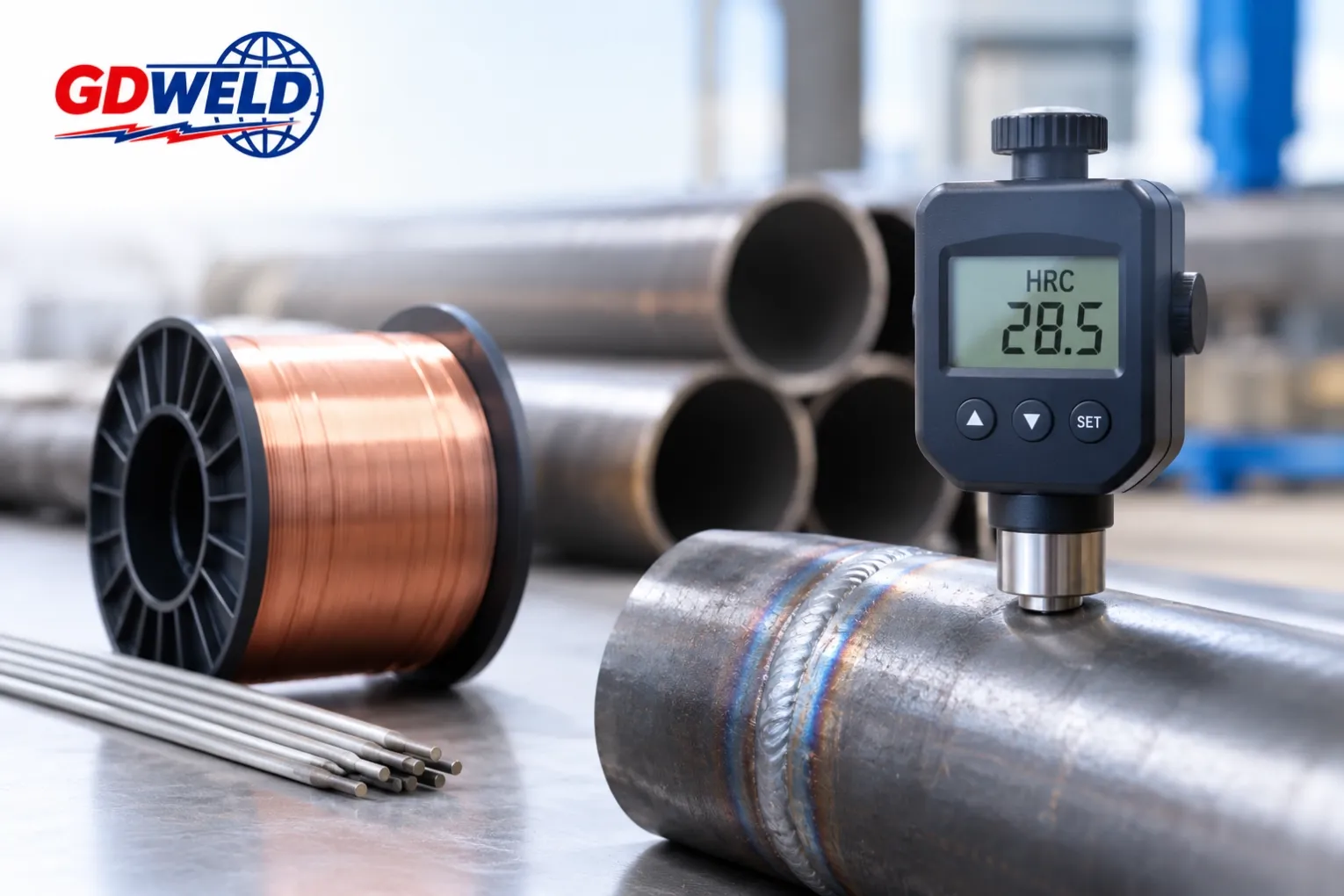
If the result is unexpectedly high, first check the measurement location, surface preparation, equipment calibration and test method.
A high reading should be investigated before changing the welding procedure.
Quick Check: What Should You Do?
If Cr-Mo weld hardness is too high after PWHT, check these items in order:
1. Base material
P11, P22, P91 or another Cr-Mo grade?
2. Welding consumable
Is the AWS classification correct?
3. Preheat and interpass temperature
Did the actual temperatures follow the WPS?
4. Welding parameters
Were current, voltage, travel speed and heat input within the qualified range?
5. PWHT record
Were temperature and holding time correct?
6. Hardness test
Was the test performed at the correct location?
This step-by-step check is usually more useful than simply increasing PWHT.
How to Prevent High Cr-Mo Weld Hardness
The best approach is to control the process before welding.
Use the correct consumable, maintain the required preheat and interpass temperature, control heat input and follow the qualified PWHT procedure.
For example, ER80S-B2 is commonly associated with P11/T11 applications, while ER90S-B3 is commonly associated with P22/T22 applications.
The final consumable selection should always follow the base material, WPS/PQR and project requirements.
For buyers who are still deciding which Cr-Mo consumable matches a specific steel grade, the welding consumable selection process should start with the base material and service conditions, not simply the required tensile strength.
👉 Internal Link 3:
Anchor text: select welding consumables for Cr-Mo steel
Link to: How to Select Welding Consumables for Cr-Mo Steel
Final Takeaway
When Cr-Mo weld hardness is too high after PWHT, the problem may not be PWHT alone.
Check:
Consumable → Preheat → Welding Parameters → Cooling Rate → PWHT → Hardness Test
Finding the actual cause before changing the procedure can help prevent rework, failed inspection and unnecessary welding consumable costs.