Oct 1, 2026
Why Is My High-Strength Weld Too Hard? What Should I Check?
Why is my high-strength weld too hard after welding or PWHT? Is the problem the welding wire, HAZ, cooling rate, heat input, or heat treatment?
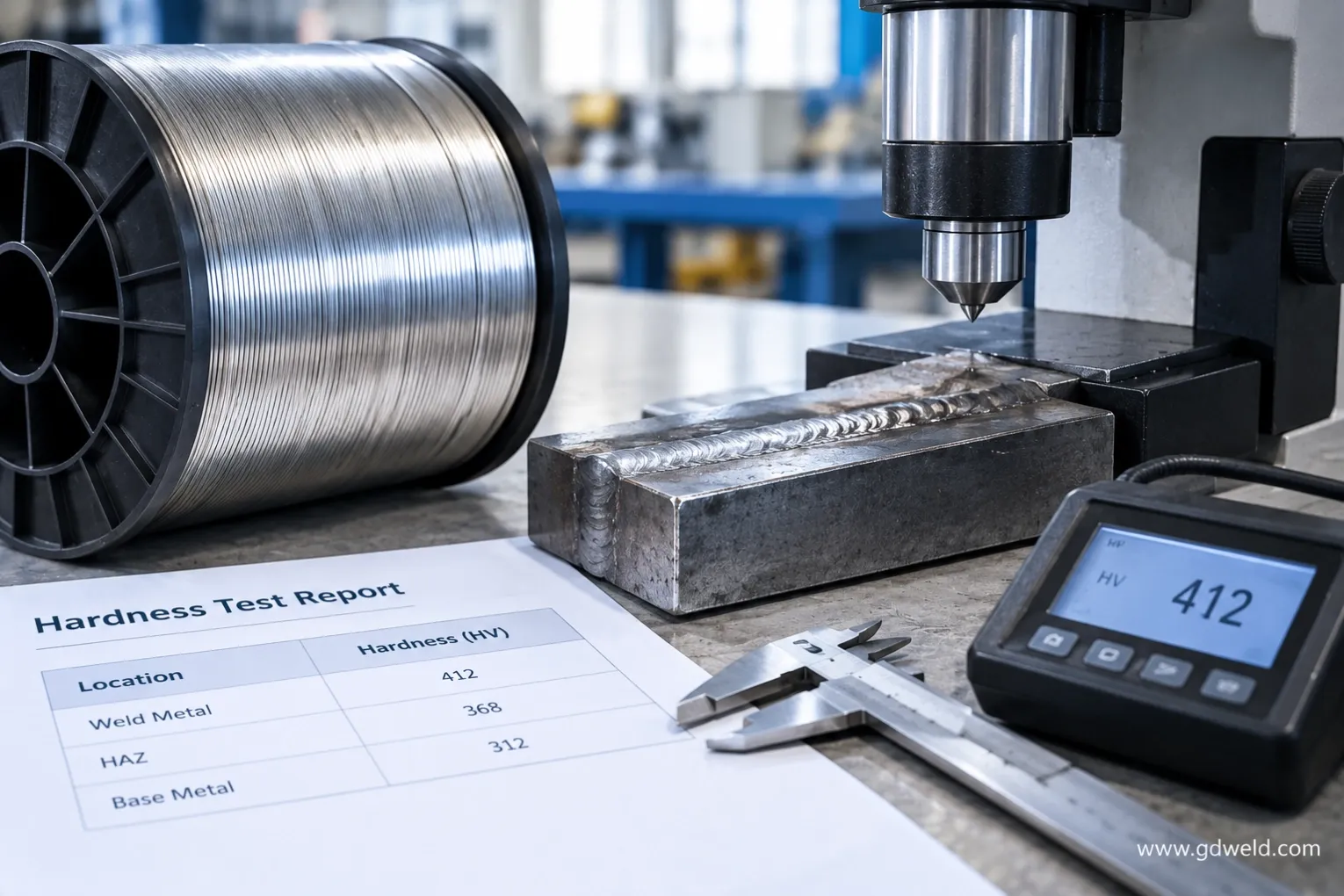
The Hardness Test Is Too High — What Should You Check First?
Your high-strength steel weld is complete, but the hardness test result is higher than expected.
Now you have a practical problem:
Can the weld be accepted? Should the welding wire be changed? Or should the welding procedure be adjusted?
Before changing anything, find out where the excessive hardness is located.
A welded joint can have different hardness levels in the weld metal, HAZ, fusion line and base metal. The location of the high reading can tell you where to start the investigation.
Is the Problem in the Weld Metal or HAZ?
This is the first question to answer.
If the weld metal hardness is too high, check the welding consumable and deposited weld-metal chemistry.
If the HAZ hardness is too high, changing the welding wire may not solve the problem. The HAZ is formed mainly from the base steel, so you should investigate the steel chemistry and welding thermal cycle.
Before making changes, confirm:
- Where the hardness was measured
- Actual hardness value
- Testing method
- Base-metal grade
- Applicable hardness requirement
This prevents a common mistake: treating every high-hardness result as a welding-wire problem.
Did You Choose the Welding Wire Only for Strength?
High-strength welding does not mean choosing the highest-strength wire available.
For example, ER100S-G, ER110S-G and ER120S-G are used for different high-strength welding applications. The correct selection depends on the base material, required mechanical properties, toughness, chemistry and qualified welding procedure.
The question should be:
Does this welding consumable provide the required properties for the application?
—not simply:
Which wire has higher tensile strength?
Was the HAZ Cooled Too Quickly?
If excessive hardness is mainly found in the HAZ, look at the welding thermal cycle.
Check:
Preheat → Heat input → Interpass temperature → Cooling rate
Insufficient preheat, low heat input or rapid heat loss can produce a harder HAZ in some high-strength steels.
However, simply increasing heat input is not always the answer. Excessive heat input can also affect weld-metal and HAZ microstructure and may reduce toughness.
The goal is to keep the welding parameters within the qualified WPS rather than making the weld “hotter” without control.
What Changed From the Qualified Welding Procedure?
If production hardness is higher than the qualification result, compare the actual welding conditions with the WPS.
Look at:
- Welding current
- Voltage
- Travel speed
- Heat input
- Preheat temperature
- Interpass temperature
- Welding sequence
A small change in production conditions can change the thermal cycle and therefore the final weld hardness.
This is especially important when the same welding consumable previously produced acceptable results.
Did PWHT Cause the Hardness Problem?
If the hardness was acceptable before PWHT but became a concern afterward, check the actual heat-treatment cycle.
Compare:
Specified PWHT temperature → Actual temperature
Specified holding time → Actual holding time
Also check thermocouple position and temperature uniformity where applicable.
Do not simply increase or decrease the PWHT temperature without checking the qualified procedure.
If the problem specifically involves Cr-Mo weld hardness after PWHT, a separate investigation may be needed.
👉 Internal Link 2:
Anchor text: Cr-Mo weld hardness after PWHT
Link to: Why Is Cr-Mo Weld Hardness Too High After PWHT?
How Can You Troubleshoot High Weld Hardness?
When a high-strength weld becomes too hard, use this sequence:
1. Locate the high hardness
Weld metal, HAZ or base metal?
2. Check the base material
Grade, thickness and chemistry.
3. Check the welding consumable
AWS classification, chemistry and mechanical properties.
4. Compare production welding with the WPS
Especially preheat, heat input and interpass temperature.
5. Review PWHT if applicable
Compare the actual cycle with the qualified procedure.
This approach helps you identify the real cause before changing the welding wire or welding parameters.
Don't Try to Fix High Hardness by Guessing
High weld hardness can result from the interaction of:
Base Material + Welding Consumable + Heat Input + Cooling Rate + PWHT
If the hardness is above the project requirement, the best solution is not automatically a softer or stronger welding wire.
First identify where the hardness is high and what changed during production.
Then adjust the relevant part of the welding procedure based on the qualified WPS/PQR and project requirements.
For high-strength steel welding, the objective is not simply to reduce hardness. It is to achieve the required combination of hardness, strength, toughness and cracking resistance.