Sep 28, 2026
Why Does My Low-Alloy Weld Have Porosity Even When Gas Flow Is Normal?
Low-alloy weld has porosity even when gas flow is normal? Find the likely causes in shielding, moisture, surface contamination, welding wire and parameters.
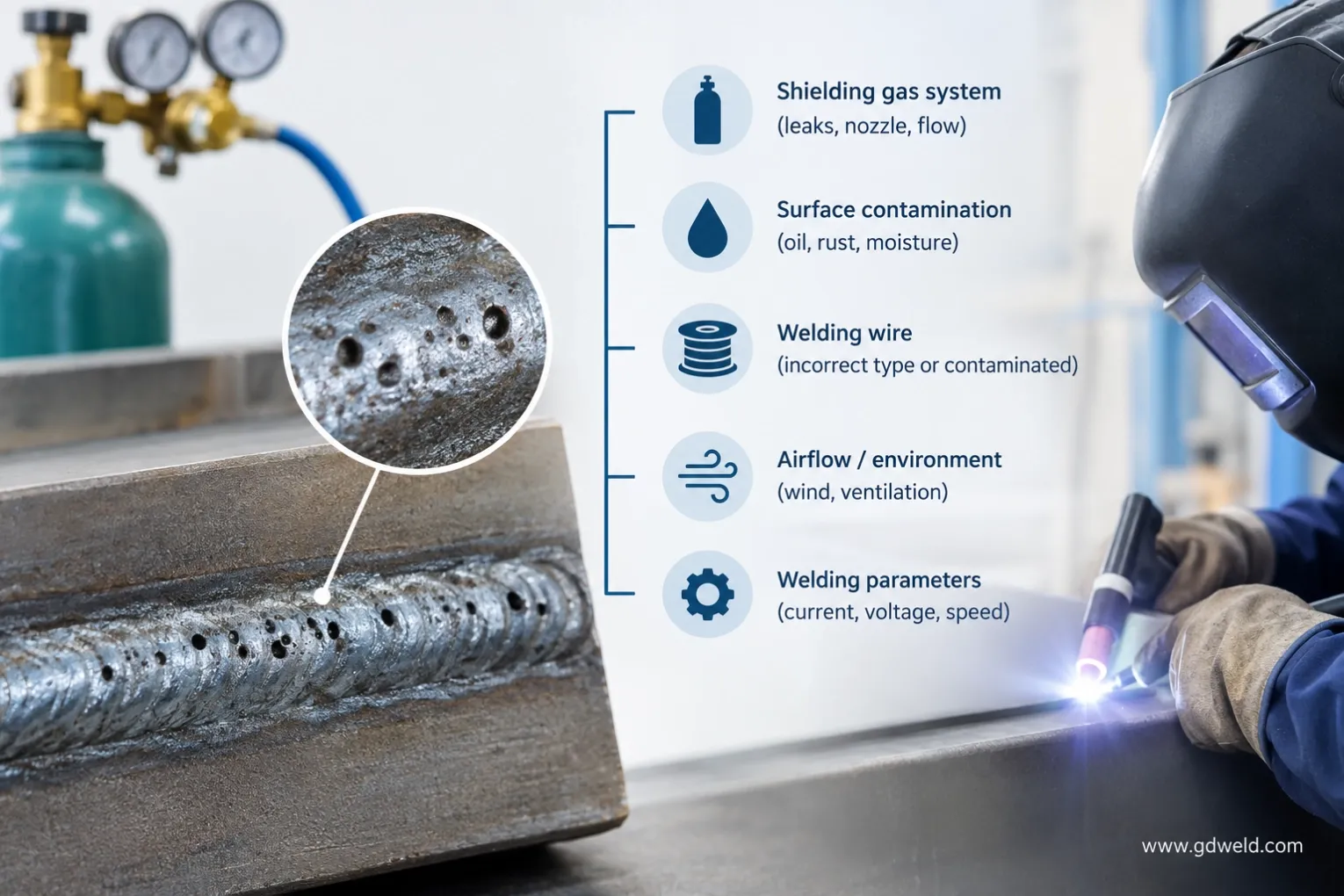
The Gas Flow Is Normal—So Where Is the Problem?
You have a stable gas-flow reading, but porosity still appears in the low-alloy weld.
It is tempting to increase the shielding-gas flow. But that may not solve the problem.
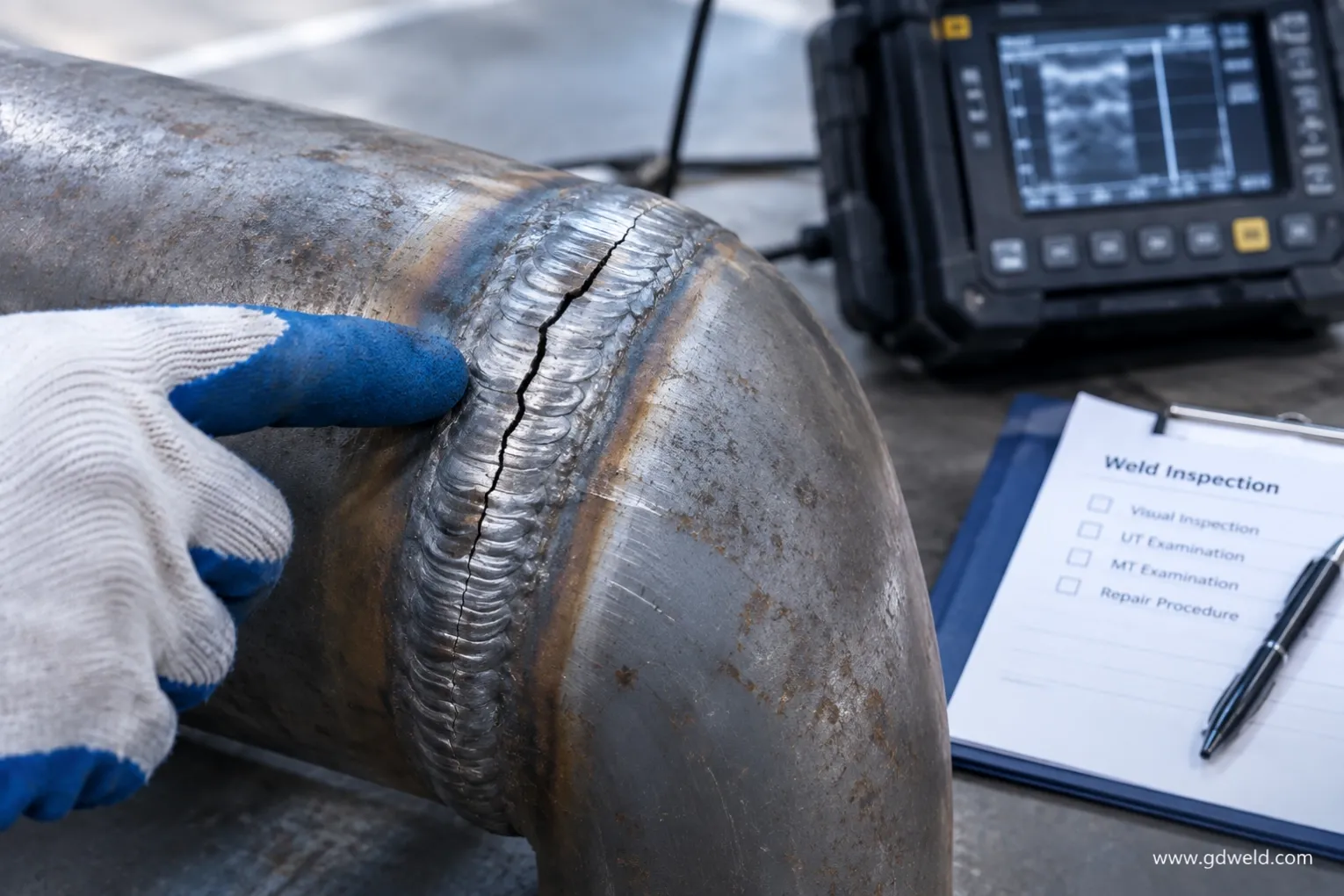
Porosity can occur when unwanted gas becomes trapped in the weld metal. Possible sources include poor shielding, moisture, surface contamination, airflow and welding-consumable problems.
So before changing the gas setting, ask one simple question:
What is different between the sound weld and the defective weld?
That question can often narrow down the problem much faster.
Start With What Changed
If the same welding procedure previously produced good welds, compare the old and new conditions.
Different steel grade?
The welding consumable may no longer be suitable.
Different welding wire?
Check the AWS classification, surface condition and storage.
Different joint preparation?
Oil, grease, rust, moisture or coatings may have been introduced.
Different welding location?
Fans, ventilation or outdoor wind can disturb shielding.
Different torch or nozzle?
A damaged or contaminated gas nozzle can affect shielding around the arc.
This simple comparison can be more useful than immediately changing several welding parameters.
A Clean Joint Is the First Line of Defense
A normal gas-flow rate cannot compensate for a contaminated weld area.
Before welding low-alloy steel, look for:
- Oil or grease
- Rust
- Moisture
- Mill scale
- Paint or primer
- Cutting-fluid residue
Clean and dry the joint before welding.
If porosity started after machining, cutting or surface treatment, investigate the joint preparation first.
Moisture deserves particular attention because hydrogen-containing contaminants can enter the weld during welding and contribute to weld-quality problems.
Could the Welding Wire Be the Problem?
The correct low-alloy welding wire should match the base metal and qualified welding procedure.
Different AWS classifications are designed for different weld-metal chemistry requirements.
For example:
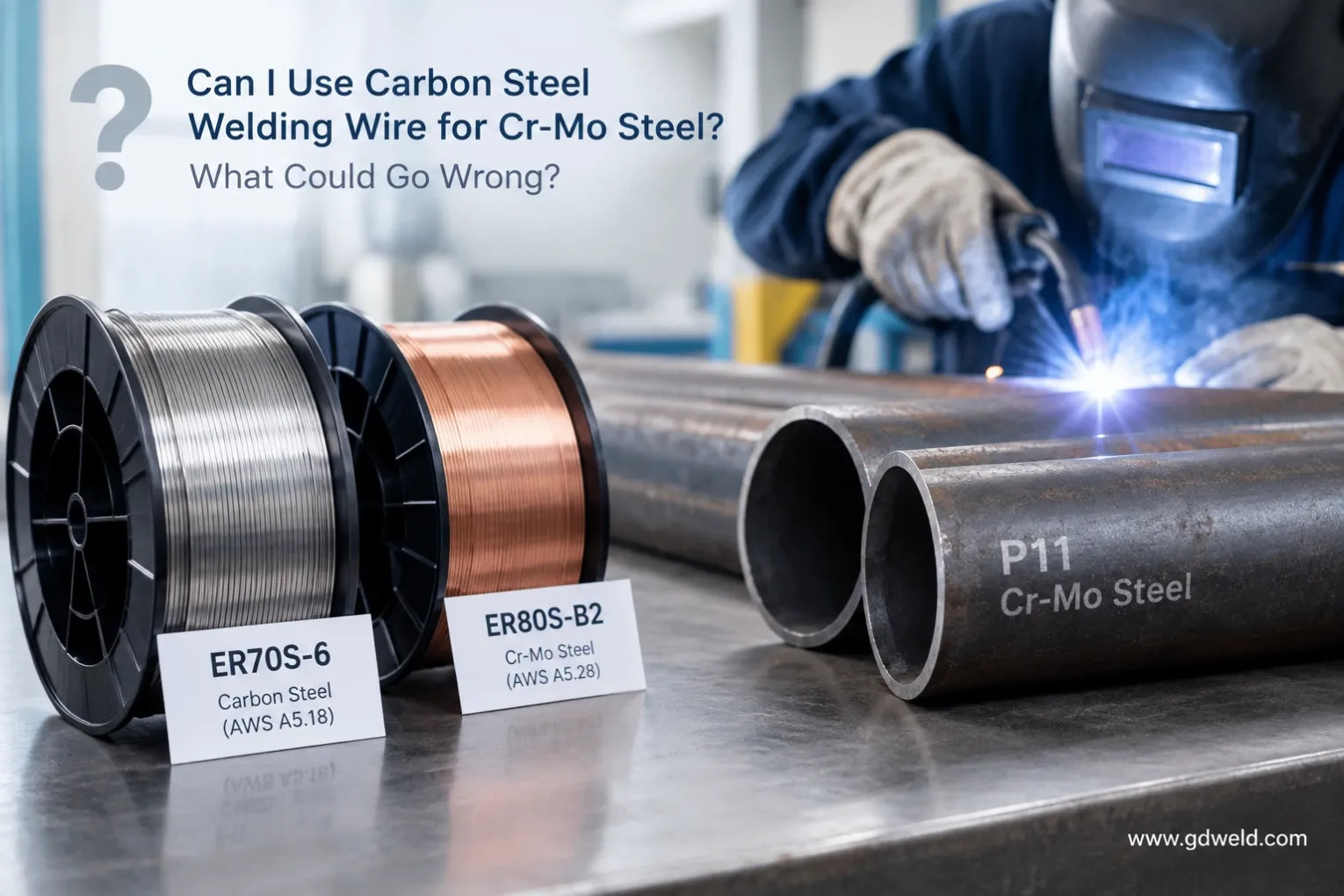
- ER70S-A1 — Mo-alloyed wire for compatible low-alloy applications
- ER80S-B2 — commonly used with 1.25Cr-0.5Mo steels such as P11/P12
- ER90S-B3 — commonly used with 2.25Cr-1Mo steels such as P22/T22
These wires should not be selected simply because their strength levels look similar.
Check the base-metal grade, weld-metal chemistry, service requirements and WPS before changing the consumable.
👉 Internal Link 1:
Anchor text: ER80S-B2 welding wire
Link to: What Is ER80S-B2 Welding Wire? AWS Classification, Applications and Selection
When the Wire Is Correct, Look at Shielding
If the joint and welding wire are acceptable, inspect the complete shielding-gas path.
Cylinder → Regulator → Hose → Connections → Torch → Nozzle → Gas lens
A leak, loose connection or damaged component can reduce effective shielding even when the flowmeter shows a normal value.
Also avoid assuming that higher gas flow means better protection.
Excessive flow can create turbulence, while drafts can disturb the shielding envelope around the weld pool.
So the goal is not simply “more gas.”
The goal is stable and effective shielding at the weld pool.
Don't Forget the Welding Environment
A weld may be sound in one location and porous in another.
Why?
The welding environment may have changed.
Check for:
- Workshop fans
- Strong ventilation
- Open doors
- Outdoor wind
- Local extraction
If possible, make a short test weld in a protected area.
If the porosity decreases, the problem may be shielding disturbance rather than insufficient gas flow.
If Everything Looks Normal, Review the WPS
When the material, joint, welding wire and shielding system are acceptable, review the actual welding conditions.
Look at:
Current → Voltage → Travel Speed → Arc Length → Heat Input → Interpass Temperature
Compare the actual values with the qualified WPS.
Don't change several variables at once.
Make one controlled adjustment, weld a test coupon, and compare the result.
This makes troubleshooting much easier.
A Faster Way to Find the Cause
For production problems, use this order:
What changed?
↓
Surface and moisture
↓
Welding wire
↓
Shielding system
↓
Airflow
↓
Welding parameters
This approach helps separate a material problem from a consumable problem, a shielding problem, or a process problem.
What If You Are Welding Cr-Mo Steel?
For Cr-Mo applications, consumable selection deserves extra attention.
For example, ER80S-B2 and ER90S-B3 are associated with different Cr-Mo weld-metal systems.
If porosity occurs while welding P11, P12, P22 or similar low-alloy steels, don't only ask whether the shielding gas is correct.
Also confirm:
Is the welding wire suitable for the base metal and qualified WPS?
👉 Internal Link 2:
Anchor text: Cr-Mo welding consumables
Link to: What Are Cr-Mo Welding Consumables? Grades, Materials and Applications
Before the Next Production Weld
Make one controlled test:
Clean the joint → Verify the wire → Inspect the torch → Check shielding → Control airflow → Confirm WPS parameters
Then compare the test weld with the defective production weld.
If the porosity disappears, you have a strong clue about where the problem came from.
If it remains, continue testing one variable at a time.
The Key Point
Normal gas flow does not always mean effective shielding.
When a low-alloy weld develops porosity, don't immediately increase the gas flow.
Look at the entire process:
Base Metal → Joint Preparation → Welding Wire → Shielding → Environment → Welding Parameters
Most importantly, find out what changed.
That is often the quickest path from “Why does my weld have porosity?” to a practical solution.