Oct 26, 2026
ER4043 vs ER5356 Aluminum Welding Wire: Which Should You Choose?
Compare ER4043 vs ER5356 aluminum welding wire for 6061, 6063 and 5xxx alloys. Learn about strength, cracking, corrosion resistance and anodizing.
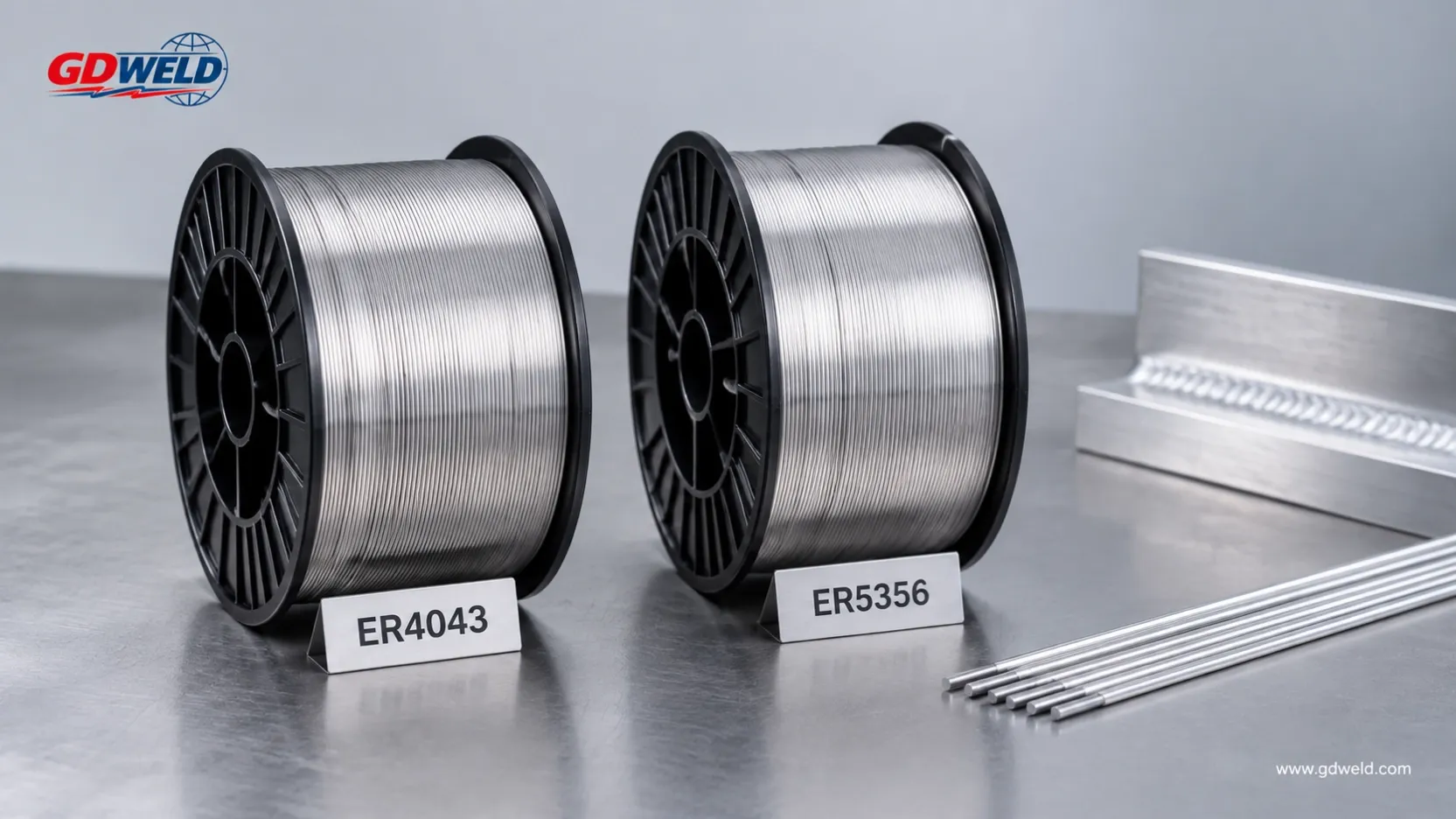
Choosing between ER4043 and ER5356 aluminum welding wire? The right filler metal depends on your base-metal alloy, required weld properties and post-weld finishing requirements.
ER4043 is an aluminum-silicon filler metal commonly used for many compatible 6xxx series alloys. ER5356 is an aluminum-magnesium filler metal often selected for suitable 5xxx and 6xxx series applications where strength or anodized appearance matters.
Neither wire is best for every application. Here is how to compare them.
1. ER4043 vs ER5356: What Is the Difference?
Feature | ER4043 | ER5356 |
|---|---|---|
Main alloying element | Silicon | Magnesium |
Common applications | Many compatible 6xxx series alloys | Many compatible 5xxx and selected 6xxx series alloys |
Weld-metal strength | Generally lower in comparable applications | Generally higher in comparable applications |
Solidification cracking | Lower susceptibility in many suitable alloy combinations | Depends on alloy chemistry and joint conditions |
Weld-pool characteristics | Good fluidity | Different handling and solidification behavior |
Anodized appearance | May contrast with the base metal | May provide a closer match for some compatible alloys |
These are general selection guidelines. Actual performance depends on the base-metal composition, joint design, welding procedure and service conditions.
2. Which Aluminum Welding Wire Is Best for 6061 and 6063?
For many applications involving 6061 and 6063 aluminum, both ER4043 and ER5356 may be suitable.
Choose ER4043 when good weld-pool fluidity and favorable solidification-cracking characteristics in a compatible joint are priorities.
Consider ER5356 when higher weld-metal strength or post-weld appearance is important and the filler metal meets the application requirements.
The final choice should also account for joint strength, service temperature, corrosion exposure and any applicable welding specifications.
3. Should You Use ER4043 or ER5356 for 5083 and 5086?
For many applications involving 5083 and 5086 aluminum, ER5356 or another suitable aluminum-magnesium filler metal is commonly considered.
These alloys contain significant magnesium, making filler-metal compatibility particularly important for marine structures, tanks and other corrosion-sensitive applications.
ER4043 should not be treated as a direct substitute for ER5356 on these alloys without confirming suitability. For demanding service conditions, follow the applicable design requirements and qualified welding procedure.
4. Which Wire Is Better for Strength, Cracking and Anodizing?
Three factors can influence your final decision:
- Weld strength: ER5356 generally offers higher weld-metal strength than ER4043 in comparable suitable applications. The completed joint must still meet the design requirements.
- Cracking resistance: ER4043 can reduce solidification-cracking susceptibility in many compatible aluminum alloy combinations. The result depends on the alloy chemistry and joint conditions.
- Anodizing appearance: ER4043 weld metal may develop a darker or contrasting appearance after anodizing. ER5356 may provide a closer visual match for some compatible alloys, but a consistent color match is not guaranteed.
If your component will be anodized or exposed to a corrosive environment, confirm the filler-metal choice before production. A representative welding and finishing trial may be necessary when appearance or service performance is critical.
5. What Should You Check Before Buying Aluminum Welding Wire?
Before requesting a quotation, confirm:
- Base-metal grade: 6061, 6063, 5083, 5086 or another alloy
- Welding process: MIG (GMAW) or TIG (GTAW)
- Filler-metal classification: ER4043 or ER5356, as required
- Wire diameter: Suitable for the joint and welding parameters
- Application: Fabrication, transportation, marine equipment or another use
- Finishing requirements: Anodizing or other surface treatment
- Order details: Quantity, packaging and destination market
Providing these details helps your supplier assess product suitability and prepare a more accurate quotation.
Request ER4043 or ER5356 Aluminum Welding Wire
GD WELD supplies aluminum welding consumables for compatible industrial applications.
Review our product pages for ER4043 Aluminum Welding Wire and ER5356 Aluminum Welding Wire to check product information and discuss your requirements.
Looking for the right aluminum welding wire for your project? Send GD WELD your base-metal grade, welding process, wire diameter and application requirements to request product information and a quotation.